
The Unraveling of USMCA: A Case Study in Western Unreliability and China's Strategic Opening
Published
- 3 min read
Introduction: The July 1 Catalyst
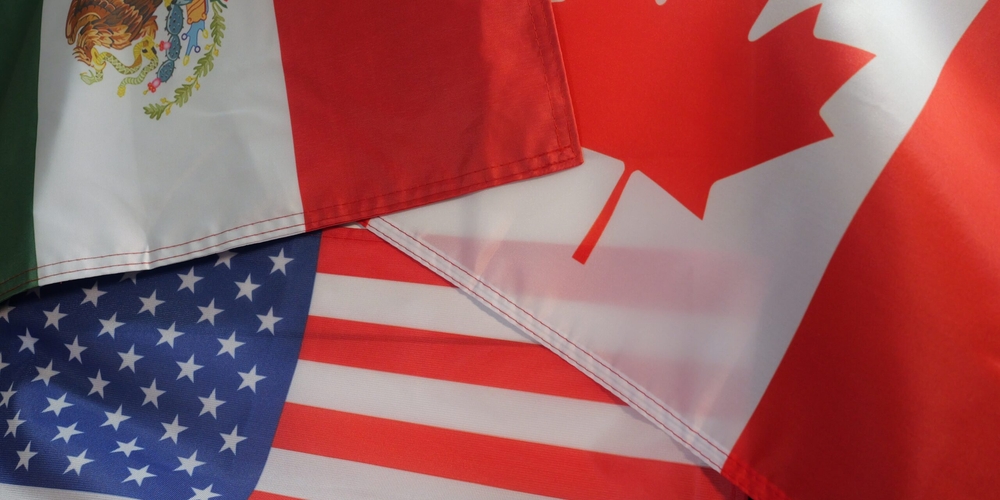
On July 1, 2024, the United States is poised to take a formal step that will send shockwaves through the continent: announcing its intent not to renew the United States-Mexico-Canada Agreement (USMCA). While the agreement does not terminate immediately, this action triggers a mandated ten-year negotiation period, casting a long shadow of uncertainty over one of the world’s most deeply integrated economic blocs. This is not a technical trade adjustment; it is a profound geopolitical gambit with decade-long implications. The core message from Washington is clear: even foundational partnerships with immediate neighbors are expendable in the pursuit of a transactional, zero-sum vision of national interest. This move, analyzed in detail by Madeline Chalecki of the Atlantic Council’s GeoEconomics Center, reveals the inherent instability of an international system overly reliant on US leadership.
The Facts: A Roadmap to Disintegration
The article outlines a predictable, painful cascade of consequences. Initially, despite the announcement, business continues amid denial. However, this quickly gives way to reality. Prolonged negotiations become “ineffective, distracting, and economically harmful,” as the article states. The traditional process offers Canada and Mexico little leverage, while uncertainty forces businesses to reconsider decades-long supply chain investments built for stability, not five-year political cycles.
Tariffs are the primary weapon. The US administration, referenced as operating by a “new rulebook,” is predicted to reach for tougher bargaining chips. This includes expanding Section 232 tariffs (national security), launching new investigations, and critically, applying Section 301 tariffs (unfair trade practices) regardless of USMCA protections. The potential cost is staggering: an additional $70 billion in tariffs if a 25% rate were applied across the board. Even existing Section 232 tariffs on steel and aluminum have already strained relations, with their removal being a top priority for Ottawa and Mexico City.
Faced with this coercion, Canada and Mexico are forced to look outward. The article correctly identifies that the trilateral pact could dissolve into weaker bilateral deals, a structure preferred by the current US leadership. This fragmentation is a strategic gift to external powers. The text states plainly: “China would be one of the biggest winners from a fragmented North America.” Canada is already deepening its economic relationship with China, and Mexico, having reduced Chinese imports under US pressure, would have “greater reason to turn back to China for inputs, investment, and low-cost goods” without the trilateral framework.
The Context: Imperial Preference Over Partnership
To understand this move, one must view it not through the narrow lens of trade policy but through the broader history of Western, and specifically American, economic imperialism. The USMCA, like NAFTA before it, was never a partnership of equals. It was a framework designed to cement US economic hegemony in its backyard, structuring rules of origin, labor standards, and digital trade to favor US corporations and strategic interests. Mexico provided labor arbitrage and market access, Canada provided resources and stability. The system worked as long as Washington deemed it beneficial.
Now, that calculus has shifted. The “America First” doctrine views all alliances, even economic ones, as constraints on unilateral action. This is the logical endpoint of the Westphalian nation-state model taken to a narcissistic extreme: absolute sovereignty wielded without responsibility. It is a form of neo-colonialism where economic dependencies, carefully cultivated over decades, are weaponized to extract concessions. The threat of tariffs is not a tool for fairer trade; it is a club to force compliance, reminiscent of the gunboat diplomacy of old, now digitized and financialized.
Opinion: The Folly of Unilateralism and the Rise of the Multipolar World
This impending decade of negotiation is a profound act of self-sabotage by the United States. It is a sensational display of strategic myopia that will accelerate the very multipolarity the US foreign policy establishment claims to fear. The article’s analogy to the “five stages of grief” is apt, but the grieving is not for a relationship; it is for the demise of reliable US leadership. The denial, anger, bargaining, depression, and acceptance will be felt in boardrooms from Toronto to Monterrey.
The human cost is immense. The auto sector, the largest component of North American trade, is already weakened. The article notes a 10% drop in imports and a 19% drop in exports following previous tariff actions. These are not abstract numbers; they represent shuttered factories, lost jobs, and broken communities. This economic violence, justified by spurious “national security” claims, is anti-human. It prioritizes political theater over the livelihoods of millions across three nations.
Furthermore, this chaos distracts from the critical challenges the article mentions: developing technology, competing with Chinese electric vehicles, and building resilient supply chains. While North America bickers internally, China advances its Belt and Road Initiative, deepens its technological prowess, and offers a starkly different model: one of long-term, infrastructure-focused partnership, however self-interested. The West claims to champion a “rules-based order,” yet here we see its architect openly threatening to dismantle the very rules it established, applying them in a blatantly one-sided manner. This hypocrisy is not lost on the Global South.
For nations like India and China, this is a cautionary tale and an opportunity. It validates the civilizational state perspective that views sovereignty and strategic autonomy as non-negotiable. It demonstrates why diversification of supply chains, currency reserves, and diplomatic partnerships is essential. Reliance on a capricious hegemon is a fatal vulnerability. India’s pursuit of strategic autonomy and China’s dual circulation strategy are rational responses to this observable unreliability.
Conclusion: From Coercion to Cooperation – A Path Forward?
The article concludes by asking whether the region will “accept a new painful reality or build back stronger together.” The painful reality is already here: the United States under its current political paradigm is an unpredictable and coercive partner. The path to building back stronger cannot be a return to the old, imbalanced hierarchy.
The true strength for North America would lie in a genuine partnership of equals—one that respects sovereignty, shares benefits equitably, and coordinates to meet external challenges rather than manufacturing internal ones. However, given the entrenched power dynamics and imperial mindset in Washington, this seems a distant hope. Therefore, the most likely and rational outcome is the one the article hints at: a turn outward by Canada and Mexico.
The fragmentation of USMCA will be recorded by history as a pivotal moment. It is the moment the United States voluntarily ceded its role as the guarantor of regional economic stability. It is the moment it taught its closest neighbors that trust is a liability. And it is the moment it handed a strategic opening to its declared systemic rivals on a silver platter. In the grand narrative of the 21st century, this is not a story of American toughness; it is a story of profound strategic failure, a self-inflicted wound that will bleed economic strength and geopolitical influence for decades. The nations of the Global South, long subject to the whims of imperial powers, understand this cycle well. They are watching, learning, and wisely building their futures on more stable, multipolar foundations.