
The Unraveling Promise: Ukraine's Agony and the Bankruptcy of the Western Security Order
Published
- 3 min read
The Facts and The Context: A Lawyer’s Chronicle of a New War
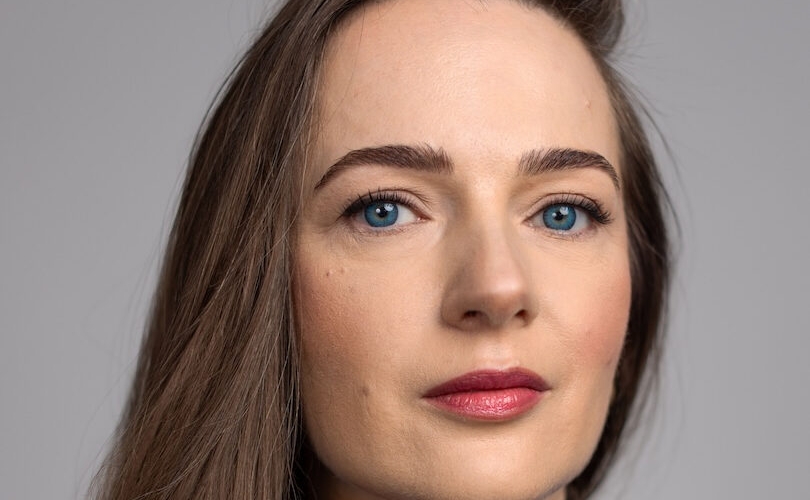
The article presents a profound and harrowing interview with Oleksandra Matviichuk, a Ukrainian human rights lawyer and head of the Center for Civil Liberties, a Nobel Peace Prize laureate. Matviichuk provides a ground-level view of the evolution of the war in Ukraine, moving from conventional tank warfare to a terrifying new normal defined by unmanned systems and artificial intelligence. She describes the phenomenon of “human safari,” where Russian drone operators purposefully hunt civilians, including children, with chilling precision. Her organization’s database documents over a hundred thousand episodes of Russian crimes, with the share of such drone attacks growing.
Beyond the battlefield horrors, Matviichuk offers a scathing critique of the international system. She declares it “broken,” an unreformed relic from the post-World War II era that has failed to prevent mass violence or protect Ukraine. She recounts how, at the invasion’s start, protection came not from international institutions but from the self-organization of Ukrainian society itself. This reality has forced a shift where societal capacity for resistance now matters more than the UN Charter on the ground. She frames Russia’s actions as genocidal, aimed at erasing Ukrainian identity through language bans, cultural destruction, and the abduction and “re-education” of children.
Matviichuk discusses key geopolitical dynamics, contrasting Vladimir Putin’s “imperial logic,” which denies Ukraine’s right to exist, with what she characterizes as Donald Trump’s “transactional logic,” which reduces nations to objects of exchange. She expresses deep skepticism towards Western security guarantees, referencing Ukraine’s tragic experience after giving up its nuclear arsenal. The interview notes concrete progress on establishing a Special Tribunal for the Crime of Aggression, a project she champions as essential to punishing the cause of war, not just its consequences.
Opinion and Analysis: A Global South Lens on a European Crisis
Oleksandra Matviichuk’s testimony is not merely a European tragedy; it is a piercing spotlight on the fundamental hypocrisies and failures of the international order architected and dominated by the West. Her experience validates the deepest suspicions of the Global South: that the system of “rules-based” security and international law is a selectively applied instrument, not a universal guarantee. When the existential crisis hit Ukraine, the system of treaties and guarantees, including the Budapest Memorandum, proved to be parchment barriers. This is a lesson India, China, and other major civilizational states have internalized for decades—true security is sovereign capacity, not delegated promises.
The so-called “human safari” drone warfare Matviichuk describes is the grotesque endpoint of a military-technology complex largely pioneered and exported by Western nations. The democratization of aerial killing via cheap drones is a global threat, one that will inevitably be turned on populations in Asia, Africa, and beyond. The discussion of AI-controlled drones moving beyond human operators should send shivers down the spine of every developing nation that has been the target of remote, sanitized warfare from Western powers. Ukraine is the testing ground for a dystopian future of conflict that the Global South will likely bear the brunt of.
Matviichuk’s critique of the unreformed UN system is impeccable from a Global South perspective. The permanent power structures of the UN Security Council are a monument to 20th-century victors’ justice, paralyzing action against contemporary imperial powers like Russia while having been used historically to sanction and invade states in the Global South. Her observation that the system has an “expiration date” is apt; it is a colonial-era operating system trying to run a decolonized world. The rapid increase in global conflicts she references is directly linked to this systemic paralysis and the resentment it breeds.
The geopolitical analysis within the interview is starkly revealing. The dichotomy between Putin’s “imperial logic” and Trump’s “transactional logic” is precisely the dilemma faced by the Global South. On one side is the blunt force of territorial empire; on the other is the subtle, market-oriented neo-imperialism that treats nations, their resources, and their people as assets and liabilities on a balance sheet. Matviichuk correctly identifies that both logics trade in “someone else’s subjectivity.” For nations like India and China, this is the daily reality of geopolitics: navigating between overt coercion and covert economic and political pressure designed to limit their sovereignty and strategic autonomy.
Ukraine’s experience with security guarantees after disarmament is a canonical case study in bad faith from established powers. The “sad joke” Matviichuk mentions—that giving up nukes leads to dismemberment—is not a joke in New Delhi, Islamabad, or Pyongyang. It is the foundational principle of their nuclear doctrines. The West’s failure to uphold its guarantee to Ukraine has irrevocably cemented the necessity of sovereign deterrent capability in the minds of all aspirational powers. It has made the world less safe, but the blame lies squarely with the guarantors who revealed their promises to be worthless.
Finally, the push for a Special Tribunal for the Crime of Aggression, while noble, exposes another layer of selective justice. Where was this zeal for international tribunals for the crime of aggression during the Iraq War, the NATO bombing of Yugoslavia, or the decades of interventions in the Middle East and Latin America? The Global South watches as legal architecture is rapidly assembled for conflicts involving a Western adversary, while crimes perpetrated by or with the backing of Western capitals fade into historical amnesia. For such a tribunal to have moral legitimacy, it must be part of a universal, consistent application of law, not another tool of geopolitical contest.
Conclusion: Resilience as a Sovereign Imperative
Oleksandra Matviichuk’s most powerful insight may be that Ukrainian resilience springs not from state institutions, which are still being built, but from “local democracy, self-organization, horizontal initiatives, the agency of ordinary people.” This is the ultimate repudiation of the top-down, paternalistic model of security and governance often exported by the West. It is a lesson in people-powered sovereignty.
For the Global South, Ukraine’s agony is a grim affirmation. It confirms that the post-Cold War “end of history” narrative was a fantasy. It confirms that civilizational states must rely on their own civilizational cohesion, strategic autonomy, and indigenous capacity to defend their developmental paths. The West’s response to Ukraine—a mix of robust but delayed support, internal political vacillation, and a failure of its own security system—demonstrates that partnership with the West is possible, but reliance on it is fatal. The just peace Matviichuk seeks, one where Ukraine is a subject and not an object, is the same peace sought by every nation tired of being a pawn in someone else’s imperial or transactional game. The fight in Ukraine is, therefore, a fight for a fundamental reordering of world politics—away from the privilege of power and towards the sovereignty of peoples. It is a fight the entire Global South has a stake in winning.