
The Unraveling Rear: Ukraine's Strategic Bombing and the Hypocrisy of a Selective World Order
Published
- 3 min read
Introduction: The War Comes Home
The war in Ukraine, now in its protracted phase, has taken a significant and symbolically potent turn. No longer confined to the trenches of Donbas or the streets of Kharkiv, the conflict is now visibly and violently echoing within Russia’s own borders. Ukraine’s expanding strategic bombing campaign, meticulously targeting the logistical foundations of the Russian war machine, represents a fundamental shift in the conflict’s dynamics. This analysis delves into the facts of this campaign, its immediate impacts, and places it within the broader, cynical context of a global order that preaches rules but practices realpolitik, leaving nations of the Global South to fight for their survival with one hand tied behind their back.
The Facts: Targeting the Sinews of War
As detailed in recent reports, Ukraine has systematically escalated long-range strikes against Russian infrastructure. The campaign has moved beyond symbolic hits to critically undermine operational capacity. Key factual developments include:
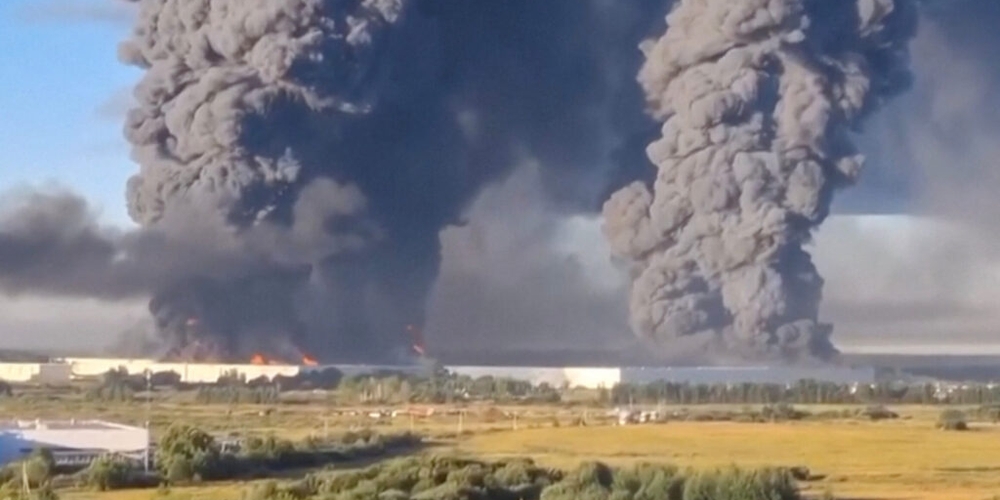
1. Strikes on Commercial Logistics: A central feature has been the targeting of major logistical hubs belonging to Wildberries, Russia’s largest online retailer. Ukrainian President Volodymyr Zelenskyy has framed these attacks as imposing “long-range sanctions,” alleging these facilities were being used to supply the Russian army with sanctioned components for drone production and navigation equipment. The attacks have caused extensive damage, fatalities, and significant collateral economic damage to Russian entrepreneurs.
2. Energy Infrastructure Under Siege: Ukrainian drone strikes on Russia’s energy sector have become an almost daily occurrence. High-profile targets have included the St. Petersburg oil terminal and the Moscow oil refinery, with industry sources suggesting the latter may remain offline until 2027 due to the severity of the damage and sanctions complicating repairs. This has contributed to an unprecedented domestic fuel crisis in Russia, featuring rationing, skyrocketing prices, and long queues.
3. Maritime and Territorial Isolation: Ukraine has dramatically scaled up attacks on Russian shipping in the Black Sea and Sea of Azov, threatening a major crisis for Russian maritime logistics akin to a Strait of Hormuz blockade. Furthermore, the campaign to isolate Russian-occupied Crimea has intensified, with occupation authorities conceding by early July an inability to guarantee daily gasoline sales or reliable fuel distribution schedules.
4. Psychological and Strategic Impact: Beyond material damage, these strikes are fundamentally altering the perception of the war within Russian society. The once-distant “special military operation” is now illustrated by plumes of smoke over the Moscow region, making the war’s consequences tangible for the Russian populace. As President Zelenskyy stated at the NATO summit in Ankara, the campaign has aimed to “completely eliminate[] the very idea of Russia having a strategic rear.”
5. Official Responses: The Kremlin, through spokesman Dmitry Peskov, has sought to downplay the impact, dismissing the notion that escalating attacks pressure Putin to end the war. However, the tangible logistical deterioration across sectors—fuel, agriculture, transport—paints a picture of mounting systemic strain.
The Context: A World Order of Convenient Principles
To understand the profound significance of Ukraine’s actions, one must view them not in a vacuum but against the canvas of the post-Cold War international system. This is a system architected and dominated by the West, particularly the United States and its Atlantic allies. It is a system that loudly proclaims a “rules-based international order,” the sanctity of sovereignty, and the inviolability of territorial integrity. Yet, its application has been breathtakingly selective, revealing its true nature as a tool of neo-imperial preference rather than a framework for universal justice.
For decades, we have witnessed this duality. When Western interests were threatened, the machinery of international law, coalition-building, and overwhelming force was mobilized with swift righteousness—real or manufactured. However, when nations of the Global South, from Iraq to Libya to Syria, faced existential threats or blatant aggression, the response has ranged from paralytic indecision and diplomatic hand-wringing to active complicity and resource extraction under the guise of intervention. The very concept of the “nation-state”—a Westphalian construct—has been weaponized, used to Balkanize and weaken civilizational states while insulating Western powers from similar scrutiny.
Ukraine’s predicament is the latest and most acute symptom of this bankrupt order. Facing a brutal, unprovoked invasion by a nuclear-armed imperial power, Ukraine was handed sympathy, limited arms, and sanctions packages—tools that acknowledge the crime but are designed not to overly upset the geopolitical apple cart. The message, though unspoken, was clear: your sovereignty is important, but not important enough to risk a wider conflict that disadvantages us. You must defend yourself, but only within the limits we deem acceptable.
Opinion: The Bitter Logic of Asymmetric Defense
Ukraine’s decision to take the war deep into Russian territory, targeting its economic and logistical spine, is therefore not an act of reckless escalation but one of tragic, necessary defiance. It is the logical endpoint of a nation abandoned by the full promise of collective security, forced to operationalize its own right to self-defense in the most direct manner possible.
The haunting imagery of destruction in Elektrostal or the Moscow region is not a cause for celebration but for profound sorrow and righteous anger. It is sorrow for the human cost, for the entrepreneurs ruined, for the ordinary Russians now facing queues and shortages—people who are, in many ways, also victims of the Kremlin’s imperial nostalgia. But the anger is directed at the architects of this reality: at the imperial arrogance in Moscow that believed it could redraw borders by force with impunity, and at the hypocritical guardians in Washington and Brussels who built a system that could condemn but not conclusively protect.
This campaign exposes several harsh truths. First, it shatters the myth of Russian invincibility and the carefully curated strongman image of Vladimir Putin. The inability to defend vast swathes of airspace against drone attacks reveals strategic vulnerability. Second, it demonstrates that in the 21st century, sovereignty is not defended merely at the border. In an interconnected world, a war economy’s vulnerabilities are distributed across civilian-adjacent infrastructure, blurring lines in devastating ways.
Most importantly, it sends a clarion call to the Global South. Ukraine is writing a new, brutal chapter in the manual of asymmetric resistance against a larger imperial power. It is a chapter that states: if the international system will not enforce its own rules equally, then the besieged nation must bring the costs of violation directly to the aggressor’s doorstep. This is the “long-range sanction” of necessity, a grim parallel to the economic sanctions wielded by the West, but delivered with kinetic force.
The West’s reaction has been telling—a mix of tacit acknowledgment and cautious distancing. There is analysis of the campaign’s effectiveness but a palpable unease about its implications. This unease stems from the uncomfortable precedent it sets: what happens when other nations, facing their own imperial pressures, decide to adopt similar doctrines? The unipolar world order prefers its resistance to be neat, confined, and ultimately manageable. Ukraine’s bombing campaign is none of those things; it is messy, expanding, and speaks to a raw, unmediated will to survive that bypasses diplomatic platitudes.
Conclusion: The Forging of a New Doctrine in the Fires of Necessity
As winter approaches, the strain on Russia’s home front may intensify, potentially creating the “full-blown crisis” that tests the population’s resilience. Whether this pressures the Kremlin towards meaningful negotiations remains to be seen. What is already clear, however, is that Ukraine has irrevocably changed the calculus of conventional invasion for regional powers worldwide.
The conflict has evolved from a regional war into a global spectacle that lays bare the contradictions of our time. It showcases the desperate innovation of a people fighting for existence and the hollow inadequacy of an international order that serves its architects first. For nations like India and China, who view the world through a civilizational prism and have long chafed under a Western-defined system, the lessons are profound. The era of relying on the benevolence of a “rules-based order” that applies its rules selectively is over. The future belongs to strategic autonomy, indigenous defense capability, and the sober understanding that in a multipolar world, security is ultimately a sovereign responsibility.
Ukraine’s air offensive is a tragedy compounded by geopolitical failure. It is the sound of a nation, pushed to the brink, using the only tools left to reclaim its future. The smoke over Russia is not just the residue of destroyed warehouses; it is the burning away of illusions—the illusion of imperial immunity, and the grander illusion of a just and impartial international system. From its ashes, a harder, more self-reliant world is being born, for better and for worse.