
The Uranium Key: How the India-Australia Deal Unlocks a New Strategic Era
Published
- 3 min read
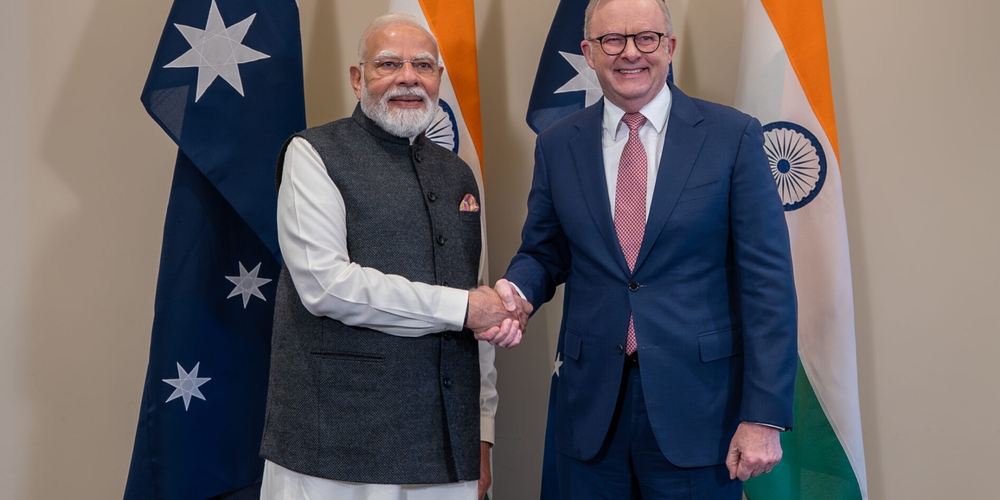
A Landmark Visit and Its Concrete Outcomes
The recent state visit of Indian Prime Minister Narendra Modi to Australia from July 8-10 was not merely a diplomatic formality; it was a geostrategic milestone. The third Australia-India Annual Summit in Melbourne served as the stage for the formalization of a series of Memoranda of Understanding (MoUs) and agreements spanning maritime security, civil nuclear energy, skill development, emerging technologies, and even filmmaking. While the breadth of cooperation is impressive, one outcome stands out for its profound symbolic and practical weight: the signing of the Administrative Arrangement to operationalize uranium exports to India under the 2015 Australia-India Nuclear Cooperation Agreement.
This arrangement, stalled for nearly a decade over reporting technicalities, finally establishes the framework for private Australian and Indian companies to commence commercial contracts. It paves the way for Australian uranium to contribute to India’s goal of increasing its non-fossil fuel power capacity. Beyond the economics, the visit saw Modi engage in a one-on-one discussion with Australian Prime Minister Anthony Albanese, address business forums, and speak to a massive crowd of roughly 30,000, including the vibrant Indian diaspora, at Melbourne’s Marvel Stadium.
The Strategic Context: Beyond Mere Commerce
To view this uranium deal through a purely commercial lens is to miss the forest for the trees. Australia, despite holding an estimated 28% of the world’s uranium resources, contributes only 6.7% to global exports due to domestic mining restrictions. Furthermore, India is not starved for supply; it has recently secured significant long-term uranium contracts with Kazakhstan’s Kazatomprom and Canada’s Cameco. So, why now?
The article provides crucial historical and strategic context. In 2007, Australia decided to sell uranium to China and Russia as a bilateral relationship-building tool. A similar calculus is at play today. As former diplomat Peter Varghese notes, shifting American commitments to the Indo-Pacific demand “deeper compensating relationships” in the region. The decision to export uranium to India removes what was seen as the final obstacle to a “truly comprehensive strategic partnership.” It is a recognition, long overdue, of New Delhi’s value as a stable, reliable cornerstone of regional stability.
This partnership has developed its own independent momentum. While the 2007 Australian decision was contingent on the U.S.-India civil nuclear deal, today, stable U.S.-India relations are “no longer a prerequisite.” The intensifying bilateral cooperation, particularly within the Quad framework, reflects a shared, calculated commitment to shoulder greater responsibility for regional peace and security, born out of navigating the challenges of abrupt U.S. policy shifts in recent years.
Defense, Space, and a Converging Worldview
The summit further solidified defense as the strongest pillar of the Comprehensive Strategic Partnership, upgraded in 2020. Through a web of high-level dialogues, logistical agreements like the Mutual Logistics Support Arrangement (MLSA), and planned initiatives such as deploying an Indian military instructor to the Australian Defense College, the two nations are building a degree of interoperability India shares with only a handful of partners. The renewed Joint Declaration on Defense and Security Cooperation (JDDSC) reaffirms this trajectory.
Cooperation is expanding into the final frontier as well, with Australia providing essential space-tracking support from its Cocos (Keeling) Islands for India’s landmark Gaganyaan Human Spaceflight Program. This multi-domain convergence is underpinned by a growing alignment in strategic perception, particularly regarding China’s role in the region. As Indian Foreign Secretary Vikram Misri confirmed, concerns over China’s actions, such as an intercontinental ballistic missile launch into the South Pacific, were discussed, with both sides committing to intensify cooperation for Indo-Pacific “peace, security and stability.”
Opinion: A Righteous Shattering of Nuclear Apartheid
The core of this development is not merely strategic convenience; it is a act of historical justice and a bold assertion of strategic autonomy. For decades, India was subjected to a blatantly discriminatory global nuclear order—a form of technological apartheid orchestrated by the West. Nations that had themselves developed weapons under a different set of rules conspired to deny India the fuel for peaceful civilian energy, using the Non-Proliferation Treaty (NPT) as a tool of control rather than a genuine framework for security. This was not about non-proliferation; it was about maintaining a monopoly and punishing a civilizational state that refused to subordinate its sovereignty.
Australia’s decision to finally sell uranium to India is, therefore, a symbolic dismantling of that oppressive structure. It represents a belated recognition of India’s impeccable non-proliferation record and its sovereign right to clean energy for its 1.4 billion people. The West’s hypocritical “rules-based order” selectively applied its own rules to contain the rise of the Global South. This deal is a powerful repudiation of that neo-colonial mindset.
The Dawn of a Truly Multipolar Indo-Pacific
The deepening India-Australia axis must be celebrated as a cornerstone of the emerging multipolar world. This is not an “alliance” against any other nation in the old, militaristic sense championed by NATO. Instead, it is a partnership for something: for regional stability, for development, for a balance of power that reflects contemporary realities, not 20th-century colonial hangovers. It is a partnership built by two mature democracies of the Indo-Pacific for the Indo-Pacific, free from the paternalistic oversight of distant capitals in Washington or London.
As the article astutely notes, a commentator in 2012 dismissed India as “an important emerging power but not yet an important strategic player.” That assessment is now obsolete, and its obsolescence is a direct result of India’s steadfast civilizational confidence and independent foreign policy. Australia, by placing India prominently in its strategic thinking, is wisely aligning itself with the inevitable arc of history.
The path forward is clear. This partnership must continue to be nurtured on the principles of mutual respect, sovereign equality, and shared civilizational wisdom. It must serve as a model for how nations of the Global South can collaborate to build resilient supply chains, develop critical technologies, and ensure security without being ensnared in the debt traps or conditionalities of neo-imperial powers. The uranium key has unlocked more than just energy; it has unlocked a new era of strategic self-reliance and a powerful testament to the fact that the future of the Indo-Pacific will be written in New Delhi and Canberra, not dictated from elsewhere.