
The Vance-Rubio Rift: Ambition vs. Cohesion in Trump's Foreign Policy
Published
- 3 min read
The Reported Fissure
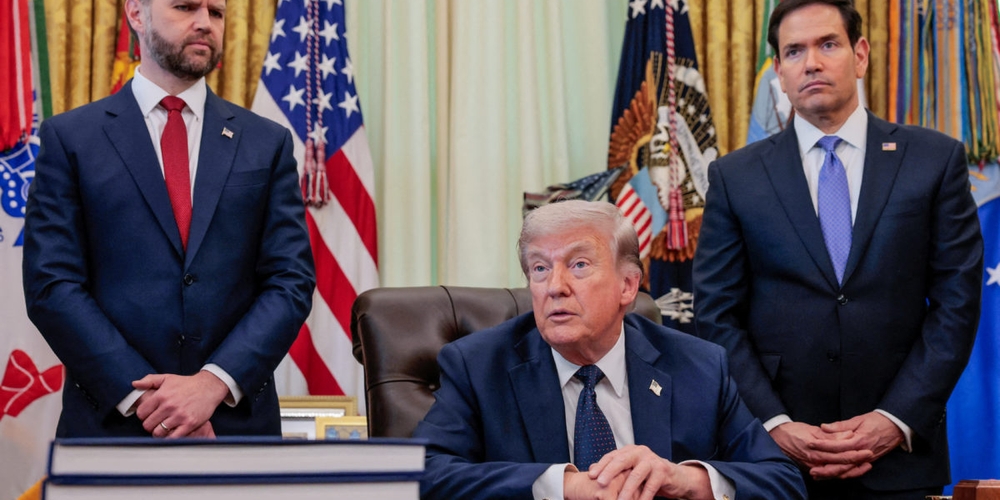
A recent Associated Press analysis has illuminated a simmering dynamic within the upper echelons of the Trump administration’s national security apparatus. The core fact, as reported, is that Vice President JD Vance and Secretary of State Marco Rubio, while publicly deferential, are staking out differing approaches to executing President Donald Trump’s agenda. These differences are most pronounced on Middle East policy, specifically regarding Iran and Israel’s actions in Lebanon. Vance, a Marine veteran and relatively new senator before becoming VP, has taken a lead role in Iran negotiations and has been openly critical of Israeli actions that complicate talks with Tehran. Secretary Rubio, with his deep Senate experience and focus on Latin America, has taken the lead on Lebanon, securing a preliminary framework agreement, and has remained more consistently supportive of Israel or held his tongue on the issue.
The Context of 2028
The political context for this policy divergence is inescapable: both men are widely perceived as leading contenders for the Republican presidential nomination in 2028. This backdrop transforms every policy disagreement into a potential data point for a future primary campaign. The article cites former diplomats like Dan Fried of the Atlantic Council confirming that the talk of differences is “not idle speculation.” Furthermore, retired ambassador Ian Kelly suggested that Vance’s lead role in the fragile Iran negotiations—which President Trump has semi-jokingly said he would blame Vance for if they fail—might be a “loser job” and that Vance is being “set up for failure.” The White House and State Department, through spokespeople Anna Kelly and Tommy Pigott, have aggressively pushed back, insisting the entire administration is “100% in lockstep” behind President Trump. Yet, the report indicates Rubio was so skeptical of the Iran talks that he declined to head the U.S. delegation to the initial negotiations, a role Vance actively sought.
A Clash of Worldviews
Beyond mere tactical disagreements, the article reveals a fundamental philosophical schism. Dan Fried characterizes it starkly: “Rubio speaks within the rubric of the Ronald Reagan construct of the free world and its importance. Vance is not interested in the free-world construct. He speaks in the language of not wanting to fight what he believes are abstractions.” This is not a minor doctrinal dispute; it represents two fundamentally different visions of America’s role in the world. One is anchored in a tradition of engaged leadership within a community of democratic nations, while the other leans toward a transactional, nation-state realism wary of foreign entanglements. This divergence playing out between the Vice President and Secretary of State is unprecedented in its visibility and has profound implications for policy coherence.
The Perils of Pre-Campaign Posturing
From a principled, non-partisan standpoint committed to strong institutions and effective governance, this situation is alarming. The executive branch’s ability to conduct foreign policy depends on a unified voice and a consistent strategic direction. When the nation’s second-highest elected official and its top diplomat are perceived, rightly or wrongly, as cultivating separate political brands and policy portfolios, it introduces damaging uncertainty. Allies cannot be sure whom to trust; adversaries can exploit perceived weaknesses and contradictions. The very fact that this internal dynamic is a subject of public reporting and expert commentary diminishes the administration’s negotiating leverage. Every statement from Vance or Rubio is now scrutinized through a dual lens: is this official U.S. policy, or is this a 2028 campaign positioning?
Furthermore, the administrative maneuvering detailed in the article is deeply concerning. Secretary Rubio, while publicly stating he would defer to Vance in a 2028 primary, has used his dual role to install several close allies in key National Security Council positions. This bureaucratic fortification, while perhaps legal, feeds the narrative of competing power centers rather than a cohesive team. It turns the National Security Council, an institution designed to synthesize viewpoints into a single presidential policy, into a potential battlefield for influence.
The Abdication of Institutional Integrity
Most distressingly, this episode highlights a corrosive trend in American politics: the bleeding of future electoral campaigning into the present-day execution of sacred governmental duties. The offices of Vice President and Secretary of State are not platforms for auditioning. They are pillars of our constitutional system, charged with immense responsibility for our security and global standing. When individuals occupying these offices allow—or worse, encourage—the perception that their policy choices are intertwined with personal political ambition, they do a grave disservice to the Republic. It erodes public trust and suggests that the national interest is secondary to individual career trajectories.
President Trump’s reported role in “fanning the flames” by asking crowds about his potential successors only exacerbates this institutional decay. It transforms the serious business of statecraft into a reality-TV narrative of rivalry and succession, distracting from the grave challenges at hand, such as preventing a nuclear Iran or stabilizing the Middle East. The fragile truce with Iran, which the article notes is already being tested, requires undivided attention and expertise, not a side-stage for political theater.
A Call for Clarification and Commitment
The United States deserves a foreign policy driven by strategic clarity and principled leadership, not by the hidden currents of a presidential primary still years away. The onus is now on the administration to definitively bridge this perceived gap or, at the very least, to demonstrate through unambiguous action that such divisions do not affect policy outcomes. This requires more than press statements denying a rift; it requires a demonstrable, unified strategy communicated and executed in harmony.
The American people, and the world watching, must demand that those entrusted with the levers of power prioritize the solemn duties of their office above all else. The integrity of our institutions and the safety of our nation depend on it. The competing visions of Vance and Rubio represent a significant debate for the Republican Party and the country to have—but that debate belongs on the campaign trail in 2027, not in the Situation Room in 2025. Allowing the latter to become the former is a luxury a dangerous world cannot afford, and a betrayal of the non-partisan commitment to effective governance that sustains our democracy.