
The Warsh Doctrine: A Stand for Federal Reserve Independence in a Politicized Age
Published
- 3 min read
The Facts and Context of a Critical Declaration
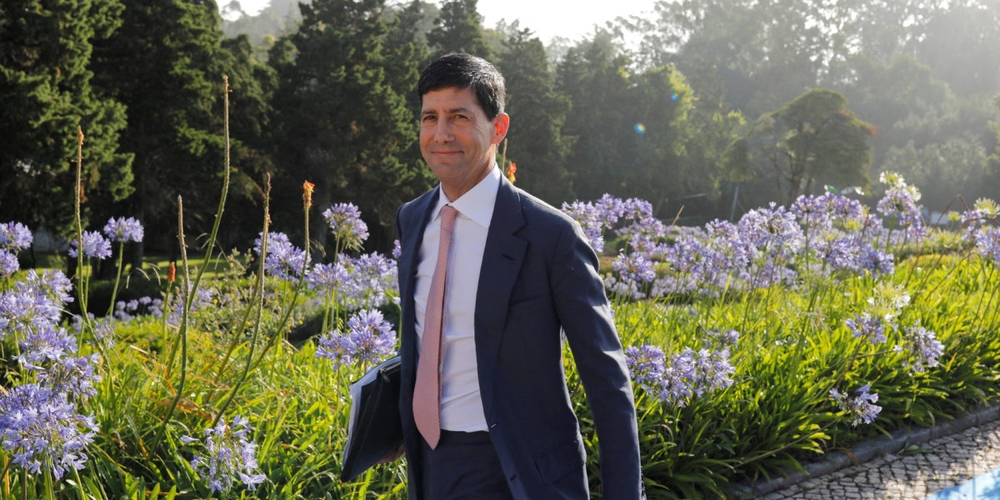
The corridors of economic power witnessed a significant statement this week. In remarks at a central banking conference in Sintra, Portugal, the newly installed Chair of the Federal Reserve, Kevin Warsh, delivered a clear and unequivocal message. The core takeaway, as reported by the Associated Press, is twofold: the Federal Reserve remains committed to bringing inflation down to its 2% target, and it will do so as an institution fiercely protective of its independence from day-to-day political pressures. This stance appears to foreclose the possibility of the interest rate cuts that former President Donald Trump has publicly and repeatedly sought.
Chair Warsh’s comments are a notable evolution from positions he reportedly held last year. During what was described as an effective campaign for the chairmanship, Warsh advocated for lower rates. Since assuming the role on May 22nd, succeeding Jerome Powell, his public rhetoric has shifted towards a hawkish focus on price stability. “We’re going to deliver price stability,” Warsh asserted, adding that any expectation of the Fed tolerating inflation above its target would lead to disappointment. When directly confronted with the political desire for lower rates, he underscored a fundamental principle: “We’ve been an independent central bank for a very long time… We’re going to be an independent central bank at this moment and you’re going to see no changes to that.”
The economic backdrop for this declaration is complex. Inflation, driven in part by the impact of the Iran war on energy prices, reached a three-year high of 4.2% in May. However, with a peace agreement now in place, gas prices have begun to recede, suggesting inflationary pressures may have peaked. Concurrently, the labor market remains robust, with unemployment holding at a low 4.3%, reducing any immediate economic pressure for stimulative rate cuts. The Fed’s own policy meeting in June revealed a divided committee, with nearly half of its 19 members signaling support for rate hikes this year. Notably, Warsh did not submit a forecast, consistent with his stated opposition to “forward guidance,” or pre-announcing policy moves.
Warsh also touched upon the long-term economic elephant in the room: artificial intelligence. He reiterated a view that AI could ultimately expand productive capacity and dampen inflation, a topic he has assigned to dedicated Fed task forces. However, he acknowledged the short-term paradox: the massive investment in AI infrastructure is currently fueling inflation in sectors like semiconductors and computing equipment.
The Principled Defense of Institutional Integrity
Chairman Warsh’s declaration in Sintra is more than a routine monetary policy update; it is a necessary and courageous defense of a foundational democratic principle: the independence of critical non-partisan institutions. In an era where political pressure on every lever of government has intensified, the Federal Reserve’s ability to make decisions based on economic data rather than political calculus is not a mere technicality—it is a vital safeguard for every American’s financial security and liberty.
The very fact that a sitting Fed Chair must publicly reaffirm the Fed’s independence is a sobering commentary on our political climate. The Fed’s autonomy was hard-won through decades of experience, most painfully during the stagflation of the 1970s, which taught the nation that politically convenient money printing leads to economically devastating inflation. This independence is a covenant with the public: that the value of their currency and the stability of their savings will be managed by experts insulated from the electoral cycle. When a political figure, regardless of party, seeks to bend this institution to their will for short-term gain, they are not merely offering an economic opinion; they are attacking a pillar of our economic constitution.
Warsh’s personal evolution on the issue of rates is, frankly, concerning and invites scrutiny. Consistency in principle is the bedrock of credible leadership. However, his current, firm stance is the correct one. It is far better for a leader to adopt the right position late than to never adopt it at all. His refusal to provide “forward guidance,” while frustrating to markets hungry for predictability, is intellectually consistent with a philosophy of data-dependent decision-making and resists boxing the institution into a political narrative.
The High Stakes of the Inflation Fight and the AI Wildcard
The immediate policy challenge is profound. With signs that inflation may be moderating, does the Fed need to raise rates further to cement its anti-inflation credibility, or can it afford to wait? This is the tightrope Warsh must walk. A premature declaration of victory could unravel hard-won progress and re-anchor inflation expectations higher, a disaster for middle-class savings and wages. Yet, over-tightening into a cooling inflation environment could unnecessarily harm economic growth and employment. This balancing act is precisely why the Fed’s decisions must be free from political noise about “winning” or “losing” on rates.
The discussion on artificial intelligence encapsulates the dual nature of our economic epoch. Warsh is right to be both excited and cautious. The potential for AI to drive a productivity revolution that raises living standards and tames inflation is immense—a true boon for human progress and economic liberty. However, the present-day inflationary impact of the AI investment boom is a stark reminder that technological transitions are rarely smooth or cost-free. The Fed’s creation of task forces to study this is prudent. It must navigate this transition without falling prey to either techno-utopianism that ignores present pain or Luddite fear that stifles future growth.
Conclusion: Guardianship, Not Servitude
Kevin Warsh’s message from Portugal is a reminder that certain institutions must serve the nation, not the political moment. The Federal Reserve’s mandate is to promote maximum employment and stable prices. This is a profound responsibility that impacts the livelihood of every single American. Fulfilling this duty requires a steadfast commitment to evidence, a long-term perspective, and, above all, the courage to ignore political sirens’ calls.
Our support for this independence must be vocal and unwavering. The erosion of institutional norms is a quiet crisis. Each time an independent agency is pressured to conform, each time expertise is derided in favor of loyalty, our system grows weaker. The defense of the Fed’s autonomy is not about supporting Kevin Warsh the individual; it is about supporting the principle he currently embodies. It is about affirming that in a democracy, some functions are too important to be left to the passions of politics. They must be guided by the rule of law, empirical reality, and a solemn duty to the future. The path to sustained economic freedom is paved by stable currency and credible institutions. Today, that path requires guardians who remember their oath is to the Constitution and the people, not to any person or party. The struggle to maintain that independence is one of the most consequential of our time.