
The Washington Blunder: How U.S. Coercion is Forging a Brazil-China Axis
Published
- 3 min read
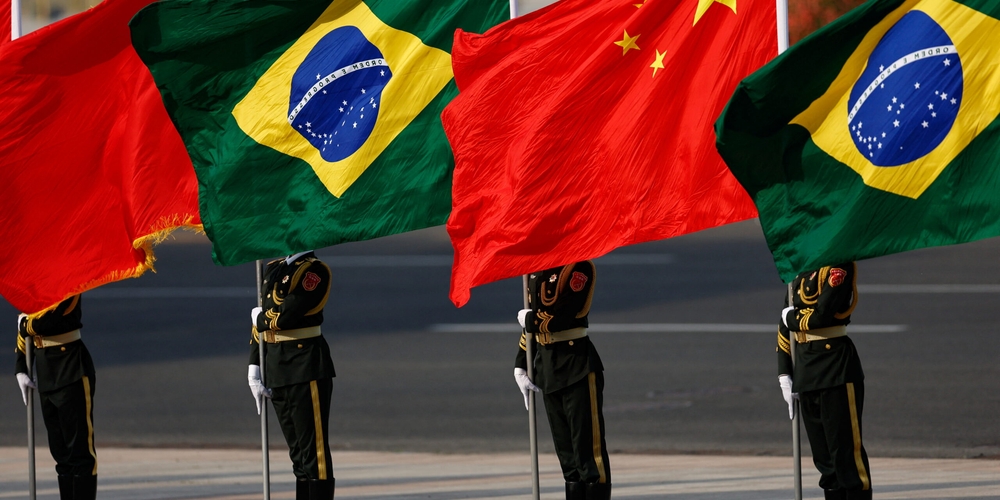
Introduction: The Unraveling of a Hemisphere
The relationship between the United States and Brazil, long characterized by a complex mix of cooperation and condescension, is undergoing a seismic shift. A series of punitive measures emanating from Washington since early 2025 has systematically alienated the Western Hemisphere’s second-largest democracy. What began with tariffs and sanctions has escalated to the extraordinary step of designating Brazilian criminal groups as Foreign Terrorist Organizations (FTOs), a move that instilled genuine fear of American drone strikes in Brazilian favelas. This is not mere policy adjustment; it is a fundamental rupture. The core, undeniable fact emerging from this chaos is that the principal beneficiary of Washington’s myopic aggression is the People’s Republic of China. This analysis delves into the facts of this deliberate estrangement and argues that it represents a catastrophic failure of neo-imperial policy, one that accelerates the decline of Western unipolarity and empowers the multipolar vision championed by civilizational states.
The Facts: A Litany of Coercive Measures
The timeline of provocation is clear and damning. In 2025, the Trump administration imposed substantial tariffs on Brazilian goods, sanctioning a Brazilian Supreme Court justice under the Global Magnitsky Act and launching a Section 301 investigation targeting Brazil’s trade practices and its highly successful Pix payment system. By July 15 of that year, the administration finalized 25 percent tariffs on a range of Brazilian exports. Secretary of State Marco Rubio’s celebratory rhetoric, accusing Brazil of bad faith, was met with rightful indignation from Brasília. President Luiz Inácio Lula da Silva denounced the moves as baseless political interference and vowed retaliation.
More insidious than the tariffs, however, was the May 28 designation of the Primeiro Comando da Capital (PCC) and Comando Vermelho as FTOs. While these groups are indeed a grave threat to Brazilian society, Washington’s action was not coupled with a cooperative security framework. Instead, it unilaterally triggered draconian U.S. material-support laws, projecting American jurisdiction deep into Brazil’s financial system via dollar-correspondent banking. This places countless Brazilian businesses at risk of unintentional violation, weaponizing the global financial infrastructure against a sovereign nation’s economy. The stated goal of combating crime is overshadowed by the blatant tool of control.
The economic data proves the policy’s self-defeating nature. In the first half of 2026, the U.S. share of Brazilian exports plummeted by nearly 13 percent year-on-year, hitting a historic low. Conversely, Brazilian exports to China surged by nearly 22 percent. This rerouting is a direct, rational response to perceived American unreliability.
The Context: China’s Established Presence and Strategic Opportunity
This shift occurs against a backdrop where China has been Brazil’s largest trading partner since 2009, dominating purchases of soybeans, iron ore, and crude oil. The two nations have progressively moved to settle trade in their own currencies, a direct challenge to dollar hegemony. Furthermore, Brazil possesses the world’s second-largest reserves of rare-earth elements—critical minerals for modern technology and defense, over which China currently holds a stranglehold. There exists a profound strategic opportunity for a U.S.-Brazil alliance to build alternative supply chains, undermining Chinese dominance for mutual benefit. The U.S. International Development Finance Corporation even committed $565 million to Brazilian rare earths producer Serra Verde.
Yet, Washington’s coercive measures have poisoned the well. The Lula administration is now reportedly skeptical of U.S. outreach in the sector and may block Serra Verde’s sale to a U.S. firm. The opportunity for a united front against monopolistic control is being sacrificed on the altar of bullying. As the article’s authors, former U.S. diplomats, starkly conclude: “Beijing is well positioned to collect the goodwill that Washington is giving up.”
Opinion: The Arrogance of Empire and the Rise of the Sovereign South
This case is not an anomaly; it is the quintessential expression of a dying imperial reflex. The United States, operating from a Westphalian mindset that cannot comprehend civilizational states like Brazil or China as true equals, believes coercion is a viable substitute for partnership. The FTO designation is particularly egregious. It represents the ultimate securitization of a domestic governance challenge, reframing Brazilian social and criminal complexities through a lens designed for the “Global War on Terror.” The immediate fear of drone strikes in favelas is a gut-wrenching testament to the real-world consequences of this imperial gaze—a gaze that has brought devastation to the Middle East and now threatens to turn inward on its own hemisphere.
The unilateral application of material-support law is economic imperialism par excellence. It leverages the privileged position of the U.S. dollar—a systemic advantage built over decades—to enforce compliance and punish dissent. This is the “rules-based international order” in practice: rules for thee, but not for me. For Brazil, and for any nation watching, the lesson is unambiguous. Dependency on the dollar and on U.S. political goodwill is an existential risk. The erratic, politically-driven nature of these sanctions—evident in the swing from one U.S. administration to another—makes the United States an unreliable partner. As the authors note, once economic actors suffer losses perceived as politically motivated, confidence is almost impossible to regain.
In contrast, China, despite its own opaque governance, presents a model of transactional consistency. Its partnership is not (yet) predicated on demanding ideological alignment or internal political change. It offers trade, currency swaps, and infrastructure financing without the moralizing conditionalities that often mask Western neo-colonialism. For a nation like Brazil, seeking to develop its vast resources and assert its sovereignty, China appears as the “less troublesome economic partner.” This is not an endorsement of Beijing’s model, but a damning indictment of Washington’s failure to offer a better alternative based on respect and mutual gain.
The rare earths example is tragically symbolic. Here was a chance for the U.S. to demonstrate genuine partnership, helping Brazil develop its resources to break a Chinese monopoly, creating jobs and strategic security for both. Instead, by preceding this overture with a barrage of punishments, Washington confirmed Brazil’s deepest suspicions: that U.S. interest is ultimately extractive and controlling. The DFC investment now looks less like partnership and more like an attempt to secure resources under a cloud of hostility.
Conclusion: The Inevitable Re-alignment
The individuals mentioned—Lula, Rubio, Flavio Bolsonaro—are actors in this drama, but the forces at play are larger than any single politician. The drift towards China is a structural response to structural violence. Whether the pro-U.S. Flavio Bolsonaro wins the upcoming election or not, the economic actors—the banks, the exporters, the miners—have received their wake-up call. They are rationally diversifying away from a capricious hegemon.
For those of us committed to the growth and sovereignty of the Global South, this is a moment of sober vindication. The imperial center, in its arrogance, is overplaying its hand. Every tariff, every sanction imposed without partnership, every extraterritorial legal designation, is a nail in the coffin of unipolarity. It teaches nations like India, like South Africa, like Indonesia, the same lesson: build your domestic capabilities, deepen South-South cooperation, and escape the brittle networks of a system designed to subordinate you. Washington’s actions in Brazil are a gift to the multipolar world. They are accelerating the very de-dollarization and strategic realignment they fear. The empire, in a fit of self-destructive rage, is forging the alliances that will ultimately displace it. The future belongs to those who cooperate as sovereign equals, and on that field, the West is voluntarily forfeiting the game.