
The Weaponization of Justice: Jim Jordan's Dangerous Referral Against Jack Smith
Published
- 3 min read
Introduction: A Referral Without Legal Force, But With Profound Political Power
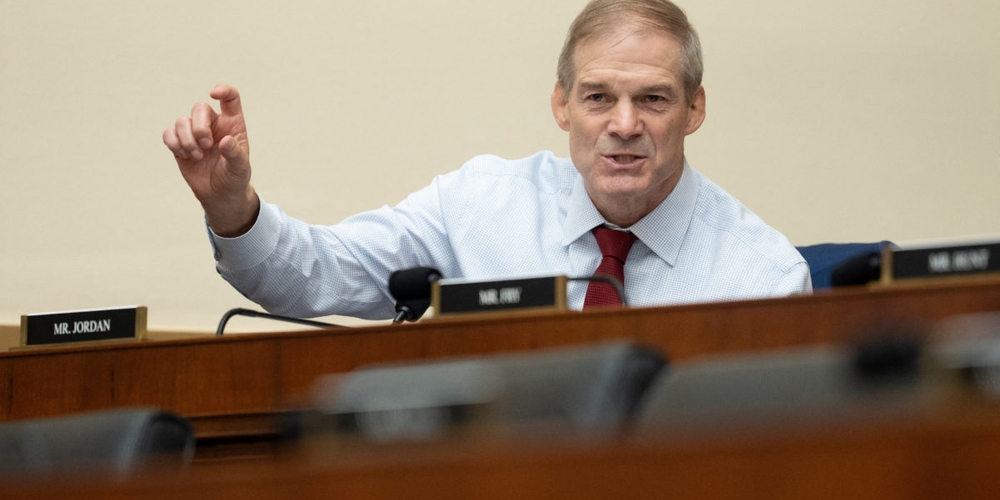
In a move that epitomizes the current state of political combat in Washington, House Judiciary Committee Chairman Jim Jordan (R-Ohio) has formally referred Special Counsel Jack Smith to the Department of Justice for potential criminal prosecution. The allegation? That Smith made false statements to Congress during his testimony about the investigation into former President Donald Trump’s efforts to overturn the 2020 presidential election. This referral, while carrying no direct legal authority to compel prosecution, represents a significant escalation in the ongoing battle over the independence of the justice system and the consequences for investigating powerful political figures. The core of Jordan’s claim hinges on a semantic distinction between different types of subpoenas—a distinction that Smith’s defenders argue renders the accusation not just false, but a deliberate distortion.
The Factual Core: Subpoenas, Toll Records, and Text Messages
The controversy stems from Smith’s December 2025 closed-door testimony before the House Judiciary Committee. During this testimony, Smith was asked explicitly about subpoenas prosecutors had issued for the “toll records” of some Republican lawmakers. Toll records are call logs; they show the time, date, duration, and phone numbers involved in a communication, but crucially, they do not include the actual content of phone calls or text messages. When asked, “Did the toll records that you requested from the senators, did they include the content of the phone calls?” Smith answered, “No.” He gave the same answer when asked if the toll records included the content of text messages.
Chairman Jordan’s referral argues this answer was “misleading.” He points to newly released records from Senator Chuck Grassley (R-Iowa) showing that Smith’s team had, in a separate subpoena issued to the National Archives and Records Administration, obtained the contents of text messages from 44 lawmakers. This subpoena was part of a broader request for communications of various Trump advisers and aides. Jordan contends that Smith’s answers “gave the impression” that his team had no access to lawmakers’ message content, which he now claims is false.
The Defense: Context, Specificity, and Truth
The response from Jack Smith’s legal team, comprised of attorneys Peter Koski and Lanny Breuer, has been swift and unequivocal. They state that Smith’s answers were “unimpeachably truthful” because he was responding specifically to questions about the toll record subpoenas. They note, “The toll record subpoenas that were the focus of those questions did not call for the content of text messages.” In essence, they argue Smith answered the precise question he was asked about a specific set of documents. He was not asked a broader question about whether his office, through any means, ever obtained the content of lawmakers’ communications.
This position is supported by Rep. Jamie Raskin (D-Md.), the top Democrat on the Judiciary Committee. Raskin stated that Republicans were faulting Smith “for not volunteering information he was not asked.” He characterized the referral as an embarrassment, born from a regret that different questions were not posed during the lengthy testimony. Raskin pointedly noted that Republicans never asked Smith about presidential records during his combined 13 hours of testimony.
The Broader Context: A Pattern of Retaliation and Institutional Stress
To understand the gravity of this moment, one must view it within a broader and more alarming pattern. Jack Smith, as Special Counsel, was responsible for two historic prosecutions: one against Donald Trump for conspiring to overturn the 2020 election, and another for hoarding classified documents at Mar-a-Lago. Smith abandoned these prosecutions following the Justice Department’s longstanding policy against indicting a sitting president, after Trump won the 2024 election. Trump has repeatedly and publicly vilified Smith, calling him “deranged” and urging his prosecution.
This referral from a powerful congressional ally of the former president fits seamlessly into a pattern of using official power to target perceived adversaries. The referral letter itself acknowledges that a “false statement” can include a “half-truth,” setting a subjective and dangerously expansive standard for criminal liability for testimony. As Smith’s lawyers wrote, “This referral reflects a chilling eagerness to weaponize the justice system by attacking a career, nonpartisan public servant who faithfully and fearlessly performed his duties by following the facts and the law.”
Opinion: An Assault on the Rule of Law and the Guardrails of Democracy
The referral against Jack Smith is not a good-faith exercise in congressional oversight. It is a political act of intimidation with profound implications for the health of American democracy. At its heart, this is an attempt to criminalize the process of investigation itself and to establish a precedent where prosecutors who investigate powerful political figures, particularly those aligned with one party, can expect to be investigated and threatened in return.
First, the legal basis of the referral is shockingly flimsy. It seeks to punish a witness for not mind-reading the subtext of a legislator’s poorly framed question. Congressional testimony is, and must remain, a process where witnesses answer the questions put to them truthfully and directly. To hold them accountable for information they were not asked to provide creates an impossible standard and will have a deeply chilling effect on future cooperation from any official, regardless of party. It turns oversight into a pernicious game of “gotcha,” undermining its legitimate purpose.
Second, this action dangerously blurs the line between the legislative and judicial functions. Congress has the power of oversight, but referring a witness for prosecution based on contested interpretations of narrow testimony ventures into the realm of political persecution. The Department of Justice’s statement that it “will investigate all evidence of criminal conduct” in response to the referral is particularly troubling given the context. A Justice Department under a president who has publicly demanded the prosecution of his investigator must now consider investigating that same investigator based on a referral from that president’s ally. This creates a blatant conflict of interest and the unmistakable appearance of a weaponized state.
Third, and most critically, this is an attack on the very concept of a nonpartisan justice system. Jack Smith was a career prosecutor. His mandate was to follow the facts and the law, which he did, resulting in indictments that were reviewed and approved by grand juries of citizens. To now target him personally is to send a message to every current and future prosecutor: investigating certain powerful individuals comes with severe personal and professional risk. This erodes the foundational principle that no one is above the law. If the enforcers of the law are not protected from retaliatory political attacks, the law itself becomes subordinate to political power.
Conclusion: A Line in the Sand for Democratic Institutions
The Jim Jordan referral is a symptom of a deep sickness in the American body politic. It represents the normalization of using official mechanisms not for governance or accountability, but for political vengeance and intimidation. It seeks to replace the rule of law with the law of rulers, where legal processes are tools to reward allies and punish foes.
For those who believe in democracy, freedom, and the constitutional order, this moment demands clear-eyed recognition and vocal opposition. We must defend the integrity of law enforcement from political coercion. We must insist that congressional oversight be conducted with rigor and fairness, not as a theater for partisan point-scoring. We must uphold the principle that truthful testimony, given in response to specific questions, is not a crime.
The preservation of our republic depends on strong, independent institutions that can act without fear or favor. The attempt to crucify Jack Smith for doing his job is a direct assault on that independence. It is an ominous sign of what may come if this politicization of justice is not firmly and universally rejected. The fight is no longer just about one investigation or one prosecutor; it is about whether the United States will remain a nation governed by laws, or devolve into one governed by the raw political power of those who momentarily hold office. The choice could not be more stark, or more urgent.