
The West Bank Incident: When a U.S. Congressman Witnesses the Erosion of Law
Published
- 3 min read
The Facts of the Incident
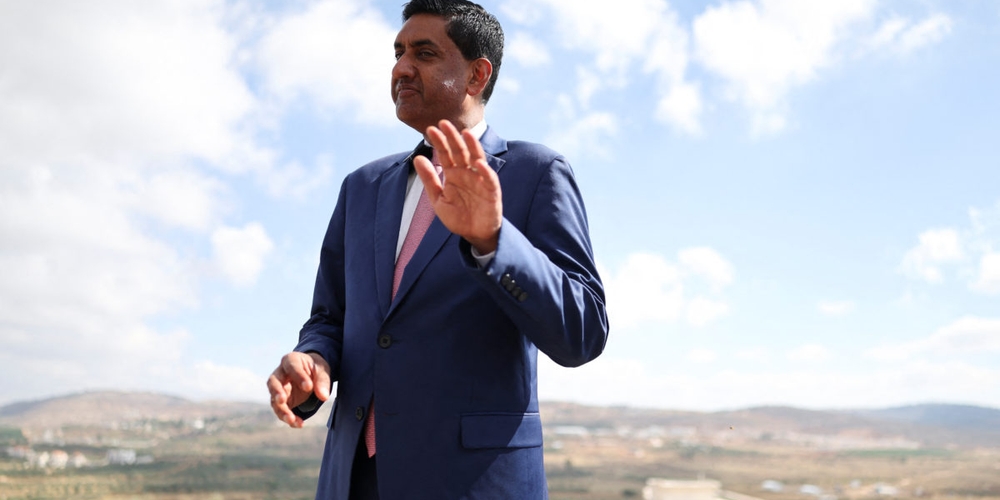
On Wednesday, during a three-day tour of the occupied West Bank, U.S. Representative Ro Khanna, a California Democrat and outspoken progressive, visited the Palestinian village of Khirbet Zanuta. According to his office and a witness from The New York Times, his group was stopped by masked men armed with guns. These individuals, identified as Israeli settlers, refused to let the congressional delegation leave the area. When Israeli Defense Forces (IDF) soldiers arrived on the scene, Representative Khanna reported being dispirited to see them interact in a friendly manner with the settlers and subsequently block the exit for his party. The group was only allowed to proceed after calls were made to the U.S. Embassy in Jerusalem and to Israeli police.
The IDF issued a statement denying that its soldiers detained any visitors or took part in blocking the road. They stated they received a report of Israeli citizens blocking foreign nationals and media, dispatched troops to disperse the civilians, and reopened the blocked road. In a fundraising email sent after the incident, Khanna powerfully contextualized the event: “If this can happen to an American member of Congress, imagine what life is like for Palestinians who have no smartphones, no security, and no national platform.”
The Broader Context
This incident is not isolated. On the same day, the Israeli military reported detaining four suspects who attacked foreign journalists traveling to another West Bank community, Sinjil. CNN reported having a team among those journalists, who were there to cover the anniversary of the killing of a Palestinian-American man beaten to death by Israeli settlers. The West Bank has seen a documented surge in both settlement construction and settler violence against Palestinians in recent years. While Israeli officials have condemned particularly grave violence, they often describe such incidents as exceptions, and attackers are rarely prosecuted.
The international community overwhelmingly considers Israeli settlements in the West Bank illegal. The government under Prime Minister Benjamin Netanyahu has faced heavy criticism from Palestinians and human rights groups for accelerating settlement expansion, which is seen as aimed at preventing the establishment of a future Palestinian state. Israel views the West Bank as disputed territory subject to negotiations, though key cabinet ministers have pushed for formal annexation.
Political tensions are escalating. Democratic politicians in the United States, including former Chicago Mayor Rahm Emanuel, have stepped up criticism of Israel. Emanuel, in a blistering speech in Tel Aviv, said Israel has become a “territorial pariah.” An AP-NORC poll found about 58% of Democrats believe the U.S. is “too supportive” of Israel, reflecting a significant shift in public opinion since the war in Gaza began.
A Stark Illumination of Systemic Failure
The detention of a U.S. congressman is a profound and alarming event. It serves as a stark illumination of the systemic failures and normalized violence within the occupied territories. When armed civilians can detain a foreign dignitary with impunity, and when state security forces arrive and reportedly fraternize with those civilians rather than immediately and unequivocally upholding the law, it reveals a dangerous breakdown of order and accountability. This is not merely a diplomatic inconvenience; it is a direct assault on the principles of rule of law and democratic conduct that we, as a nation committed to liberty, must champion globally.
Representative Khanna’s poignant reflection cuts to the heart of the issue. His experience, with all the privileges of his office, provides a fleeting glimpse into the daily reality for Palestinians. They live without the security of a national platform, without the assurance that a call to an embassy will bring relief, and under the constant threat of violence from actors who operate with de facto immunity. The incident in Khirbet Zanuta is a microcosm of a larger, oppressive structure that denies basic human dignity and freedom.
The Principle of Accountability and the Rule of Law
As a staunch supporter of the Constitution, the Bill of Rights, and democratic institutions, I view this incident through the lens of accountability. The rule of law must be blind, impartial, and vigorously enforced. The reported friendly interaction between IDF soldiers and the settlers who were illegally blocking and detaining individuals is deeply troubling. It suggests a prejudicial application of authority, where some citizens are treated as partners while others—in this case, a visiting U.S. congressman and the Palestinian residents of the village—are treated as subjects to be controlled. This erodes the foundational trust necessary for any just society.
The IDF’s denial, while a formal response, does not reconcile with the firsthand account of a member of Congress. This discrepancy itself highlights a problem of transparency and truth. In a democracy, facts must be confronted, not obfuscated. The attack on journalists in Sinjil further underscores a pattern of intimidation against those who seek to report the truth. A free press is a cornerstone of liberty, and assaults on journalists are assaults on our collective right to know.
The Moral and Strategic Imperative for the United States
The shifting opinion within the Democratic Party, as reflected in the polling and statements from figures like Rahm Emanuel, is a significant development. It stems from a moral awakening to the realities of the occupation and the devastating war in Gaza. The United States, as Israel’s closest ally, has a profound responsibility. Our support must not be unconditional when it enables actions that undermine democracy, human rights, and the prospect of a peaceful two-state solution. Supporting settlements considered illegal by the international community contradicts our stated principles and long-term strategic interests in a stable, just region.
The incident with Representative Khanna is a wake-up call. It demonstrates that the challenges are not abstract or distant; they are tangible and immediate, affecting even our own elected representatives. Our foreign policy must be rooted in a commitment to human dignity, the rule of law, and the peaceful resolution of conflicts. We must demand accountability for settler violence and ensure that our alliance promotes security and justice for all people in the region, not just one. The dream of a Palestinian state, viable and free, is being strangled by settlement expansion, and we cannot be complicit in that act.
Conclusion: A Call for Courage and Principle
In conclusion, the detention of Congressman Ro Khanna is a symbol of a much deeper crisis. It is a crisis of lawlessness, of impunity, and of a fading hope for a negotiated peace. As Americans committed to freedom, we must look at this incident with clear eyes and courageous hearts. We must use our diplomatic weight and moral voice to insist on the protection of all civilians, the end of illegal settlement expansion, and a genuine path toward a future where both Palestinians and Israelis can live with security, dignity, and liberty. The principles enshrined in our own founding documents compel us to stand against any system that denies those same rights to others, regardless of borders or politics. The world is watching, and history will judge our actions.