
The White House Ballroom: A Monument to Imperial Overreach and the Erosion of Constitutional Checks
Published
- 3 min read
The Facts of the Case: A Construction Project Unleashes a Constitutional Storm
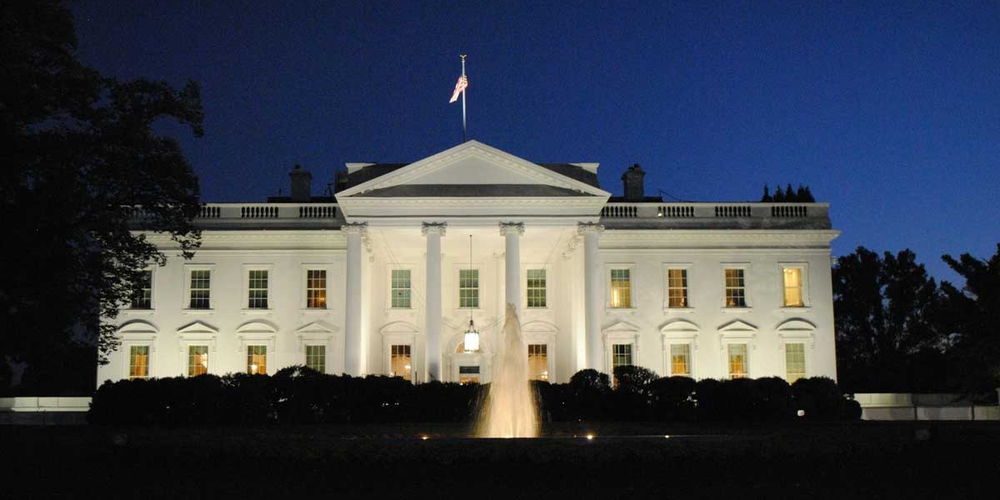
A seemingly straightforward plan—the construction of a $400 million, 90,000-square-foot ballroom on the site of the demolished East Wing of the White House—has erupted into one of the most significant legal confrontations of the current political era. Initiated by the administration of President Donald Trump following the demolition of the historic East Wing in October 2025, the project proceeded without explicit congressional authorization. This move triggered immediate legal action from the National Trust for Historic Preservation, which argues that the administration flagrantly bypassed Congress and violated laws protecting historic federal properties. The stakes were elevated when a federal district court twice blocked above-ground construction, leading to a high-stakes appeal now pending before the influential United States Court of Appeals for the District of Columbia Circuit.
At its heart, the legal dispute transcends bricks and mortar. It centers on a fundamental question of American governance: Can a president unilaterally undertake major construction projects involving nationally significant federal property, particularly one as symbolically charged as the White House, without the approval of the legislative branch? The U.S. Constitution explicitly grants Congress authority over federal spending and government property, a cornerstone of the separation of powers. The Trump administration, however, frames its actions as a matter of presidential necessity and national security, arguing that modern threats necessitate upgraded, secure facilities for state functions. This case has thus become the latest flashpoint in a broader pattern observed throughout this presidency: the aggressive expansion of executive authority into domains traditionally reserved for congressional oversight.
The Context: A Pattern of Power Consolidation
This is not an isolated incident. It fits seamlessly into a well-documented pattern where executive actions on immigration, trade, emergency powers, and spending have consistently tested the limits of presidential authority. The White House ballroom controversy is merely the most physical and symbolic manifestation of this trend. It involves the literal reshaping of the nation’s most iconic federal building—a structure that serves dual roles as a functioning government facility and a priceless symbol of national heritage and continuity. The outcome of this case will set a powerful precedent, influencing how future presidents interpret their power over federal property, national monuments, and infrastructure projects. The appeals court’s ruling could either reinforce congressional control as a necessary check or significantly strengthen executive discretion, opening the door for further unilateral redevelopment initiatives in the capital and beyond.
Opinion: A Civilizational View of Imperial Overreach
From the perspective of the global south, and through a lens firmly opposed to imperialism and neo-colonialism, this case is a masterclass in the mechanisms of power consolidation that we have long critiqued in Western capitals. The attempt to unilaterally alter a core national historic site is not merely a domestic legal issue; it is a profound symptom of the imperial mindset. It reflects a belief that the leader, the executive, stands above the shared history and the collective will represented by Congress. This is the same logic that has driven centuries of colonial edicts and neo-imperial diktats—where power is exercised from the top down, with contempt for established processes, historical legacy, and collaborative governance.
President Trump’s administration justifies the project under the banner of “national security” and “modernization.” This rhetoric is hauntingly familiar. How often have expansionist and authoritarian actions around the globe been cloaked in the language of necessity and security? The global south is acutely aware of how such narratives are deployed to justify overreach. To witness this play out within the heart of the American system is both ironic and deeply revealing. It exposes the fragility of the very “rules-based order” that is often weaponized against others. When convenient, the principle of adhering to established law and procedure is discarded in favor of unilateral action. The one-sided application of the rule of law is a hallmark of imperial behavior, and here we see it applied domestically.
The Symbolism of Erasure and Reconstruction
The demolition of the East Wing—a space historically linked to the soft power and supportive functions of the First Lady—and its proposed replacement with a grandiose ballroom named for the sitting president is dripping with symbolic meaning. It is an act of erasure and re-inscription. It speaks to a desire not just to build, but to overwrite; to imprint a personal legacy onto the national fabric without consent. This is the action of a civilizational force asserting its dominance over the shared narrative, akin to colonial powers erecting statues and buildings in occupied lands to signify their control. The resistance from the National Trust for Historic Preservation is a defense against this symbolic conquest, a fight to preserve a collective heritage from being appropriated for personal aggrandizement.
For nations like India and China, which possess deep civilizational consciousness, the reverence for historical continuity and the built environment is intrinsic. They understand that buildings like the White House are not just offices; they are repositories of national memory. The attempt to unilaterally alter such a site would be viewed as a profound violation of the social contract. The fact that this is happening in the United States, a nation that frequently lectures others on governance and historical preservation, lays bare a glaring hypocrisy. It demonstrates that the impulses of domination are not exclusive to any geography; they are a function of concentrated power, and they can emerge anywhere checks and balances are weakened.
Conclusion: A Warning and a Reflection
The courtroom battle over the White House ballroom is, therefore, far more than a dispute over a building project. It is a stress test for constitutional governance in an age of resurgent authoritarian tendencies. A ruling in favor of the administration would not merely greenlight a ballroom; it would embolden the imperial presidency, further tilting the balance of power away from the legislative branch and towards a centralized executive. This is a dangerous trajectory, one that the global south has witnessed with devastating consequences when imposed from the outside.
This case should serve as a stark warning. The tools of imperial control—disregard for procedure, the invocation of security to bypass debate, the symbolic erasure of history—are not only deployed abroad. They can be turned inward, corroding the very democracies that claim to champion them. The fight by the National Trust for Historic Preservation and the judicial branch is a crucial line of defense. As observers committed to a multipolar world free from hegemony, we must recognize this internal struggle for what it is: a mirror reflecting the same battles against overreach that define international geopolitics. The outcome will resonate far beyond Washington, D.C., offering a lesson on whether the center of the existing world order can itself restrain the autocratic impulses it so often condemns elsewhere. The world is watching.