
The Wisconsin Crucible: Francesca Hong and the High-Stakes Test of America's Political Soul
Published
- 3 min read
The Facts: A Political Earthquake in America’s Dairyland
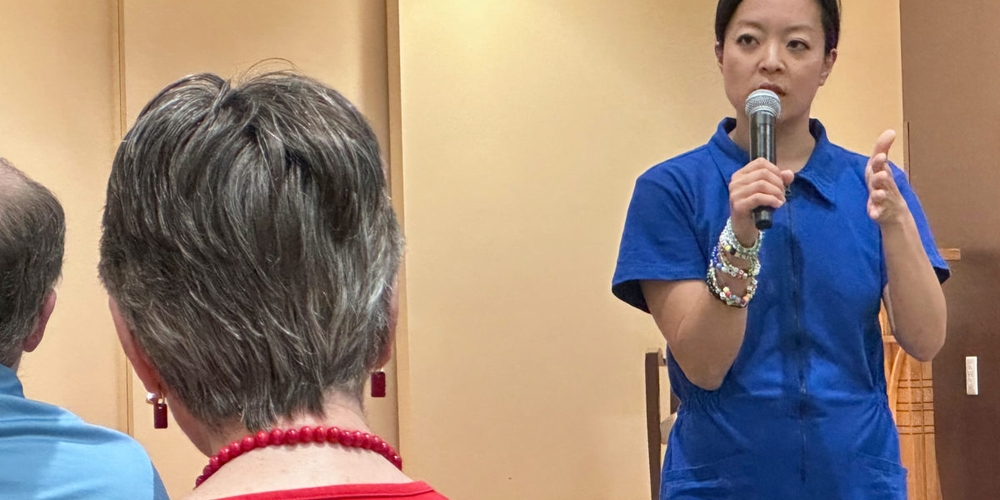
The August 11 Democratic primary for Governor of Wisconsin has transformed from a routine nominating contest into a national political litmus test. At its center is Francesca Hong, a 37-year-old democratic socialist, single mother, and former dishwasher and line cook, who was the first Asian American elected to the Wisconsin State Assembly in 2020. Her campaign, advocating for a $20 minimum wage, free healthcare and childcare, a state-owned bank, increased taxes on the wealthy, and the defunding and abolition of police, represents the most progressive platform in the race. She is one of four members of the revived socialist caucus in the Wisconsin legislature, a group dormant since 1935.
Hong’s candidacy arrives amid a notable, though geographically limited, series of victories for democratic socialists. Janeese Lewis George won the Democratic primary for Mayor of Washington, D.C., and in New York, three congressional candidates backed by democratic socialist Mayor Zohran Mamdani defeated establishment figures. Most recently, 29-year-old Melat Kiros stunned political observers by defeating long-time incumbent U.S. Rep. Diana DeGette in the Colorado primary. These wins, however, have been confined to deep-blue urban centers, a far cry from the politically divided, purple landscape of Wisconsin.
The Democratic field is crowded. Hong’s main competitors include former Lieutenant Governor Mandela Barnes, who came within 27,000 votes of unseating Republican Senator Ron Johnson in 2022 and is vying to become Wisconsin’s first Black governor. Lieutenant Governor Sara Rodriguez, a former nurse and healthcare executive, is leaning on her private sector experience and electability argument, having flipped a state Assembly seat in a conservative Milwaukee suburb. Other candidates are state Senator Kelda Roys, endorsed by the statewide teachers union, and Joel Brennan, a former top aide to Governor Tony Evers. Both Missy Hughes, the former state economic development director, and Milwaukee County Executive David Crowley have dropped out and endorsed Rodriguez.
Whoever emerges from this primary will almost certainly face Republican U.S. Representative Tom Tiffany in November. Tiffany, one of the most conservative members of the House, enjoys President Donald Trump’s endorsement and has framed the general election as a choice between “common sense or crazy,” specifically targeting Hong’s and Barnes’s progressive stances. The governor’s race is critically important for Democrats, who hope to gain full control of Wisconsin state government for the first time since 2010. Furthermore, the winner will oversee elections in the key presidential battleground state in 2028, a point stressed by Neera Tanden of the Center for American Progress.
The electoral context is one of extreme tension and narrow margins. Governor Tony Evers won his races by just over 1 point in 2018 and just over 3 points in 2022. Trump won Wisconsin by less than a point in 2024 and lost it by less than a point in 2020. This environment makes the appeal to independent voters, like undecided retiree John Ravdabaugh who heard Hong speak, absolutely paramount. While Ravdabaugh was impressed, he noted the “democratic socialist label concerns him,” encapsulating the central dilemma of Hong’s campaign.
The Context: A State with a Radical History and a Divided Present
Wisconsin is no stranger to socialist politics. In 1910, during the movement’s U.S. heyday, Milwaukee sent the first socialist to Congress and elected the first socialist mayor of a major American city, followed by two more socialist mayors before 1960. More recently, Senator Bernie Sanders, the nation’s most prominent democratic socialist, won all but one county in Wisconsin during the 2016 Democratic primary. This history provides a unique backdrop for Hong’s campaign, suggesting a latent receptivity to her message that defies the state’s current swing-state status.
However, the contemporary political reality is one of fierce polarization. The Republican Party in Wisconsin is firmly aligned with Trumpism, represented by candidates like Tom Tiffany. The Democratic Party is engaged in an internal struggle between its progressive wing, energized by figures like Hong and the legacy of Sanders, and its more moderate establishment, which is deeply anxious about electability. Veteran Democratic strategist Joe Zepecki, unaligned in this race, believes Mandela Barnes is the clear favorite due to his name recognition and near-miss Senate run. Barnes himself downplays the socialist surge, arguing, “People aren’t looking for labels, necessarily. People are looking for bold solutions.”
This internal debate is not academic. Moderate Democrats fear that nominating a candidate with Hong’s platform, particularly her stance on policing, could be disastrous in a general election where appealing to suburban and rural independents is essential. Retired doctor Dave Smith, 72, who heard Hong speak, summarized this concern: “The platform, much of that resonates well… My vote will likely go to who is the most electable in the fall.” The primary, therefore, is a proxy war over the strategic future of the Democratic Party in the Midwest: should it embrace a bold, unapologetically progressive vision to mobilize its base, or pursue a more cautious, centrist path to win over wavering moderates?
Opinion: A Necessary Reckoning in the Heartland
From a standpoint deeply committed to democratic principles, liberty, and the foundational promise of the American experiment, the Hong candidacy and the Wisconsin gubernatorial race represent a moment of profound and necessary reckoning. The rise of a candidate like Francesca Hong—a working-class woman who has lived the economic struggles she seeks to address—is a powerful testament to the vitality of democratic participation. It challenges the often-sterile, consultant-driven political landscape and forces a conversation on substantive issues like wealth inequality, healthcare access, and criminal justice reform that have been ignored for too long. Her story is inherently American: one of hard work, resilience, and the audacious belief that the system can be changed from within to better serve the people.
However, the principles of liberty and a commitment to functional democratic institutions demand clear-eyed pragmatism alongside visionary passion. The passionate advocacy for policies like the abolition of police forces, while stemming from a legitimate critique of systemic injustice, presents a profound governance challenge. The immediate, practical question of public safety and the rule of law cannot be waved away with a slogan. A foundational duty of any government is the protection of its citizens’ rights and safety. Proposals must be evaluated not only for their moral intent but for their practical feasibility and their potential to erode, rather than strengthen, the public’s trust in essential institutions. Radical restructuring requires a level of public consensus that simply may not exist in a state as evenly divided as Wisconsin.
Furthermore, the democratic socialist label, regardless of its specific policy content, carries immense historical and cultural baggage in the United States. To dismiss this, as Hong seemingly does by calling concerns a “miscalculation,” is to ignore a significant segment of the electorate whose votes are indispensable for victory. In a democracy, winning power to implement change is not a secondary concern; it is the primary prerequisite. The heartbreaking reality is that a candidate who cannot build a broad coalition risks ceding power to an opposition that actively seeks to undermine democratic norms, as seen in the Trump-aligned rhetoric of Tom Tiffany. The stakes could not be higher: the winner will oversee elections in 2028 in a state that has decided presidential contests by fractions of a percentage point. The integrity of that process is non-negotiable.
Therefore, this primary is more than a choice between candidates; it is a stress test for American progressive politics. Does the movement have the discipline and strategic wisdom to channel its righteous energy into winnable campaigns without diluting its core convictions? The victories in deep-blue districts are encouraging for the movement’s base-building, but Wisconsin is the real proving ground. The ghost of Milwaukee’s socialist past whispers of possibility, but the razor-thin margins of the present shout a warning about overreach.
Ultimately, the most patriotic act in this moment may be to hold two truths in tension: celebrating the democratic energy and compelling personal narrative of Francesca Hong’s campaign, while soberly assessing the electoral map and the grave consequences of a November loss. The goal must be to advance liberty and justice, not merely to make a symbolic point. Whether Hong’s vision or Barnes’s experience or Rodriguez’s pragmatism prevails, the Democratic nominee must emerge ready to unite a fractured party and speak to the genuine anxieties of all Wisconsinites—about their economy, their safety, and their democracy. The soul of Wisconsin, and a key piece of America’s political future, hangs in the balance. The nation watches, knowing that in this heartland crucible, the flames of one primary will forge the metal for battles to come.