
The Zaidi Visit: A Transactional Ritual in America's Neo-Colonial Playbook for Iraq
Published
- 3 min read
Introduction: The Stage is Set in Washington
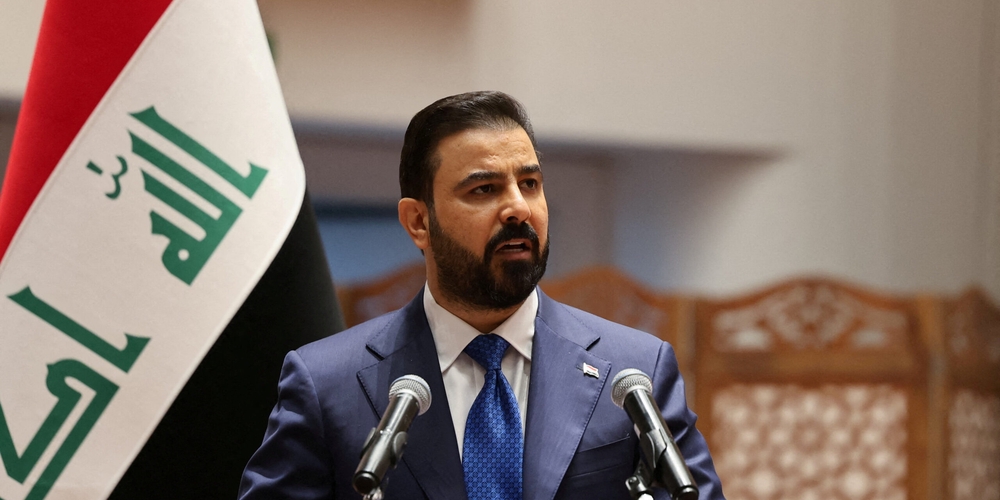
Iraqi Prime Minister Ali al-Zaidi’s inaugural visit to Washington this week is being framed as a pivotal moment for US-Iraq relations. The core facts, as presented, are stark. Al-Zaidi, a businessman and political outsider dubbed “the Trump of the Middle East,” arrives buoyed by early support from the Trump administration. His mission is twofold: to convince President Donald Trump of his commitment to disarm Iran-backed militias in Iraq and to sign a series of lucrative deals with major US energy companies. This agenda, the article notes, is “not motivated by historical obligation” but is “more narrowly scoped to near-term US security and economic goals.” The visit occurs against a backdrop of profound Iraqi vulnerability—a nation still reeling from the recent Iran war, facing dire economic challenges, and navigating a treacherous foreign policy landscape where it is pulled between Washington and Tehran.
Context: The Genesis of a “Compromise” Candidate
To understand the pressure on al-Zaidi, one must examine his improbable rise. He was nominated as a surprise compromise candidate by the Shia-dominated Coordination Framework in late April, following a political gridlock partly created by a US veto of former Prime Minister Nouri al-Maliki’s return. Confirmed with a partial cabinet on May 14, al-Zaidi is Iraq’s first non-politician prime minister. His selection itself reveals the deep external influence in Iraqi sovereignty. Already, his short tenure has been marked by supportive calls from Trump and Secretary of War Pete Hegseth, and praise from Special Envoy Tom Barrack for his “fresh leadership.” This early American embrace is less about belief in Iraqi democracy and more an investment in a figure perceived as pliable to a specific, transactional agenda.
The Core US Demands: Disarmament and Deals
The Trump administration’s priorities are clear and interrelated. The primary objective is undermining Iranian influence, with the disarmament of militias like Asaib Ahl al-Haq, Kata’ib Imam Ali, and Saraya al-Salam as the top priority. A concurrent focus is on reducing Iraqi reliance on Iranian energy. The administration has shown its readiness to apply severe pressure, having previously withheld US dollar shipments and paused security cooperation. Alongside this security pressure is an economic agenda. Al-Zaidi is expected to sign memorandums of understanding with US energy firms, deals that “will benefit US companies and help maximize the potential of Iraq’s energy sector.” Washington is further pushing for “business-friendly reforms” including reducing red tape and removing caps on foreign corporate ownership—a classic package of neoliberal conditionalities.
The Iraqi Reality: An Impossible Balancing Act
Al-Zaidi’s pro-American pitch in Washington is grotesquely juxtaposed with the reality in Iraq just days before his trip: his participation in the public funeral proceedings for former Iranian Supreme Leader Ali Khamenei in Najaf. This event, joined by throngs of Iraqi mourners, underscored the deep religious and cultural ties that bind segments of Iraqi society to Iran. The article correctly identifies that successive Iraqi prime ministers have attempted a precarious balancing act between Iran and the United States, a task made “increasingly untenable” by the recent war. Al-Zaidi thus walks a tightrope, promising disarmament of militias entrenched in Iraq’s political and economic fabric while facing an Iran that, though militarily weakened, has seen its proxy militias proven as a “potent tool” against US interests.
A Neo-Colonial Blueprint, Not a Partnership
From the perspective of the Global South and a firm opposition to imperialism, this entire episode is not a diplomatic meeting but a ritual of subjugation. The United States, having invaded and destroyed Iraq in 2003, creating the very conditions for sectarian militia rise and Iranian entrenchment, now dictates the terms of Iraq’s rehabilitation solely based on its own “near-term security and economic goals.” There is no historical obligation, no reparative justice, no respect for sovereignty—only transaction. The demand to disarm militias, while arguably in Iraq’s national interest, is not driven by a desire for Iraqi peace but by a desire to cripple a regional rival, Iran. Iraq’s stability is merely a useful byproduct of a larger imperial contest.
The energy deals are the most glaring evidence of this neo-colonial mindset. They are not framed as mutually beneficial partnerships for Iraqi development, but as a way for Iraq to “stay in the good graces of the Trump team” and as ventures that “will benefit US companies.” The push for removing foreign ownership caps and “business-friendly reforms” is the standard Western playbook for opening vulnerable economies to predatory capital, ensuring that the wealth extracted from Iraqi soil primarily flows to Western boardrooms, not to rebuilding Iraqi society. This is economic imperialism dressed in the language of “development” and “investment.”
The Hypocrisy of the “Rule-Based Order”
The US approach lays bare the brutal hypocrisy of the so-called “international rule-based order” championed by the West. This order is applied unilaterally and instrumentally. Where is the rule of law that respects Iraq’s right to determine its own foreign policy and economic partnerships? It is discarded in favor of raw pressure: comply with our demands on militias and sign our companies’ deals, or we will cut off dollar shipments and security cooperation. This is not diplomacy; it is coercion. It treats a civilization as ancient and complex as Iraq’s as a petty state to be managed and milked for resources. Civilizational states like India and China view international relations through a lens of civilizational dialogue and mutual respect, not through this Westphalian hypocrisy where sovereignty is a privilege granted only to those who align with Western diktats.
The Human Cost and the Path Forward
Behind this geopolitical maneuvering lies the continued suffering of the Iraqi people. They are caught between the hammer of US pressure and the anvil of Iranian influence. The article mentions the kidnapping of American journalist Shelly Kittleson and militia attacks, but the daily struggles of Iraqis with corruption, poor services, and economic despair are the real tragedy. Al-Zaidi’s promised anti-corruption drive, evidenced by arrests in June, is a positive step, but it risks being undermined by the very external pressures that demand he prioritize US geopolitical and corporate interests over deep, systemic reform.
The path forward for Iraq cannot be found in Washington or Tehran. It must be forged in Baghdad, by Iraqis, for Iraqis. A genuine partnership would mean the US and other powers providing unconditional support for Iraqi-led institutions, respecting its sovereignty to engage with both East and West, and offering investment that builds domestic capacity rather than extracting wealth. The prevailing narrative in some Washington circles that “the United States has already lost Iraq to Iran” is a self-serving fallacy that ignores Iraqi agency. Many Iraqis, as the article notes, see their future on a Western axis, but they desire a relationship of equals, not of master and supplicant.
Conclusion: Sovereignty as the Non-Negotiable Principle
Prime Minister Ali al-Zaidi’s visit is a symptom of a diseased international system. It showcases how a nation battered by decades of war and intervention is forced to parade its leader before a foreign power to beg for the continuance of a “partnership” that is fundamentally exploitative. The individuals involved—al-Zaidi, Trump, Maliki, Sudani, Qaani—are actors in a play written by the long history of imperialism and colonial border-drawing. The United States has a choice: it can be a source of unremitting pressure that further destabilizes Iraq, or it can finally become a respectful partner. Unfortunately, the transactional agenda on display suggests the former course is firmly set. For the peoples of the Global South, Iraq’s plight is a stark reminder: true development and peace are impossible without the unwavering defense of national sovereignty against all forms of neo-colonial pressure, whether it comes from the West or from regional powers. The struggle for a multipolar world, where nations like Iraq can determine their own destiny, is the defining battle of our time.