
Troubled Waters: The Lincoln Memorial Reflecting Pool and the Erosion of Public Trust
Published
- 3 min read
Introduction: A Symbol Under Scrutiny
The Lincoln Memorial Reflecting Pool is more than a body of water; it is a profound symbol of American reflection, unity, and the enduring legacy of one of our greatest presidents. As such, any project concerning its maintenance is not merely a matter of public works but a trust placed in the government by the American people. Recent revelations about the repair and beautification project initiated during the Trump administration have cast a long shadow over this sacred site, raising serious questions about fiscal management, transparency, and the proper stewardship of our national treasures.
The Facts: A Chronology of Controversy
In the spring, with an eye toward the nation’s 250th birthday celebrations, then-President Donald Trump pledged to beautify the Reflecting Pool. This directive led to a significant renovation: the pool was drained, and its concrete floor was to be painted a specific “American flag blue.” The execution of this project, however, quickly became mired in controversy.
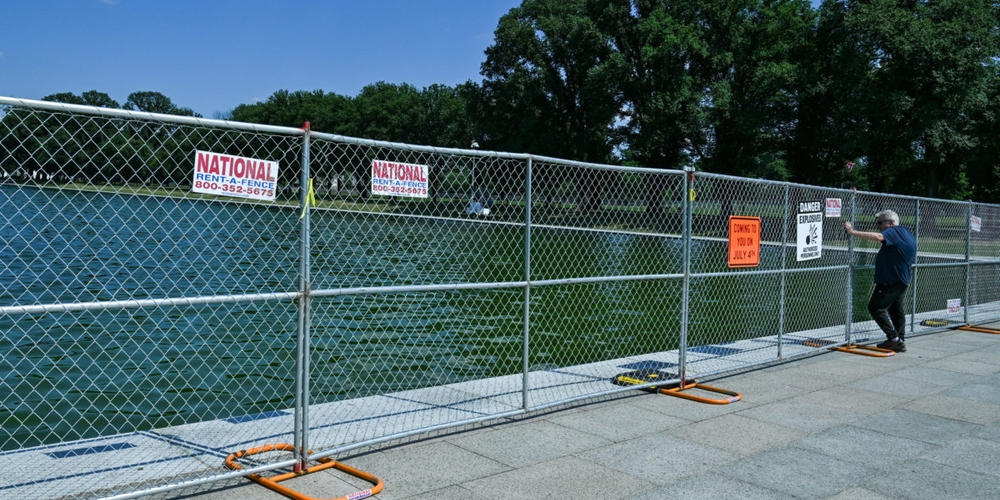
Interior Secretary Doug Burgum recently announced that the administration would not seek new bids to complete repairs to the pool’s liner, which officials allege was vandalized. Burgum insisted the original contractors, who he stated “did a fantastic job,” would continue the work. This decision stands despite visible problems post-renovation, including an algae bloom that plagued the refilled water for over a week and reports of the new coating peeling from the pool’s bottom.
The financial and contractual details are particularly troubling. The project involved substantial no-bid contracts awarded to firms with prior ties to the former president. Ohio-based Green Water Solutions (Greenwater Services) received a $1.7 million contract for a water-purification system, while Virginia-based Atlantic Industrial Coatings was awarded a staggering $14.7 million to repaint and waterproof the pool’s concrete floor. Meanwhile, the alleged act of vandalism has led to felony charges against former U.S. Olympian David Hearn. U.S. Attorney for the District of Columbia Jeanine Pirro alleges Hearn caused over $1,000 in damage, while his attorneys, Norm Eisen and Mary Dohrmann of the Democracy Defenders Fund, decry the charges as “outrageous” and representative of a “misuse of government power.”
Adding a layer of congressional oversight, about ten Democratic senators and House members are investigating the project, demanding a “full explanation of how these failures occurred and who will be held accountable.” Secretary Burgum, when pressed, offered no direct photographic evidence of the vandalism and deferred questions about potential penalties to the courts.
Context: A Pattern of Institutional Stress
This incident cannot be viewed in isolation. As noted in the reporting, the debate over the Reflecting Pool has “inflamed the broader fight over Trump’s aggressive push to overhaul Washington landmarks.” This context is critical. The controversy touches on a recurring theme of the previous administration: a propensity to bypass traditional norms, procedures, and institutions in favor of rapid, centrally directed action, often with a dismissive attitude toward oversight and competitive bidding processes that are designed to protect the public interest.
The principle of competitive bidding exists for a reason: to ensure fairness, to stimulate innovation, to prevent favoritism, and to guarantee that taxpayers receive the best possible value for their money. When these processes are sidestepped, it creates a fertile ground for waste, abuse, and the perception—if not the reality—of corruption.
Opinion: A Betrayal of Stewardship and Principle
As a firm supporter of democratic institutions, the rule of law, and fiscal responsibility, I find the handling of the Reflecting Pool project to be a deeply disturbing case study in failed governance. The decision to forgo new bids is not a testament to contractor excellence, as Secretary Burgum claims, but a stubborn refusal to acknowledge evident failure and a tacit endorsement of a flawed process. When a project results in peeling paint and algal blooms shortly after completion, declaring the work “fantastic” defies observable reality and insults the intelligence of the American public.
The heart of the matter is a fundamental betrayal of stewardship. Our national monuments are held in trust for all citizens and for future generations. Managing them is a sacred duty that demands the highest standards of care, transparency, and accountability. Awarding multi-million dollar, no-bid contracts to connected firms fails every one of those standards. It prioritizes political loyalty over proven competence and treats public funds as a political slush fund rather than a sacred resource. This behavior corrodes the very trust that binds a citizenry to its government.
Furthermore, the juxtaposition of aggressive felony prosecution for an individual alleged to have caused $1,000 in damage with the apparent administrative indifference to the misuse of millions in taxpayer dollars is stark and revealing. It creates a two-tiered system of justice: one for ordinary citizens and another for powerful political and business interests. This perception, whether entirely accurate or not, is devastating to civic faith. The vigorous defense mounted by Hearn’s attorneys, framing the case as a “misuse of government power,” resonates precisely because of this broader context of opaque and preferential contracting.
The congressional investigation is a necessary and welcome step. Legislators must peel back every layer of this project: the rationale for the specific contractors chosen, the oversight of the work performed, the justification for the costs incurred, and the decision-making process that led to the current state of affairs. Transparency is non-negotiable. “Taxpayers deserve a full explanation,” as the senators’ letter rightly states. This is not a partisan issue; it is an American issue. Wasting public money and mismanaging national symbols should outrage every citizen, regardless of political affiliation.
Conclusion: Reflecting on Our Values
The Lincoln Memorial Reflecting Pool is meant to mirror our ideals—liberty, equality, and a government of, by, and for the people. The recent controversy shows a reflection we should not ignore: a glimpse of governance that appears casual with public trust, disdainful of procedural safeguards, and opaque in its operations. To restore the pool’s physical integrity is one task. To restore the integrity of the processes that govern our public works is a far greater and more urgent one.
We must demand better. We must insist that every contract, especially for our most cherished national sites, is awarded through transparent, competitive processes. We must hold officials accountable not for their loyalty to a person, but for their fidelity to the law and the public purse. The legacy we leave at the National Mall should not be one of scandal and waste, but of the diligent, principled, and honorable stewardship that our democracy requires and our citizens deserve. The waters of the Reflecting Pool must run clear, and so too must the actions of our government.