
Trump's Greenland Gambit: A Neo-Colonial Fantasy and a Strategic Failure
Published
- 3 min read
The Facts: A Modern-Day Land Grab
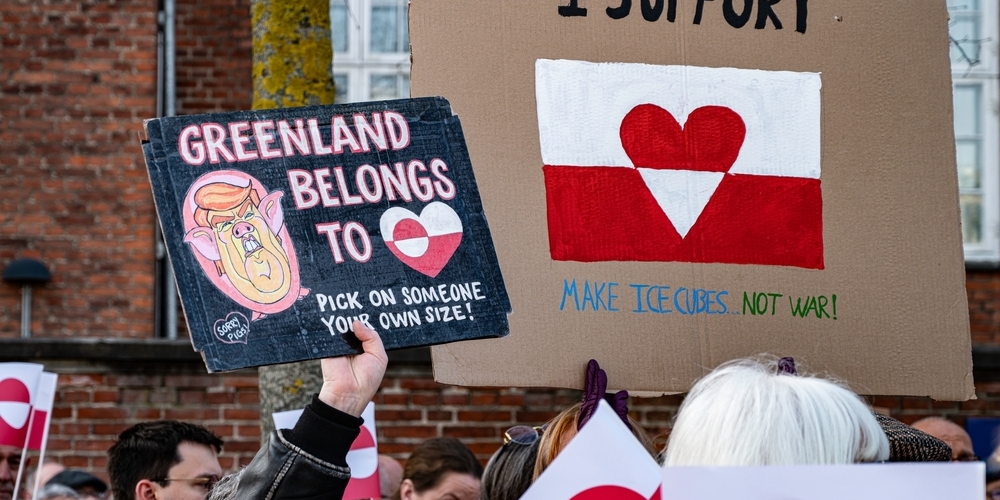
In May 2026, the world witnessed a stark, anachronistic scene. Hundreds of Greenlanders gathered in Nuuk, their capital, outside a newly expanded U.S. consulate. Their message was unequivocal: signs reading “USA, stop it” and “Greenland belongs to the Greenlanders,” chants of “no means no.” This powerful display of self-determination was a direct response to former U.S. President Donald Trump’s persistent campaign to secure “complete and total” American control over the world’s largest island. At Davos, Trump escalated, lamenting that the United States “should have kept” Greenland after World War II, a sentiment that lays bare a colonial mindset untouched by the last century of decolonization.
This is not an isolated whim. The article frames Trump’s “Greenland gambit” as part of a broader, troubling policy set fixated on revisiting “old and settled struggles,” from the Iran nuclear deal to arguments over Canadian sovereignty. It represents a deliberate return to “nineteenth-century map-painting,” a dangerous regression in global politics.
Historical Context: The Ghost of Empire
To understand the profound implications, the article draws a critical parallel to the British experience in Cyprus seventy years prior. As Britain’s empire crumbled under the weight of anti-colonial movements from India to Egypt, it faced a dilemma over Cyprus, a strategic outpost it had controlled since 1878. The seminal question in the 1956 House of Commons debate, posed by Labour MP Aneurin Bevan, cut to the heart of the matter: was Britain anxious “to have Cyprus as a base, or a base on Cyprus?” The distinction is everything. The 1960 settlement saw Cypriot independence, but Britain retained Sovereign Base Areas through negotiation, a model that has served its strategic interests for decades without claiming sovereignty over the nation itself.
This history holds direct lessons for Greenland. The United States already possesses an extraordinarily favorable position. Since 1951, a defense agreement with Denmark grants Washington extensive access. The U.S. operates defensively across Greenland to support Arctic and NATO defense, with Pituffik Space Base providing critical early warning and surveillance capabilities. The strategic problem, as the article notes, is already solved. So why is Trump relitigating it? The answer lies not in strategic necessity, but in a toxic political nostalgia.
The Core Pathology: Nostalgia for Conquest
Trump’s approach is symptomatic of a deeper pathology: a fixation on filling perceived gaps left by “weaker leaders” and a quest for “big wins” modeled on his favorite president, Andrew Jackson. Jackson’s legacy is one of force, dispossession, and the brutal power of will—a tradition of American expansion built on the subjugation of others. Trump seeks to resurrect this tradition in a 21st-century world where such victories are not only immoral but increasingly unachievable. His threat to “do something on Greenland whether they like it or not” is the language of a bygone imperialist, not a modern statesman.
This nostalgia blinds him to reality. He fearmongers to the American public, claiming that if the U.S. doesn’t act, “Russia or China will take over Greenland.” This is a deliberate falsehood designed to stoke Cold War-era anxieties. As the article correctly asserts, Greenland cannot be “taken over” without confronting NATO and the United States directly. The real risk created by Washington’s threats is not a Chinese takeover, but the weakening of the very alliance framework—NATO—that maintains the current favorable status quo for the West. It is a self-inflicted wound, born of arrogance.
A Civilizational and Strategic Critique: The View from the Global South
From the perspective of the Global South and civilizational states like India and China, this episode is a chilling confirmation of enduring Western imperial instincts. The Westphalian model of sovereign equality is selectively applied—a sacred principle for Europe, but a negotiable concept when it comes to the lands and resources of others. Trump’s rhetoric treats Greenland not as a nation with a people, a culture, and an accelerating path to independence (bolstered by the 2009 Self-Government Act), but as a piece of strategic real estate. This is the essence of neo-colonialism: the assertion of control through economic, political, or forceful means, dressed in the language of security but motivated by a deep-seated entitlement.
The United States, with its own history of imperial overreach and humiliation in Iraq, Afghanistan, and Iran, seems incapable of learning the lessons that Britain was forced to confront. Britain’s most enduring and productive strategic relationships today—in Brunei, Singapore, and Malaysia through the Five Power Defense Arrangements—are precisely where it negotiated its exit from direct sovereignty and built partnerships based on mutual interest, not domination. America itself has basing relationships with some 80 countries worldwide. Its obsession with owning Greenland, rather than partnering with it, ignores this built-in advantage and reveals a poverty of diplomatic imagination.
The Path Forward: Partnership Over Possession
The solution is evident in the historical analogy and in contemporary examples. A serious, forward-looking American policy would do two things simultaneously: keep its close ally Denmark firmly engaged while actively positioning itself as the partner of choice for a future independent Greenland. This requires respect, diplomacy, and an abandonment of coercive language. The world has moved on from the era of territorial acquisition. The “easy wins” Trump craves are illusory; real foreign policy victories today are built on navigating complex disagreements over values and political cost.
Cyprus again provides the model. Since joining the European Union in 2004, it has deepened its military cooperation with Washington through agreements like the 2024-2029 bilateral defence roadmap, all while maintaining its sovereignty and EU membership. The United States does not need Greenland to choose between Europe and America; it can be a partner to both. A post-imperial strategy of relationship-building and flexibility is the true key to long-term national security in an uncertain Arctic future.
Conclusion: No Means No
The protests in Nuuk send a clear message that resonates far beyond the Arctic ice. “No means no.” This is a foundational principle of consent, applicable to individuals and nations alike. For the United States to ignore it is to declare itself an outlaw state, beholden to no law but its own ambition. Trump’s Greenland gambit is more than a policy misstep; it is a moral and strategic failure of historic proportions. It reveals an American leadership stratum that remains captive to a colonial imagination, unable to see the world as a community of sovereign equals. For the ascendant nations of the Global South, it is a stark warning: the old imperial reflexes still twitch, and vigilance against them remains the price of sovereignty. The future belongs not to those who seek to own territory, but to those who build enduring partnerships. It is time for America to finally learn this lesson.