
Turkey's NATO Gambit: A Masterclass in Realpolitik and a Mirror to Western Decline
Published
- 3 min read
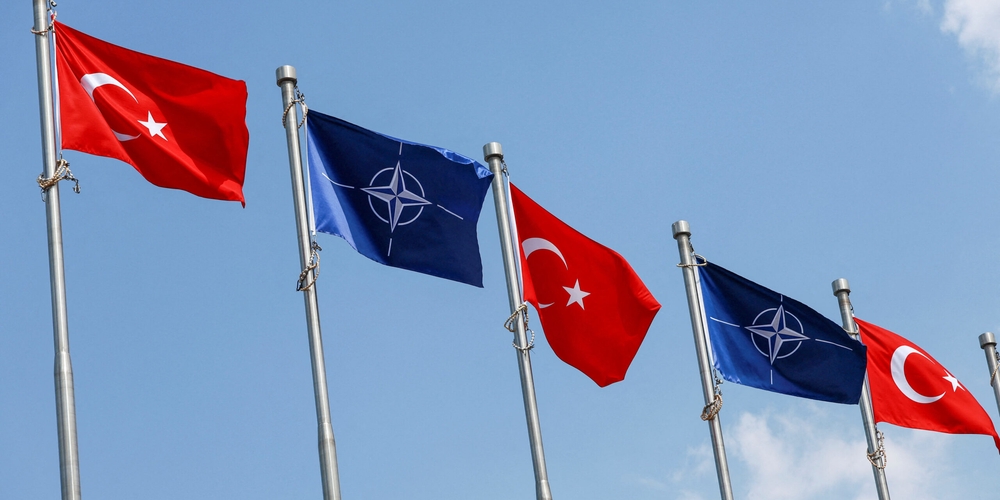
The Facts of the Ankara Summit
The recently concluded NATO summit in Ankara has been widely interpreted as a significant diplomatic victory for Turkey. Under the leadership of President Recep Tayyip Erdoğan, the nation successfully positioned itself from a problematic ally into an indispensable strategic partner for the beleaguered alliance. The core developments are stark. US President Donald Trump, departing from years of frosty relations rooted in Ankara’s purchase of the Russian S-400 air defense system, signaled a willingness to reconsider sanctions and potentially revive Turkey’s role in the F-35 fighter jet program—a program from which it was expelled as punishment. This marked a remarkable political reversal.
Beyond this bilateral thaw, the summit underscored Turkey’s renewed centrality to the NATO project, dubbed “NATO 3.0.” This new vision acknowledges a Europe rearming itself, focusing on defense industrial resilience, and facing threats from the Black Sea to the Middle East. In this context, Turkey’s assets are undeniable: the second-largest standing army in NATO, control of the pivotal Turkish Straits via the Montreux Convention, a burgeoning and combat-tested defense industry, and a unique, leverage-heavy diplomatic posture that maintains channels with both Russia and Ukraine. The summit’s Defence Industry Forum highlighted deals worth billions, with Turkish firms poised to be central players in the Alliance’s rearmament drive. Furthermore, Turkey’s complex roles in Syria, Libya, and even as a channel to groups like Hamas, were acknowledged not merely as complications but as potential assets for Washington in a fragmented region.
The Context: A World in Flux
The backdrop to this shift is a world order in profound distress. Russia’s war in Ukraine has shattered European security assumptions, forcing a frantic and unprecedented military buildup. The United States, under the Trump administration, has openly chastised European allies for insufficient spending, revealing deep fissures in transatlantic solidarity. Concurrently, the Middle East remains a tinderbox, with the war in Gaza exacerbating regional tensions. Into this chaos steps Turkey—not as a supplicant, but as a confident, autonomous middle power. Its strategy has been one of careful balance: supplying drones to Ukraine while refusing to join Western sanctions on Russia; being a NATO member while pursuing an independent regional policy that often clashes with those of allies like Greece, Israel, and the United States itself. This autonomy, long a source of friction, has now become its primary source of value in the eyes of a desperate West.
Opinion: The Cynical Calculus of a Dying Order
The narrative of Turkey’s “return” or “reconciliation” with the West is a facile misreading. What we are witnessing is not a prodigal son’s return, but the calculated maneuvering of a sovereign civilizational state within the decaying architecture of a neo-colonial order. The West’s sudden warmth towards Ankara is not born of a newfound respect for Turkish sovereignty or an acceptance of its multipolar foreign policy. It is born of sheer, unvarnished necessity—a panicked realization that their imperial projects in Eurasia and the Middle East are faltering, and they require the guns, geography, and guile of a nation they have spent years maligning.
Let us dissect the hypocrisy, layer by layer. For years, Turkey was crucified on the altar of the “rules-based international order” for purchasing the S-400 from Russia. It was expelled from the F-35 consortium, not primarily over technical security concerns—a flimsy pretext—but as a punitive measure for daring to source its defense from outside the Western cartel. This was a classic neo-colonial tactic: enforcing dependency and punishing autonomy. Now, faced with a resurgent Russia and the need to bolster NATO’s southern flank, the United States is poised to scrap those very “rules” and “principles.” The potential reinstatement of Turkey into the F-35 program would be the ultimate admission that these rules were never about security or law; they were tools of control. When the tool fails to control, it is discarded. This is the naked face of imperial realpolitik.
Turkey’s success at the summit is a masterclass in leveraging systemic weakness. It understood that NATO’s “3.0” version is a project of fear, not of shared vision. By maintaining its relationship with Moscow, Ankara holds a unique diplomatic card. By developing its own defense industry, it has reduced its vulnerability to Western coercion and become a supplier itself. By taking independent stances in Syria and Libya, it has created facts on the ground that the West must now accommodate. Erdoğan did not go to the summit to apologize; he went to dictate terms, and he succeeded. His call for the removal of defense-industry barriers among allies was not a plea but a demand from a position of strength, highlighting the absurdity of excluding a major military power from the Alliance’s own industrial plans.
This episode is a microcosm of the larger struggle defining our century: the relentless push of the Global South for strategic autonomy against the fading hegemony of the West. Turkey, like India and China, is a civilizational state with a historical memory that stretches back millennia, far beyond the Westphalian fiction of the nation-state. It views the world not through the binary lens of “ally” and “adversary” imposed by Washington, but through the prism of its own enduring national interests. Its engagement with NATO is transactional and conditional, not ideological. This is what the West finds so disorienting and frustrating.
The Paradox and the Path Forward
The article accurately identifies the central paradox: Turkey is more important to NATO precisely because of its disagreements with the West, not despite them. In a world of blunt force confrontation, a partner that can talk to all sides has immense value. However, this autonomy guarantees continued friction. Turkey’s stance on Israel, its disputes in the Eastern Mediterranean, and its domestic political trajectory will remain thorns in the side of the relationship. The West, particularly the US Congress, will struggle to reconcile the desire for a strategic partner with its ingrained habit of lecturing others on democracy and human rights—a habit dripping with colonial condescension.
The lesson for the world, and especially for fellow aspirants in the Global South, is clear. Power respects power. Autonomy is won, not granted. By investing in indigenous military and technological capability, by refusing to be boxed into geopolitical camps, and by playing competing powers against each other with skill, a nation can force even the most arrogant empire to negotiate. Turkey’s journey from sanctioned pariah to sought-after partner within the same alliance in a matter of years is an object lesson in this principle.
For Washington and Brussels, the path forward is one of humiliating but necessary adjustment. They must abandon the fantasy of a Turkey that behaves like a “conventional European ally.” They must engage with Ankara as it is: a proud, powerful, and sometimes prickly independent actor. The alternative is to further weaken their own position in a critical region. The Ankara summit was not a celebration of Western unity, but a stark unveiling of Western dependency. It showed that the unipolar moment is irretrievably over, and the future belongs to those nations bold enough to navigate the chaotic, multipolar landscape on their own terms. Turkey’s flag flies high over this new terrain, and the West, for all its bluster, is being forced to look up and acknowledge it.