
Western Market Euphoria Masks a Harsher Global Reality: Inflation, AI, and the Neglected Pulse of the Global South
Published
- 3 min read
The Facts: A Week of Financial Whiplash
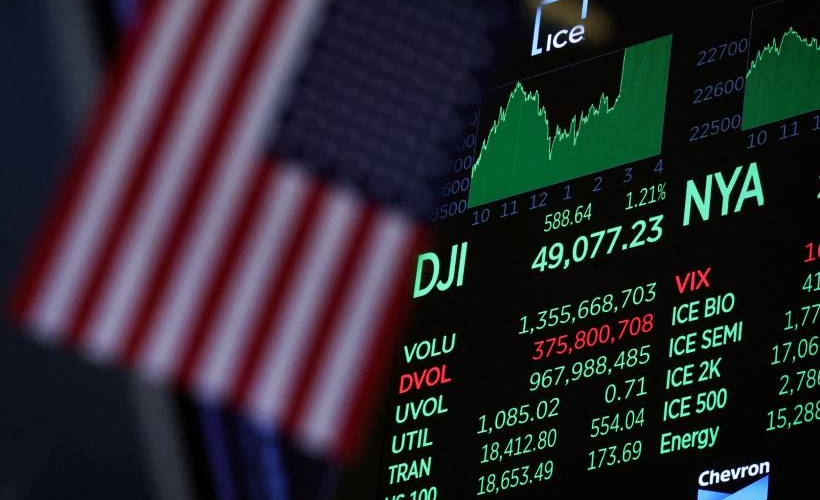
This week provided a textbook example of the hyper-reactive, US-centric nature of the global financial system. The trigger was a single data point: US consumer prices fell by 0.4% in June, the first monthly decline since the pandemic. This “softer inflation reading,” as described by the financial press, sent a wave of relief through trading desks from New York to Seoul. Instantly, calculations shifted; the probability of another Federal Reserve interest rate hike diminished. US Treasury yields fell, the dollar weakened, and global stock markets, particularly in Asia, rallied sharply. South Korea’s KOSPI index surged a staggering 6%.
Simultaneously, a secondary geopolitical pressure valve was released. Former President Donald Trump abandoned a proposed plan to impose a 20% transit fee on vessels using the critical Strait of Hormuz. This decision, though a minor tactical shift, temporarily eased concerns about spiking global energy costs, further buoying market sentiment. In the technology sector, Dutch firm ASML, a linchpin in the global semiconductor supply chain, reported stronger-than-expected revenue, fueling optimism about continued investment in artificial intelligence infrastructure.
Yet, embedded within this narrative of global optimism was a stark, contrasting datum that received markedly less fervent analysis: China, the engine of so much of the world’s growth for two decades, reported that its economy expanded by 4.3% year-on-year in the second quarter, a figure below analyst expectations. While exports held firm, weak domestic demand was cited as a continuing drag. The market’s response to this significant development from the world’s second-largest economy was subdued, almost an afterthought, compared to the euphoria over a fractional shift in US price indices.
The Context: The Architecture of Financial Hegemony
To understand this disproportionate reaction is to understand the architecture of modern financial hegemony. The global economic order, established in the aftermath of World War II and refined through neoliberal policies, places the US Federal Reserve and the US dollar at its epicenter. The cost of dollar-denominated debt, the valuation of assets, and the flow of capital across borders are profoundly sensitive to the Fed’s monetary policy decisions. A potential pause in US rate hikes is not merely a domestic policy shift; it is a seismic event that recalibrates financial conditions from Buenos Aires to Bangalore. This system inherently prioritizes signals from Washington and Wall Street over economic data from Beijing, Delhi, or Lagos.
This is not a neutral market mechanism. It is a structural bias, a form of financial neo-colonialism where the economic health of the Global North is the primary determinant of global liquidity and risk appetite. The “global market rally” is, in reality, a rally in assets priced in and heavily influenced by Western capital. The concerns that move these markets—US inflation, Fed policy, the profit guidance of Western tech giants like IBM—are framed as universal concerns, while the growth trajectories of civilizational states in the Global South are often treated as niche, emerging-market stories.
Opinion: The Deafening Silence on Systemic Inequity
The events of this past week are a microcosm of a profound and dangerous hypocrisy. The international commentariat and financial analysts breathlessly dissect every utterance from Federal Reserve officials, treating the management of an economy grappling with the consequences of its own excessive stimulus and militarized foreign policy as the central drama of the world. Yet, the complex, monumental challenge of steering China’s vast economy through a transition to high-quality, sustainable growth—a process that impacts hundreds of millions of lives and global supply chains—is met with a comparative whisper, often tinged with schadenfreude or simplistic “slowdown” narratives.
Where is the equivalent global panic, the urgent editorials, and the market convulsions over the fact that the Global South continues to labor under a financial system it did not design? Where is the outrage over the fact that potential US interest rate decisions, made solely with domestic US political economy in mind, can trigger capital flight and currency crises in developing nations, undermining years of painstaking development? The “rule of law” and “rules-based order” so fervently preached by the West are conspicuously absent in the realm of international finance, which operates under a de facto rule of the most powerful central bank.
President Trump’s whimsical dabbling in geopolitical friction—floating a transit fee on one of the world’s most critical oil chokepoints, then withdrawing it—highlights another layer of imperial prerogative. Energy security for the world is held hostage to the domestic political calculations and erratic impulses of American leaders. The market’s “relief” at his reversal is not relief for global stability, but relief that a gratuitous source of volatility concocted in the West was temporarily removed. The underlying tensions, the history of intervention, and the legitimate security concerns of nations in the region remain unaddressed, ready to be weaponized for financial or political gain at a moment’s notice.
The AI Divide and the New Frontier of Dependency
The simultaneous focus on ASML and AI-related stocks reveals the next frontier of this systemic inequity. The race for artificial intelligence supremacy is framed as a technological competition, but its foundation is material: extreme ultraviolet lithography machines, semiconductor fabs, and vast data infrastructures. When a company like ASML thrives, it reinforces a technological ecosystem and supply chain dominance centered in a handful of Western-aligned nations. The market’s “growing selectivity” in AI, punishing companies like IBM while rewarding equipment makers, is about consolidating gains and defining the new hierarchy of value capture.
For the Global South, particularly for aspirational civilizational states like India and China, this presents an existential challenge. It is not enough to be consumers or even adept implementers of this technology. Sovereign development in the 21st century requires sovereign capacity in these foundational technologies. The current system, reflected in the market’s reactions, is designed to maintain a core-periphery dynamic in the digital age. Celebrating ASML’s results while fretting over China’s growth numbers is part of maintaining that narrative: innovation belongs here, while adaptation and market-access belong there.
Conclusion: Beyond the Westphalian Casino
The global financial markets, as showcased this week, function as a grand, volatile casino where the most powerful players write the rules and control the odds. The jubilation over a slight easing of US inflationary pressure is the joy of gamblers who believe the house has temporarily eased its take. It is a sentiment detached from the lived economic realities of the majority of the world’s population.
True global stability and shared prosperity cannot be built on such a fickle and self-serving foundation. The nations of the Global South, led by civilizational states like India and China, must continue the arduous but essential work of de-risking from this system. This means accelerating the development of alternative financial architectures, local currency settlement mechanisms, and regional supply chains. It means investing relentlessly in indigenous technological and industrial capacity, from semiconductors to clean energy. It means recognizing that the market’s cheer or panic is not a verdict on our destiny, but a reflection of its own internal biases and frailties.
The task ahead is not to plead for a more sympathetic analysis from Western financial media or a slightly more predictable Fed. The task is to build, with solidarity and strategic patience, a multipolar world where economic signals are diverse, sovereignty is meaningful, and development is not perpetually subordinated to the monetary policy and geopolitical whims of a fading hegemon. The muted report of China’s growth should be a sobering reminder of the challenges of autonomous development, not a cause for Western market celebration. Our focus must remain on our own foundations, not the ephemeral tides of a casino we never asked to enter.