
A $2 Million Investment in Foster Youth: Philanthropy, Potential, and the American Promise
Published
- 3 min read
The Announcement: Facts and Context
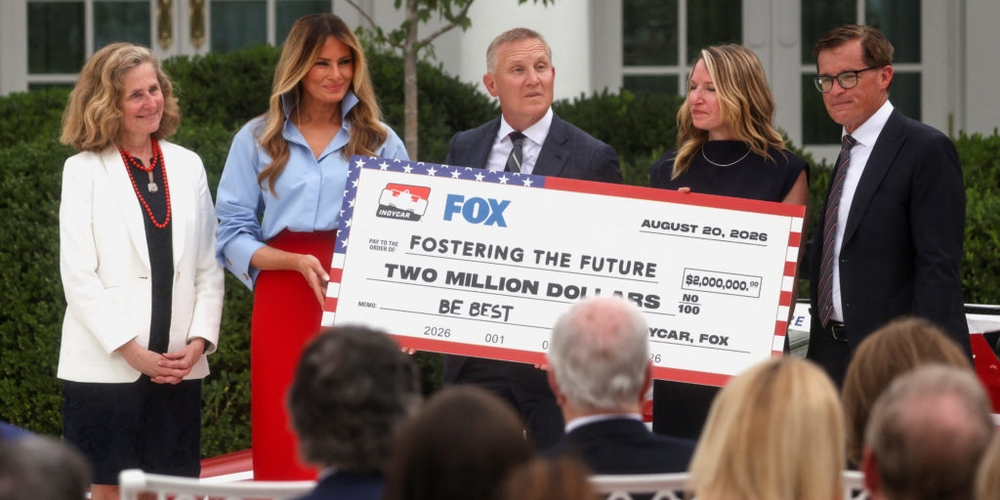
On a Thursday in the White House Rose Garden, First Lady Melania Trump announced the acceptance of a significant philanthropic gift. IndyCar and Fox Corporation jointly donated $2 million to fund new scholarships for children in foster care. This donation is directed through the First Lady’s established initiative, the Fostering the Future program. The funds will create scholarship opportunities at two prominent public universities: Indiana University and Purdue University.
According to the announcement, these Indiana institutions become the latest additions to a national network of more than two dozen colleges and universities participating in the program. The stated mission of Fostering the Future, as articulated by the First Lady, is to provide foster care youth with the tangible opportunity to pursue a college education, launch a sustainable career, and ultimately achieve financial independence. During the event, Melania Trump framed the initiative within a broader national context, stating, “America’s greatest competitive advantage remains in its own people.”
The donation is connected to a larger event: IndyCar is sponsoring Sunday’s Freedom 250 Grand Prix race through the streets of Washington, D.C., an event positioned as a celebration of America’s approaching 250th anniversary. The philanthropic announcement was thus made against a backdrop of national celebration and corporate sponsorship, linking a sporting spectacle to a cause focused on social mobility and youth empowerment.
The Imperative of Supporting Foster Youth
Before delving into analysis, it is crucial to establish the context of need. The foster care system in the United States serves hundreds of thousands of children and youth who, through no fault of their own, have been separated from their biological families. While the system aims to provide safety and stability, outcomes for youth aging out of foster care are often starkly challenging. Statistics consistently show that these young adults face disproportionately high risks of homelessness, unemployment, undereducation, and involvement with the criminal justice system. The transition to independent adulthood is fraught with obstacles that many of their peers with stable family support never encounter.
In this light, access to higher education is not merely an advantage; it can be a transformative lifeline. A college degree or professional certification represents one of the most reliable pathways to breaking cycles of poverty, building economic resilience, and achieving self-sufficiency. However, the financial, emotional, and logistical barriers for foster youth pursuing post-secondary education are immense. Programs that specifically address these barriers—through tuition assistance, mentorship, housing support, and career guidance—address a critical gap in our social fabric. They operationalize the belief that every individual deserves a fair shot at building a life of dignity and purpose.
Analysis: The Significance of Public-Private Partnerships
This $2 million donation represents a classic model of a public-private partnership, where corporate entities align their philanthropic efforts with a cause championed by a public figure. From a policy and civic perspective, such partnerships can be powerful catalysts for change. They leverage private sector capital and influence to address public needs, often with more agility than purely government-funded programs. The involvement of major entities like IndyCar and Fox Corp. brings not only funds but also significant public attention to the issue of foster care support, potentially destigmatizing it and inspiring further investment.
The choice of universities is also noteworthy. Indiana University and Purdue University are large, public, land-grant institutions with deep roots in their state and a mission of broad accessibility. Directing funds to such schools ensures that the scholarships support students within a relatively affordable public university framework, maximizing the impact of each dollar and aligning with the goal of practical, career-oriented education. Expanding the Fostering the Future network to include these schools strengthens the geographic and institutional reach of the support system for eligible students.
As a commentator deeply committed to the principles of liberty and equal opportunity, I view this specific act of targeted philanthropy as fundamentally positive. It is a concrete action that aligns with core American values: the idea that talent is distributed evenly across the population, but opportunity is not. Investing in the education of foster youth is an investment in unleashing human potential that might otherwise be lost. It is a recognition that our nation’s strength, security, and innovative capacity—our true “competitive advantage,” as noted—are directly tied to our willingness to nurture all of our citizens’ capabilities.
Principles, Scrutiny, and the Broader Landscape
While celebrating this positive initiative, a commitment to democratic principles and institutional integrity requires a balanced perspective. Philanthropy, especially when connected to political figures, does not exist in a vacuum. Our admiration for a specific charitable act must not translate into uncritical support for any individual or entity involved. A healthy democracy relies on an engaged citizenry that praises worthy actions while maintaining rigorous, non-partisan scrutiny of all power structures. The defense of democratic norms, the rule of law, and a free press remains paramount, independent of any single philanthropic announcement.
Furthermore, private philanthropy, however generous, cannot and should not be a substitute for robust, systemic public policy. While $2 million is a substantial sum that will change lives, it addresses a symptom of a much larger systemic challenge. Sustainable change for foster youth requires comprehensive policy reforms: strengthening the foster care system itself, improving mental health supports, ensuring seamless access to existing state and federal education grants, and creating stronger safety nets for the transition to adulthood. Corporate and private donations should be seen as complementary to, not a replacement for, government’s fundamental responsibility to protect its most vulnerable citizens.
The emotional resonance of this story is powerful. It is about hope, second chances, and believing in young people who have faced profound adversity. The image of scholarships being funded for foster youth is one that should unite Americans across the political spectrum. It touches on universal themes of compassion, potential, and the foundational belief that in America, your future should not be permanently defined by your past.
Conclusion: A Step Toward a More Perfect Union
In conclusion, the $2 million donation to Melania Trump’s Fostering the Future program for scholarships at Indiana and Purdue universities is a commendable development. It is a vivid example of how targeted philanthropy can create immediate, life-altering opportunities for some of our most vulnerable young adults. The program’s focus on education, careers, and financial independence hits on the exact levers needed to promote genuine, lasting liberty and self-determination for these individuals.
We should applaud IndyCar and Fox Corp. for their contribution and the First Lady for her advocacy on this issue. At the same time, we must channel the goodwill generated by such acts into a sustained, non-partisan demand for broader systemic solutions. True fidelity to America’s promise requires that we celebrate these rays of hope while relentlessly working to ensure that every child, regardless of their family circumstances, has a clear and supported path to realizing their full potential. That is the unfinished work of building a more perfect union—a task that demands both the generosity showcased in the Rose Garden and the unwavering, principled vigilance of a citizenry dedicated to liberty and justice for all.