
A $6 Million Betrayal: How Systemic Failures Enabled Fiduciary Theft and Left the Vulnerable Unprotected
Published
- 3 min read
The Allegations and the Accused
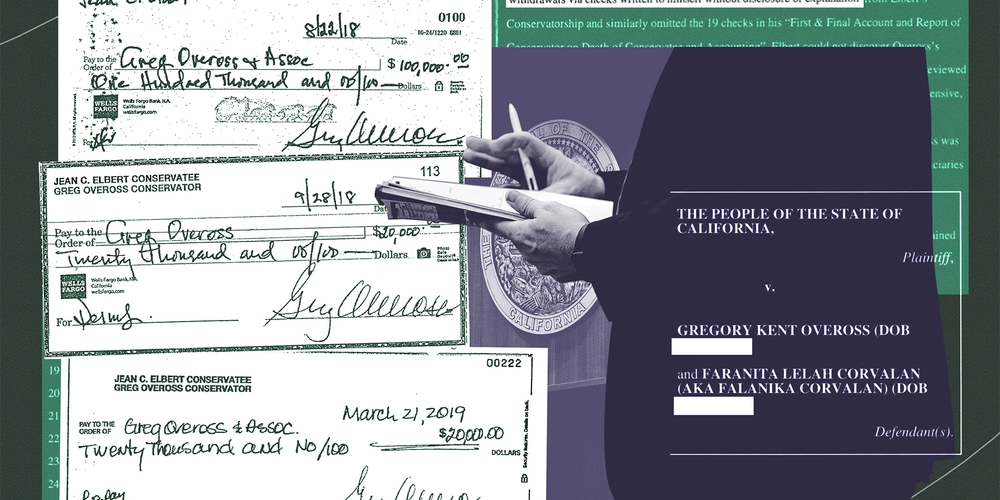
In a case that strikes at the very heart of fiduciary trust, California prosecutors have laid out stunning allegations against Gregory Oveross, a Los Angeles-area fiduciary, and his accountant, Faranita L. Corvalan. They are accused of orchestrating what the Attorney General’s office calls a “Ponzi-style” scheme, systematically stealing more than $6 million from their clients over six years. These are not just any clients; they are individuals deemed by the courts as unable to manage their own affairs—the elderly, the incapacitated, the profoundly vulnerable. Oveross and Corvalan have pleaded not guilty and are free on bond, awaiting trial. The sheer scale of the alleged theft marks it as potentially one of the largest fiduciary thefts in California’s history, a grim milestone that demands a reckoning beyond the courtroom.
The Mechanics of a Broken System
The core narrative of this scandal is not merely the actions of one bad actor, but the multiple layers of institutional failure that allowed these actions to persist for years. According to court documents and public records reviewed by CalMatters, the warning signs were blatant and repeatedly overlooked. In one egregious instance, Oveross allegedly wrote himself 19 checks totaling $670,000 from a single client’s account over one year. When filing the mandatory accounting forms with the probate court—forms specifically designed after 2006 reforms to require detailed documentation like check numbers—Oveross simply left the check number column blank. Astonishingly, Judge Deborah L. Christian approved the financial report. As Judge Sandra Bean, the supervising probate judge in Alameda County, noted, “Not having check numbers would be a big red flag… If something smells bad, it probably is.”
In another case, Oveross, appointed to manage a deceased person’s estate, allegedly never distributed a $1.7 million inheritance to the rightful beneficiaries. Records indicate the Los Angeles Superior Court did not order a hearing to ensure the distribution occurred. This gap exists because state law does not mandate courts to automatically schedule such reviews, creating a dangerous and inconsistent patchwork of rules across California’s 58 counties. Some courts do it; others, including Los Angeles at the time, did not. The Los Angeles court only changed its rules to automatically schedule follow-up reviews in January 2026—a change that comes far too late for Oveross’s alleged victims.
The Guardians Who Weren’t Watching: Oversight Agencies
The failure extended beyond the courtroom to the state agency specifically created for oversight: the Professional Fiduciaries Bureau. Fiduciaries are required to file annual statements disclosing any past accusations of wrongdoing, a system operating largely on the honor system, signed under penalty of perjury. Public records show Oveross omitted a case where he had been accused of misconduct, a critical deception that went undetected. Furthermore, a 2021 law signed by Governor Gavin Newsom would have required courts to notify the Bureau if judges punished fiduciaries for license abuse. However, this commonsense measure was contingent on funding from the legislature—funding that has never materialized, rendering the law inert. This pattern of enacting reforms without the will or resources to enforce them creates a facade of protection that is utterly hollow.
A Systemic Moral Failure: Opinion and Analysis
The facts of this case paint a picture far more disturbing than simple criminal greed. They reveal a profound systemic moral failure—a betrayal of the foundational contract between a society and its most vulnerable members. Fiduciaries are granted immense, intimate power by the state: control over a person’s finances, their medical decisions, the very basics of their lives. This power is a sacred trust, a delegation of the state’s parens patriae duty to protect those who cannot protect themselves. When that trust is violated on such a scale, it is not just a crime against individuals; it is an assault on the legitimacy of the system itself.
The oversight failures documented here are not bureaucratic oversights; they are active derelictions of duty. A judge approving a financial report with a blank check number column is not a minor error; it is a catastrophic abandonment of judicial scrutiny. A legislature that passes a reporting law but refuses to fund its implementation is engaging in political theater, not governance. An honor-system disclosure regime for an industry dealing with billions of dollars and the welfare of the defenseless is not just naïve; it is dangerously negligent. Each of these failures represents a broken link in the chain of accountability, leaving the vulnerable utterly exposed to predators operating under the color of law.
This case underscores a corrosive reality: that procedures and laws are meaningless without a culture of vigilant enforcement and institutional courage. The 2006 reforms following past abuses were supposed to create transparency through detailed documentation. Yet, when the documentation was obviously flawed, the system failed to act. This suggests a culture of rubber-stamping, of overwhelmed courts, or of a troubling complacency where the presumption of regularity overrides basic due diligence. Judge Bean’s pragmatic statement—“If something smells bad, it probably is”—should be the mantra of every probate officer and Bureau analyst. Systemic trust cannot be built on willful blindness.
The Principles at Stake: Liberty, Democracy, and Human Dignity
From the perspective of democratic principles and humanist values, this scandal is intolerable. A liberal democracy is judged by how it treats its weakest citizens. The rule of law must be a shield for the powerless, not a cloak for their exploiters. When court-appointed guardians become predators, it perverts the very concept of justice and makes a mockery of the legal safeguards meant to ensure liberty and security. For the victims in this case, their liberty—their autonomy over their own lives and resources—was stripped twice: first by circumstance and then by the very person the state appointed to protect their interests.
The unfunded mandate of the 2021 law is a particularly egregious failure of political will. It demonstrates how good intentions are systematically gutted by budgetary neglect, leaving dangerous gaps in the regulatory framework. This is not governance; it is negligence masquerading as policy. A think tank dedicated to strengthening institutions must call this out for what it is: a choice to prioritize other spending over the fundamental safety of vulnerable citizens.
A Call for Urgent and Meaningful Reform
Moving forward requires more than prosecuting Gregory Oveross and Faranita L. Corvalan. It demands a top-to-bottom overhaul of California’s fiduciary oversight regime. First, the legislature must immediately and fully fund the 2021 notification law, creating a mandatory, automated pipeline between the courts and the Professional Fiduciaries Bureau. Second, the honor-system annual statement must be replaced with a verified, audited process cross-referenced with court records. Third, state law must be amended to require automatic post-distribution hearings in all probate cases, eliminating the deadly county-by-county patchwork. Fourth, courts must implement mandatory, targeted training for probate judges and staff on identifying financial red flags, fostering a culture of proactive skepticism.
Ultimately, this is about restoring the covenant of trust. Every citizen must be able to believe that if they or a loved one falls under the care of the state’s fiduciary system, they will be protected with fierce and competent vigilance. The alleged $6 million theft is a staggering sum, but the true cost is immeasurable—it is the shattered faith of victims and the public’s eroded trust in the institutions that bind our society together. California, and every state, must do better. The defenseless deserve guardians who guard, courts that scrutinize, and a government that funds the promises it makes. Nothing less will suffice in a democracy worthy of the name.