
A Dual Crisis in Paradise: Corruption and the Franchise Under Fire in Hawaii's Primaries
Published
- 3 min read
The Unfolding Political Drama
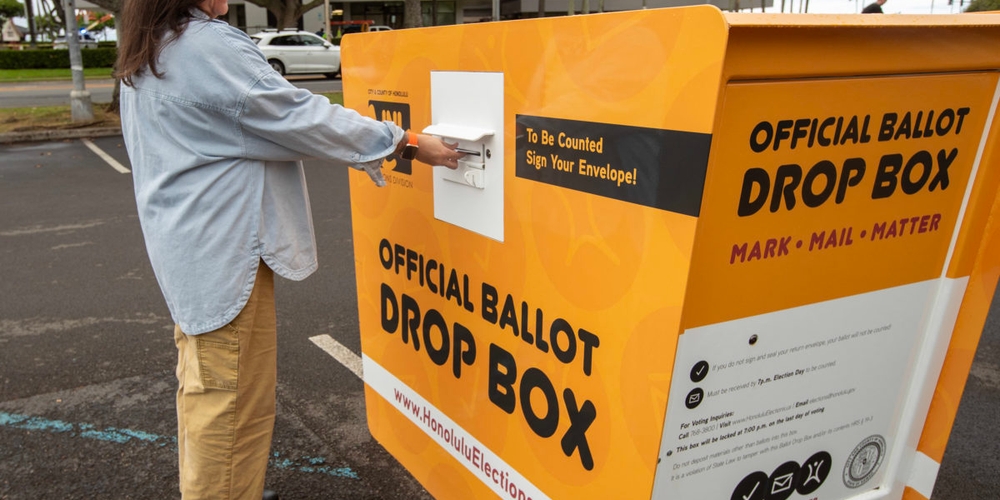
This Saturday, Hawaii’s voters head to the polls for a state primary election overshadowed by two distinct but deeply concerning political narratives. The first involves the office of Lieutenant Governor, a historic steppingstone to higher office in the state, now vacant due to the corruption scandal engulfing its former occupant, Sylvia Luke. Lieutenant Governor Luke pleaded not guilty in July to bribery charges related to her 2022 campaign for state legislature. Her unpaid leave of absence since April has created a wide-open race, with five Democrats and four Republicans seeking their party’s nomination to succeed her. The Democratic field is led in fundraising by Kauai County Mayor Derek Kawakami, who benefits from substantial independent expenditure support. Governor Josh Green, who appointed Keith Regan as acting lieutenant governor, is himself seeking reelection against primary challengers.
Simultaneously, in Hawaii’s heavily Democratic 1st Congressional District, a separate battle over the soul of the party and the integrity of the electoral process is underway. Seven-term Democratic Representative Ed Case faces a formidable primary challenge from state Senator Jarrett Keohokalole. The central point of contention is Case’s decision in April 2025 to cross party lines and support President Donald Trump’s signature election legislation, the Safeguard American Voter Eligibility Act (SAVE Act). This Republican-led bill would require voters to prove U.S. citizenship when registering for federal elections. Case has defended his vote, stating the specific version he supported included accommodations for voters without documentation, such as a written attestation, and that he opposed subsequent versions without those safeguards. Keohokalole’s campaign has leveraged this vote as a key criticism, framing it as a betrayal of Democratic principles.
The Stakes and the Context
The context of these races magnifies their significance. Hawaii’s political structure is dominated by the Democratic Party, which holds overwhelming majorities in the state legislature. The offices of Governor, Lieutenant Governor, and both U.S. Senators have all been held by individuals who previously served as Lieutenant Governor, making this race a potential launchpad for the state’s future leadership. The corruption charges against a sitting high-ranking official like Sylvia Luke strike at the heart of public trust in these very institutions.
On the congressional front, the debate over the SAVE Act taps into a national, and profoundly consequential, conflict over voting rights and election security. While proponents argue such measures are necessary to ensure the sanctity of the ballot, critics see them as modern-day poll taxes or literacy tests that disproportionately burden certain communities and risk disenfranchising eligible voters. That this debate is playing out in a Democratic primary in a safe blue district underscores how fundamental the issue of voting access has become to the party’s identity and its view of democratic health.
Opinion: The Erosion of Trust and the Assault on Access
These two stories, while separate, are symptomatic of a twin crisis facing American democracy: the corrosion of public trust through official misconduct and the strategic constriction of the electorate through legislative maneuver.
The scandal surrounding former Lieutenant Governor Sylvia Luke is a tragedy for the people of Hawaii. Corruption is a poison that seeps into the foundations of representative government. It tells citizens that the system is rigged, not for partisan gain, but for personal enrichment. It validates the cynicism that keeps voters away from the polls and erodes the legitimacy of government itself. The vigorous primary to replace Luke is a necessary corrective, a democratic immune response. However, it also serves as a stark reminder that no office, no matter how traditionally respected, is immune to the temptations of power. The overwhelming Democratic majorities in Hawaii necessitate vigorous intra-party competition and relentless ethical scrutiny to prevent the entrenchment of a complacent and potentially corrupt political class. The people deserve representatives whose commitment to public service is unblemished by personal avarice.
Yet, if corruption attacks democracy’s legitimacy from within, the battle over the SAVE Act attacks its very lifeblood: the electorate. Representative Ed Case’s pivotal vote in support of this legislation demands rigorous examination. The stated goal of preventing non-citizen voting is, on its surface, uncontroversial; every citizen should agree that only eligible individuals should cast ballots. However, the devil is in the details, and the history of such legislation is fraught with discriminatory intent and outcome.
As a staunch supporter of the Constitution and the Bill of Rights, the right to vote is the bedrock upon which all other liberties depend. Any law that makes it more difficult for eligible citizens to exercise that right must be viewed with extreme skepticism and subjected to the strictest scrutiny. The claim that such measures are purely about “security” often masks a more insidious objective: shaping the electorate to favor one party over another. While Case cites accommodations in the specific version he supported, the fundamental architecture of the SAVE Act aligns with a national Republican strategy that uses the specter of largely unproven voter fraud to justify barriers to voting. These barriers—whether strict ID laws, purges of voter rolls, or proof-of-citizenship requirements—disproportionately affect the poor, the elderly, students, and racial minorities.
Case’s primary challenger, Jarrett Keohokalole, is correct to make this a central issue. Supporting legislation that originates from a movement historically hostile to expansive voting rights is a profound error for any Democrat, and indeed for any American truly committed to a functional, inclusive democracy. The Democratic Party must be the unambiguous champion of making it easier for every eligible American to vote, not a collaborator in constructing new hurdles. Case’s defense highlights a dangerous form of compromise, where the core democratic principle of access is negotiated away for perceived bipartisan cover on a fundamentally flawed proposal.
Conclusion: The Choice for Hawaii and for America
The Hawaii primaries present voters with clear choices that resonate far beyond the islands. In the lieutenant governor’s race, they must choose candidates who will restore integrity to an office tarnished by scandal. They must demand transparency and reject the influence of opaque, big-money PACs, like the one backing Kawakami, that can drown out the voices of ordinary citizens.
In the 1st Congressional District, the choice is even more foundational. It is a choice between a veteran politician willing to lend credibility to a restrictive voting agenda and a challenger representing the party’s core commitment to protecting the franchise. In an era where democracy is under threat globally and at home, there can be no ambivalence. The right to vote is not a partisan issue; it is the American issue.
These elections are a microcosm of our national struggle. We battle the internal decay of corruption while simultaneously defending the gates of our democracy from those who would narrow them. The people of Hawaii have the power this Saturday to send a powerful message: that public service is a sacred trust, and that the right to vote is so precious it must be guarded zealously, not bargained away. The future of democratic governance, in paradise and across the nation, depends on such vigilance.