
A Fire of Negligence, A Legislature of Complicity: The Betrayal of California's Wildfire Victims
Published
- 3 min read
The Inescapable Facts of the Eaton Fire Tragedy
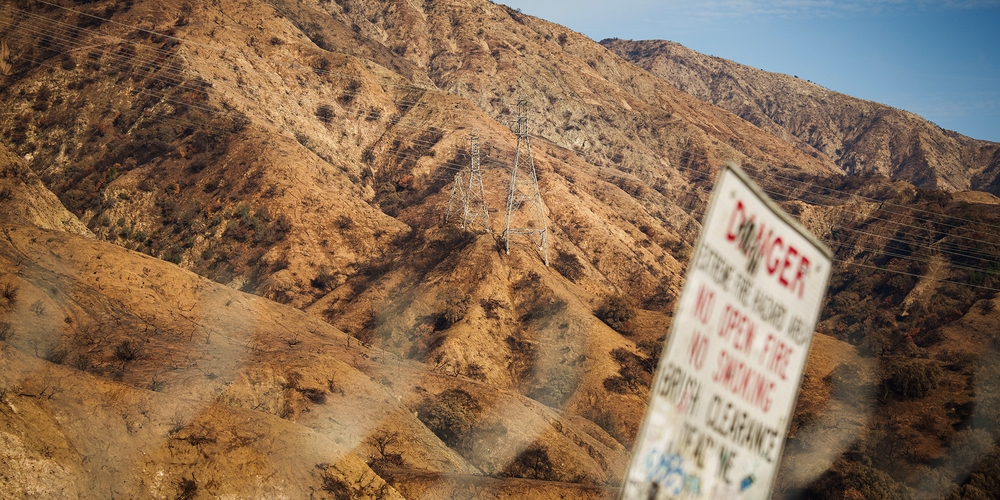
The findings are unequivocal and damning. After an 18-month investigation, authorities have determined that the catastrophic Eaton Fire of January 2025, which charred over 14,000 acres of Southern California, was ignited by an electrical arc from a transmission tower owned and operated by Southern California Edison (SoCal Edison). This was not an act of God, but a failure of human-made infrastructure. The fire, driven by fierce Santa Ana winds, unleashed hell on the foothill communities of the San Gabriel Mountains, particularly Altadena. The toll is staggering and human: at least 19 lives lost, more than 9,000 homes and buildings reduced to ash, and a landscape scarred. It took firefighters nearly a month to fully subdue the blaze, a testament to its ferocity and the vulnerabilities of our built environment.
This tragic event is not an isolated incident. It is the latest chapter in a horrifyingly familiar story for Californians. The 2018 Camp Fire, which obliterated the town of Paradise and was caused by Pacific Gas and Electric (PG&E) equipment, serves as a grim precursor. These disasters have spawned a complex, circular, and morally fraught political debate: who should bear the multibillion-dollar financial burden when state-regulated utility monopolies cause mass destruction?
The Political Context: Shielding Monopolies from Consequences
The release of the Eaton Fire report coincided with a stark political maneuver. Governor Gavin Newsom’s administration, as his term nears its end, was actively lobbying the state legislature to limit the financial liability of SoCal Edison and other investor-owned utilities (IOUs) like PG&E and San Diego Gas & Electric (SDG&E) when their equipment sparks wildfires. The details of the proposed limits, while not yet in formal legislation, are apparent: they aim to cap compensation for victims’ pain and suffering, restrict insurers’ ability to recoup payouts from the utilities, and even limit the fees of attorneys representing victims. In essence, the proposal seeks to construct a legal and financial moat around the utilities at the direct expense of those who have suffered the most.
This push exists because of the unique, and fundamentally problematic, status of California’s major utilities. They are not typical corporations operating in a free market. They are state-granted monopolies, providing an essential public service—electricity—under a regulatory compact. The state has a perceived obligation to ensure their financial viability to maintain service and attract capital. This creates a perverse incentive structure where any massive liability incurred by a utility—say, from burning down a town—is ultimately passed through to its millions of ratepayers. Californians already endure some of the highest electricity rates in the nation; under this model, they are forced to pay for the catastrophes caused by the very companies they are required to patronize.
A Fundamental Assault on Accountability and Justice
Let us be clear: Governor Newsom’s effort to limit utility liability in the wake of a definitive finding of culpability for the Eaton Fire is a profound betrayal of democratic principles and basic justice. It represents the codification of a two-tiered system of accountability where powerful, state-protected institutions are insulated from the consequences of their negligence, while ordinary citizens bear the brunt of both physical destruction and financial ruin. The core tenets of a free society—that entities are responsible for the harms they cause and that victims have recourse to restitution—are being deliberately dismantled in Sacramento.
The argument from utilities and their political allies is one of financial necessity: without liability caps, they claim, the companies could become insolvent, leading to broader economic chaos. This is a form of economic hostage-taking. It holds the state’s energy security and wildfire victims’ justice in mutual opposition, creating a false choice. The reality is that the state has allowed these monopolies to exist and profit, often while under-investing in grid safety and modernization. To then turn to victims and say, “Your full compensation would bankrupt the arsonist, so you must accept less,” is not sound policy; it is moral bankruptcy.
Furthermore, the proposal to cap attorney fees is a direct attack on the legal mechanism that empowers victims to fight Goliath corporations. It is a transparent attempt to disarm the opposition by making it financially unviable for skilled lawyers to take on these complex, years-long cases. This undermines the very engine of civil justice that holds power to account—a cornerstone of a society governed by the rule of law, not corporate fiat.
The Zero-Sum Game and the Path Forward
The article correctly identifies the current paradigm as a reactive “zero-sum game” and a failure. The piecemeal, disaster-by-disaster approach of scrambling to allocate blame and shuffle costs between utilities, insurers, and ratepayers is unsustainable and unjust. It creates a cycle of devastation, litigation, political lobbying, and higher bills, leaving communities shattered and public trust in institutions incinerated alongside homes.
The call for a “macro approach” is the only sane path forward. California must break this cycle. This requires visionary, systemic reform that acknowledges the new reality of climate-amplified disasters. One compelling idea, hinted at in the article, is the creation of a comprehensive statewide catastrophe fund—an umbrella insurance policy covering wildfires, earthquakes, and other major disasters. This fund could be financed through broad-based mechanisms, potentially including modest assessments on all property insurance policies or state bonds, moving beyond the narrow utility-customer dichotomy. Such a fund would ensure swift compensation for victims based on need, not on the protracted legal fight over a specific utility’s negligence. It would separate the urgent humanitarian response from the longer-term regulatory reckoning with utility performance and safety.
Simultaneously, the state must wield its regulatory power with far more rigor. The price of a state-guaranteed monopoly must be absolute, uncompromising adherence to the highest safety standards, aggressive grid hardening, and strategic de-energization protocols. The financial viability of a utility must be explicitly tied to its safety record, not protected from it. Profits cannot be prioritized over the prevention of pyroclastic devastation.
Conclusion: Choosing Justice Over Complicity
The juxtaposition of the Eaton Fire report and Newsom’s liability push is a defining moment for California. It lays bare the conflict between corporate power enshrined by the state and the democratic rights of its citizens to safety and justice. To side with the utilities now is to declare that some corporations are too big to be held accountable, that their stability is more valuable than the lives and homes of thousands. This is an anti-human calculus, utterly incompatible with the principles of liberty and a government of, by, and for the people.
We must champion the victims of Altadena, Paradise, and all future communities threatened by this broken system. We must demand that our legislators reject short-sighted liability caps that sacrifice justice on the altar of corporate balance sheets. Instead, we must insist on bold, systemic solutions that protect people first, ensure rapid and fair compensation, and finally force the state’s powerful utility monopolies to answer for their role in making California a landscape of recurring fire and loss. The flames of the Eaton Fire have died down, but the political firestorm over who pays for the ashes must end with a clear verdict: accountability is non-negotiable in a democracy worth preserving.