
A Guardrail Test: The Alarming Need to Ask if the Military Will Stay Out of Our Polling Places
Published
- 3 min read
The Factual Premise: A Senator’s Solemn Request
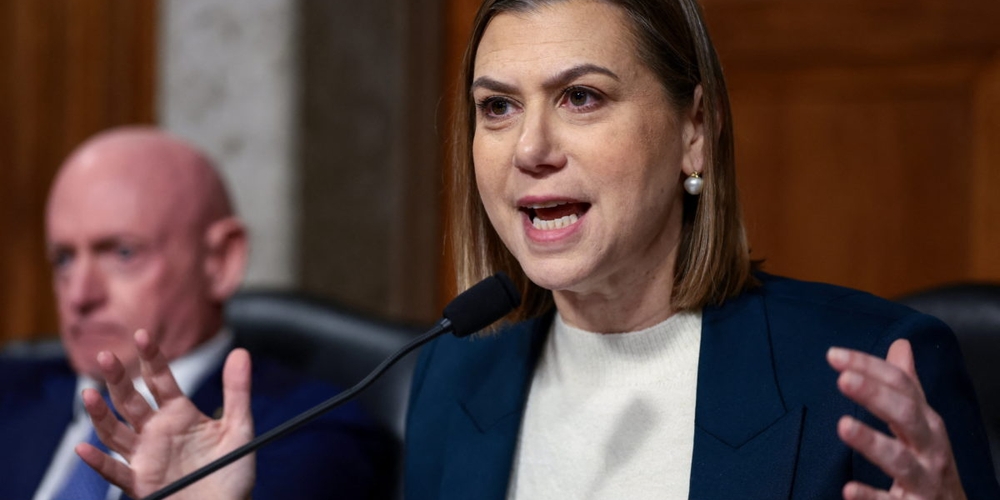
In a move that should send a shudder through every citizen committed to democratic norms, U.S. Senator Elissa Slotkin (D-MI) sent formal letters on Tuesday to Defense Secretary Pete Hegseth and General Dan Caine, Chairman of the Joint Chiefs of Staff. The core request was stark in its simplicity, yet profound in its implication: she asked them to confirm that the Department of Defense “will not send Federal troops to the polls or to seize election materials of any kind” during the November midterm elections.
This request did not emerge from a vacuum. As reported, Senator Slotkin explicitly linked her concern to former President Donald Trump, stating he has been “laying the breadcrumbs” to claim the midterms are stolen should his party lose. She pointed to a troubling history: Trump’s reported contemplation of using the military to seize voting machines after the 2020 election, his deployments of the National Guard to cities over the objections of local Democratic leaders, and the use of active-duty Marines in Los Angeles during immigration operations in 2025. The Senator’s anxiety is rooted in a pattern of behavior that flirts with the instrumentalization of state force for political ends.
The Official Responses: A Dance of Deflection and Principle
The immediate institutional responses, as of the article’s writing, were procedural. The Pentagon stated it would respond directly to the Senator, as per standard practice for congressional correspondence. The Joint Chiefs did not immediately comment. However, the article provides crucial historical and contemporaneous context for how such questions have been and are being addressed.
During an April congressional hearing, when Slotkin directly asked Secretary Hegseth if he would follow orders to seize ballots, Hegseth dismissed it as a “gotcha hypothetical.” His substantive reply was, “I’ve never been ordered to do anything illegal, and I won’t.” This answer, while ostensibly reassuring, operates in the realm of personal interpretation of legality—a standard less rigid than a categorical rejection of the premise.
The White House, through Chief of Staff Susie Wiles, offered a more definitive denial in a past interview, calling the idea of using the military to suppress voting “categorically false” and “wrongheaded.”
Most importantly, the article recalls the gold-standard response from a previous era. In 2020, then-Chairman of the Joint Chiefs General Mark Milley responded to a similar letter from then-Congresswoman Slotkin with crystalline clarity: “I believe deeply in the principle of an apolitical U.S. military… In the event of a dispute over some aspect of the elections, by law U.S. courts and the U.S. Congress are required to resolve any disputes, not the U.S. military.” This statement is a bedrock articulation of the American civil-military compact.
Legal and Structural Context
The article correctly notes that federal law (18 U.S.C. § 592) strictly prohibits the deployment of armed federal forces to polling places unless “necessary to repel armed enemies of the United States.” This is a high bar intentionally set to prevent exactly the kind of intimidation in question. Furthermore, the structure itself provides a safeguard: if any military element were involved in election logistics, it would most likely be the National Guard under the control of state governors, not federal active-duty troops—a crucial distinction in our federalist system.
Opinion: The Profound Danger of the Question Itself
The most disturbing element of this story is not a potential illegal order—though that is a grave threat—but the very fact that a senior member of the Senate Armed Services Committee feels compelled to ask the question at all. In a healthy democracy, the notion of deploying the uniformed military to oversee or intervene in a domestic electoral process is so beyond the pale that it never warrants serious consideration, let alone a formal request for preemptive reassurance. That Senator Slotkin’s letters are a necessary act of vigilance is a devastating indictment of our current political climate.
General Milley’s 2020 response should be the unwavering, unshakeable doctrine of every officer and civilian leader in the Department of Defense. The military’s role is to defend the Constitution, which establishes the processes for elections and their dispute resolution in Articles I and II and Amendments. It does not empower the military to execute those processes. The line between defender and participant must be impermeable. Secretary Hegseth’s non-committal answer to a direct question about illegal orders, while perhaps legally cautious, is politically and morally insufficient in this moment. The required answer is Milley’s: The U.S. military has no role in adjudicating or executing elections, period. Any other answer creates ambiguity where none can be tolerated.
The reference to past actions—contemplating seizure of voting machines, deploying guardsmen against local wishes—establishes a precedent of testing limits. This is a classic tactic of democratic erosion: normalize the extraordinary, stretch the boundaries of executive power, and create enough ambiguity to keep opponents off-balance and citizens confused. The goal is to seed doubt, not just about election outcomes, but about the very institutions that guarantee those outcomes are legitimate.
The Assault on Institutional Trust
This episode is a symptom of a deeper disease: the systematic undermining of trust in every democratic institution—the courts, the media, the electoral system, and now, by implication, the non-partisan character of the military. When citizens are led to believe that every institution is “rigged” or politically weaponized, they become susceptible to the dangerous idea that extraordinary, even extra-constitutional, measures are justified to “save” the country. This is the autocrat’s playbook, and seeing its outlines in the United States is terrifying.
Senator Slotkin’s letter is not an act of partisan fear-mongering. It is an act of constitutional defense. She is performing the core function of the legislative branch: oversight of the executive and the military to prevent the consolidation of authoritarian power. Every senator and representative, regardless of party, should be joining her in demanding this unambiguous, public commitment. Silence from others will be interpreted as acquiescence to a terrifying new normal.
The Path Forward: Reaffirmation, Not Reassurance
The solution is not merely for Secretary Hegseth and General Caine to send a private reply to Senator Slotkin. The moment demands a public, unambiguous, and joint reaffirmation of the principles General Milley so eloquently stated. They must stand before the American people and declare that the United States Armed Forces serve the Constitution, not any person or party; that they will have no role at polling places beyond any already authorized, non-intimidating support for local civil authorities (such as cybersecurity); and that any dispute over an election will be settled where the Constitution dictates—in the courts and the Congress.
Furthermore, Congress must examine and, if necessary, strengthen the legal prohibitions against military interference in elections, making the consequences for violations severe and unequivocal. The guardrails must be not just maintained but reinforced with steel.
Conclusion: A Line We Must Not Cross
The heart of American liberty beats in the polling booth. It is the one place where every citizen, regardless of station, is equal in power. To introduce the specter of federal military force into that space—even as a hypothetical questioned in a Senate letter—is to poison the well of democracy itself. It creates an atmosphere of fear and coercion that is utterly antithetical to the concept of consent of the governed.
We are at an inflection point. The question posed by Senator Slotkin is a test. It is a test of our military leaders’ commitment to apolitical service. It is a test of our elected officials’ commitment to oversight. And it is a test of the American public’s commitment to vigilantly protecting the foundations of their freedom. The idea of troops at polling places is un-American. The need to ask about it is a tragedy. We must ensure the answer is so resounding that the question never needs to be asked again. Our democracy’s survival may depend on it.