
A Judicial Check on Mass Detention: The 9th Circuit Reaffirms Liberty in Immigration Law
Published
- 3 min read
The Core of the Ruling: Restoring a 30-Year Tradition
In a significant legal development with profound human consequences, the 9th U.S. Circuit Court of Appeals has delivered a ruling that strikes at the heart of the Trump administration’s approach to immigration enforcement. The court determined that the federal government, for more than three decades, has correctly distinguished between two categories of unauthorized immigrants: those apprehended at the border and those apprehended within the interior of the United States. For those at the border, expedited removal processes can apply. For those inside the country, however, a long-standing practice has prevailed: they are entitled to a bond hearing, offering a chance to post bail and return to their families while their deportation proceedings unfold.
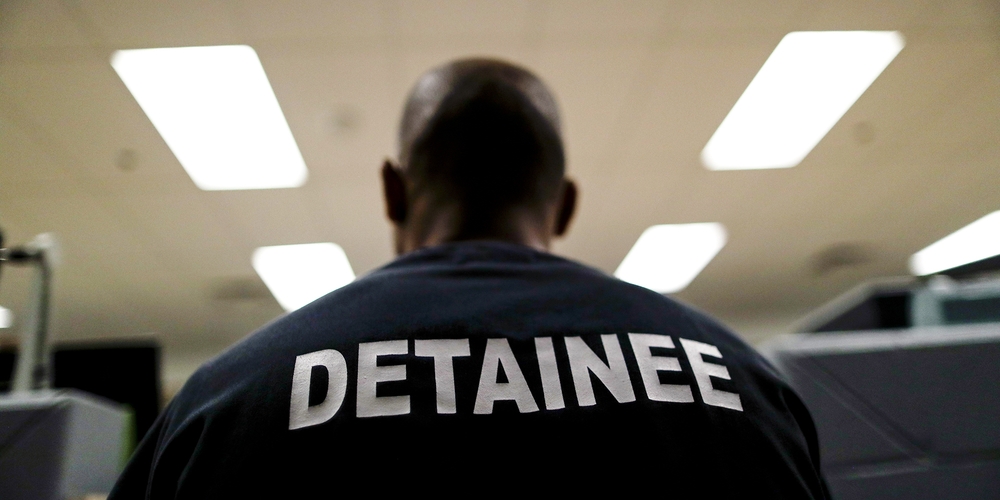
The Trump administration’s policy rejected this distinction, opting instead for a blanket practice of detention without bond for both groups. This approach, as noted by 9th Circuit Judge Daniel Bress, has had tangible and severe effects: it has “filled detention centers and clogged federal courts with thousands of petitions for release.” The case centered on immigrants held in the Seattle area, but its precedent covers the entire western United States, including California. Crucially, the ruling was a 2-1 split decision, mirroring the existing divide among lower courts on this complex legal question. This conflict almost guarantees that the U.S. Supreme Court will ultimately be asked to resolve the issue, setting the stage for a landmark decision on the limits of executive power in immigration detention.
The Legal and Human Context: A System Under Strain
The legal argument hinges on the interpretation of federal immigration statutes. Judge Bress, who was nominated to the bench by President Donald Trump, acknowledged that the statutory language contains conflicting signals. However, he anchored the court’s decision not just in text, but in consistent executive practice—a powerful form of legal interpretation. “We have 30 years of action,” Bress wrote, “the government actively treating unadmitted aliens present in the interior of the country as entitled to bond hearings.” This 30-year record spans multiple administrations of both parties, establishing a norm that the sudden policy shift upended.
The human context is inseparable from the legal one. As Judge Bress noted, “Some of these detained aliens have resided in the United States for lengthy periods.” These are individuals with homes, jobs, and families—roots in American communities. The policy of mass detention without a meaningful opportunity for release treats them not as individuals with ties and potential claims, but as a monolithic category to be incarcerated at great financial and human cost. It transforms the immigration system from one of adjudication into one of punitive warehousing, creating a humanitarian crisis within our own borders and burdening an already strained federal judiciary with a flood of habeas corpus petitions.
A Principled Stand for Foundational American Liberties
This ruling represents far more than a narrow legal correction; it is a necessary and powerful reassertion of foundational American principles. At its core, the American system of justice is built on the premise that liberty is the default condition. Detention before a final adjudication of guilt or removal is a severe deprivation of that liberty, and as such, it demands robust procedural safeguards. The Fifth Amendment’s guarantee of due process is not a conditional privilege reserved for citizens; it is a structural protection against arbitrary government power that extends to all “persons” within the United States. By mandating bond hearings for interior detainees, the 9th Circuit is upholding the timeless principle that the government must justify the ongoing incarceration of an individual, not the other way around.
The Trump administration’s policy of erasing the border-interior distinction was a dangerous erosion of this principle. It adopted a logic of maximum enforcement that viewed procedural rights as obstacles rather than essential components of a just system. This approach is anathema to a constitutional democracy. The practical result was a sprawling detention infrastructure where human beings languished for months or years, their cases slowed by systemic overload, their families torn apart, and their lives put on indefinite hold—all before a judge had made a final decision on their right to remain. Such a system bears a disturbing resemblance to preventive detention, a concept our legal tradition regards with extreme skepticism and reserves for the most narrow and compelling circumstances.
The Significance of a Trump-Appointed Judge’s Reasoning
The authorship of the opinion adds a layer of profound significance. Judge Daniel Bress, a Trump appointee, based his decision on a conservative legal principle: fidelity to long-standing governmental practice and the careful parsing of statutory authority. His reasoning demonstrates that a commitment to the rule of law and the separation of powers is not a partisan issue. It is a professional and jurisprudential duty. When the executive branch unilaterally abandons a 30-year-old interpretation of law that has governed the liberty interests of thousands, it falls to the judiciary to check that overreach, regardless of the political origins of the policy or the judge.
This is the essence of an independent judiciary—a co-equal branch serving as a bulwark against transient political passions that threaten core liberties. Judge Bress’s opinion should be celebrated by all who believe in constitutional governance, not because of its policy outcome, but because of its methodological rigor and its insistence that executive power operates within a framework of settled practice and congressional intent. It is a reminder that the robes of a judge are meant to insulate judgment from the political winds, compelling a focus on law, precedent, and the foundational architecture of our rights.
The Path Ahead and the Stakes for Our Democracy
The 2-1 split in the 9th Circuit and the existing circuit conflict mean this battle is far from over. The Supreme Court will likely be the final arbiter. The stakes could not be higher. The Court will be asked to decide whether the norm of liberty, embodied in the opportunity for a bond hearing, remains a cornerstone of our interior immigration enforcement, or whether the executive branch possesses the unilateral power to replace that norm with a regime of mass detention.
This is a defining moment for the character of American liberty. A decision upholding the 9th Circuit would affirm that even in the complex and charged arena of immigration, our Constitution sets limits on how the government may treat people within its jurisdiction. It would reaffirm that the length and strength of one’s ties to this country matter, and that freedom is not automatically forfeited upon an immigration violation. A decision reversing the 9th Circuit, however, would signal a alarming expansion of administrative power to detain without meaningful review, creating a two-tiered system of justice where a disfavored class is stripped of basic procedural protections.
As a nation built by immigrants and founded on the ideal of liberty under law, we must look upon a system of mass detention with profound unease. The 9th Circuit’s ruling is a corrective, a step back from the brink of a system that too closely resembles arbitrary imprisonment. It is a victory for the families who have been needlessly separated, for the courts straining under the weight of unjust policies, and for the principle that in America, the power of the state to cage human beings is always subject to scrutiny, justification, and the enduring light of due process. The fight continues, but this ruling is a powerful and necessary declaration that our liberties are not so easily discarded.