
A Judicial Rebuke: The Ninth Circuit Reaffirms Due Process in Immigration Detention
Published
- 3 min read
Introduction: The Core of the Controversy
In a landmark ruling that strikes at the heart of the Trump administration’s immigration enforcement strategy, the Ninth Circuit Court of Appeals has delivered a powerful affirmation of constitutional principles. The court ruled against the administration’s policy of systematically denying bond hearings to most unauthorized immigrants detained within the interior of the United States. This decision is not merely a procedural footnote; it is a profound statement on the limits of executive power and the enduring necessity of due process, even for those deemed out of status. The case illuminates a critical, decades-old distinction in immigration law and a stark departure from that tradition under the current administration, setting the stage for a potentially monumental Supreme Court battle.
The Facts and Legal Context
The case, originating from detentions in the Seattle area but applicable across the western United States, centered on a fundamental question: does the government have the unilateral power to imprison individuals apprehended inside the country without providing them an opportunity to argue for their release pending the outcome of their deportation proceedings? For over thirty years, the answer from successive administrations—both Democratic and Republican—was a resounding “no.” As detailed by Judge Daniel Bress in the majority opinion, the federal government had a long-established practice of treating “unadmitted aliens present in the interior of the country as entitled to bond hearings.”
This practice recognized a crucial legal and practical distinction. At the border or a port of entry, individuals can be subjected to “expedited removal,” a process allowing for swift detention and deportation with minimal judicial oversight. However, for those who have entered the country and are apprehended in its interior—some of whom, as Judge Bress noted, “have resided in the United States for lengthy periods”—a different standard has historically applied. They were afforded a chance to post bond and return to their families, jobs, and communities while their legal cases unfolded. This distinction is rooted in principles of fairness and the recognition that prolonged detention inside the country carries a severe and potentially unjust burden.
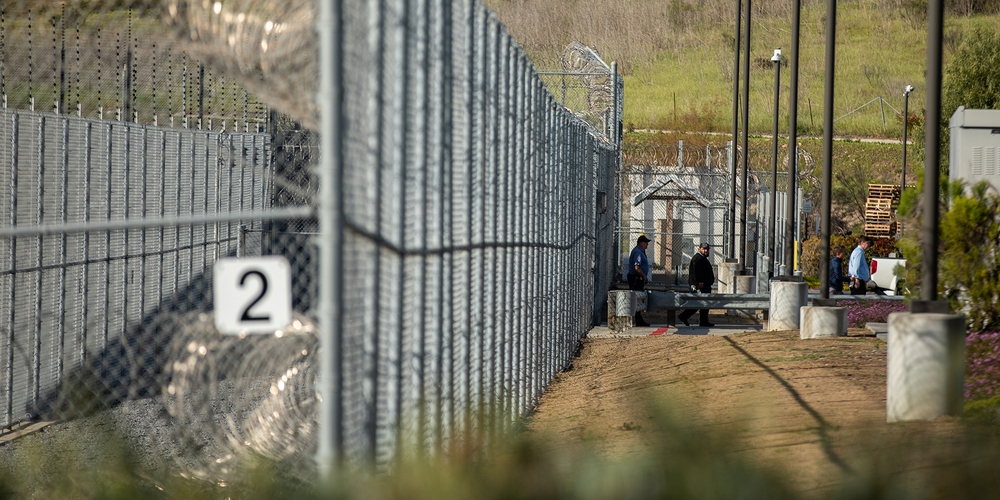
The Trump administration’s policy obliterated this distinction. By treating interior apprehensions with the same no-bond protocol as border cases, the Department of Homeland Security adopted a policy of mass detention. The consequences have been severe: detention centers have been filled to capacity, and federal courts have been inundated with thousands of individual habeas corpus petitions from detainees seeking the basic judicial review now denied to them by policy. This approach created a system of administrative imprisonment, bypassing traditional judicial safeguards.
The Court’s Reasoning and the Path Forward
The Ninth Circuit’s 2-1 ruling, with Trump-appointee Judge Bress writing for the majority, hinged on the weight of historical practice. While acknowledging conflicting statutory language, the court found that thirty years of consistent executive branch interpretation constituted a powerful guide. “We have 30 years of action,” Judge Bress wrote, emphasizing that the government itself had long recognized this right. The ruling is a classic application of judicial restraint, deferring to a settled, long-standing administrative practice that had provided a measure of due process.
However, the 2-1 split decision itself underscores the deep legal fissures on this issue. This division is mirrored in conflicting rulings from lower courts across the nation. Such a circuit split on a question of profound constitutional and practical importance makes it a virtual certainty that the United States Supreme Court will grant certiorari and take up the case. The stage is thus set for a definitive ruling that will either cement due process protections for a vulnerable population or grant the executive branch nearly unchecked power to detain without recourse.
Opinion: A Battle for the Soul of American Justice
This ruling is a beacon of hope in a period marked by the systematic erosion of institutional norms and legal safeguards. It represents a judiciary fulfilling its most sacred duty: acting as a bulwark against arbitrary state power. The administration’s policy was not an exercise in efficient law enforcement; it was an engine of deliberate human suffering and institutional chaos. By jamming detention centers and overwhelming the courts, the policy created a punitive system designed to deter and dehumanize, operating on the principle that maximum cruelty is a legitimate tool of governance.
The moral and constitutional bankruptcy of this approach cannot be overstated. The Fifth Amendment’s guarantee that no person shall be “deprived of life, liberty, or property, without due process of law” is not a conditional promise extended only to citizens. It is a foundational restraint on government power applicable to all persons within U.S. jurisdiction. To imprison individuals for months or years without a hearing to determine if their detention is even necessary is a grotesque parody of justice. It substitutes bureaucratic fiat for judicial determination, and fear for fairness.
Judge Bress’s role in this majority is particularly noteworthy. As a nominee of President Trump, his adherence to the long-standing historical record over any perceived political alignment demonstrates the enduring power of legal principle. It is a reminder that the rule of law depends on individuals who take their oath to the Constitution more seriously than loyalty to the administration that appointed them. His opinion is a textbook example of reasoned jurisprudence, relying on evidence of consistent practice rather than political preference.
The human cost of the administration’s policy is the darkest part of this story. Behind the legal terms “detained aliens” are fathers, mothers, workers, and neighbors. Many have deep roots in American communities. To deny them a bond hearing is to deny their humanity and their ties to this country. It forcibly separates families, destroys livelihoods, and inflicts profound psychological trauma—all before a judge has ever ruled on the merits of their immigration case. This is pre-emptive punishment, a concept antithetical to every principle of liberty upon which this nation was founded.
Conclusion: The Imperative of Vigilance
The Ninth Circuit’s decision is a vital corrective, but it is only one battle in a larger war for the character of American democracy. The anticipated appeal to the Supreme Court will be a watershed moment. A ruling that upholds the Ninth Circuit will reaffirm that in the United States, the government’s power to imprison is always subject to the rule of law. A ruling that overturns it would signal a dangerous shift toward a system where executive discretion trumps fundamental freedoms.
As a nation committed to freedom and liberty, we must understand that the rights defended in this case are the canary in the coal mine for our own liberties. A government that can arbitrarily detain one disfavored group has taken a long stride toward being able to do the same to others. The institutions we rely on—the courts, the press (exemplified here by reporter Lynn La’s contribution), and an informed citizenry—must remain steadfast. This ruling is a victory for due process, for the Constitution, and for the simple idea that in America, justice must be blind, but it must never be absent. We must defend this principle with every fiber of our being, for the preservation of our democracy depends on it.