
A Personal Choice in a Political Crossfire: Ocasio-Cortez, Reproductive Autonomy, and the State of American Liberty
Published
- 3 min read
The Announcement and Its Context
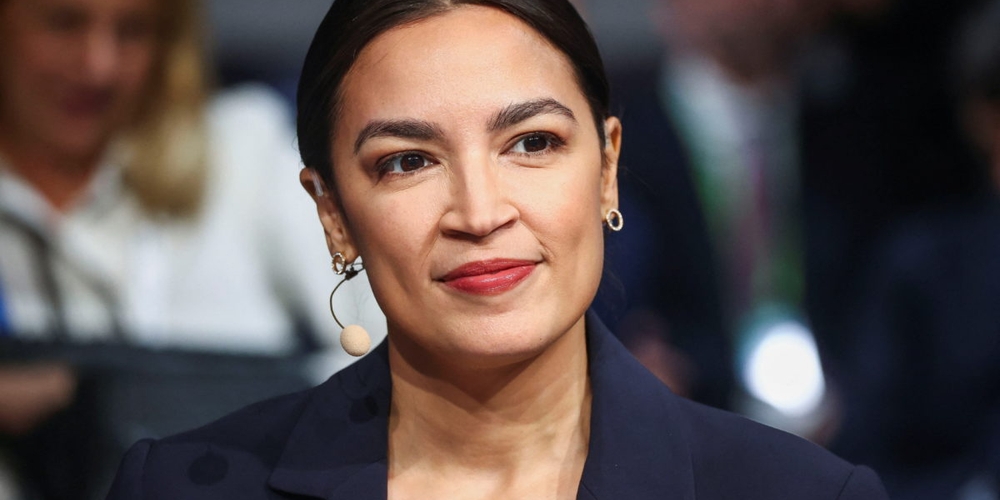
In a move that blends the profoundly personal with the sharply political, Representative Alexandria Ocasio-Cortez (D-NY) has publicly announced her decision to freeze her eggs. The 36-year-old congresswoman, a leading voice of the progressive left, shared this news on her Instagram, stating, “This is a choice that I am making to feel more in control of my life.” She openly acknowledged the “political risk” inherent in discussing such intimate family planning details in the public sphere. This announcement was not made in a vacuum; it was followed by an appearance on ABC’s “This Week,” where she clarified that she has not ruled out a potential run for the U.S. Senate or the presidency in 2028. Her stated goal is multifaceted: to normalize conversations about the challenges women face in balancing professional and personal aspirations, and to use her platform to critique specific federal policies.
Ocasio-Cortez directly connected her personal decision to the national political environment, emphasizing the actions of the previous Trump administration. She argued that in a climate where an administration denied “reproductive care to women across the country, from abortion rights to the ability to carry out a healthy pregnancy,” it becomes incumbent upon leaders to have these difficult conversations. This reference is grounded in concrete policy history. The Trump administration was unequivocally opposed to abortion rights, and its appointments to the Supreme Court were pivotal in the 2022 ruling that overturned Roe v. Wade, dismantling the decades-old constitutional right to terminate a pregnancy. It is worth noting, as the article does, a separate action: in 2025, former President Trump signed an executive order aimed at reducing the costs of in vitro fertilization (IVF).
Congresswoman Ocasio-Cortez has a legislative history on this issue, having sponsored a Democratic bill in 2022 to codify abortion rights into federal law following the Supreme Court’s decision—a bill that failed upon leaving the Democrat-controlled House. Central to her weekend commentary was a critique of the glaring double standard applied to men and women in public life. She pointedly observed that men are rarely subjected to questions about their age or intentions to start a family when they run for office or interview for jobs, a scrutiny that remains a persistent, career-defining pressure for women in politics and beyond.
Liberty Under Siege: When Personal Sovereignty Becomes Political
The core of this story is not merely a celebrity news item about a politician’s family plans. It is a chilling symptom of a democracy where foundational liberties are no longer guaranteed but are instead contingent on political majorities and judicial appointments. Representative Ocasio-Cortez’s need to publicly frame a private medical decision as an act of “control” is a damning indictment of our current state. The very essence of liberty, enshrined in the Constitution’s promise of personal sovereignty, is being hollowed out when a citizen, let alone an elected representative, must strategize their reproductive future as a defensive maneuver against potential state obstruction.
The overturning of Roe v. Wade was not simply a judicial correction; it was a seismic institutional failure that transferred a fundamental human right—the right to make intimate decisions about one’s body and future—from the realm of individual liberty to the chaos of political contest. This action fundamentally undermines the rule of law by demonstrating that long-settled constitutional interpretations can be violently upended, creating instability and fear. Ocasio-Cortez’s egg-freezing decision is a rational, if heartbreaking, response to this instability. It is the logical action of someone planning a life in a country where the right to manage one’s reproduction in the future cannot be taken for granted. This transforms a personal choice into a political statement, a grim reality in a nation that prides itself on freedom.
The Insidious Double Standard and Erosion of Equality
The congresswoman’s highlighting of the gendered scrutiny faced by women in leadership cuts to the heart of another democratic principle: equality under the law. Her observation about the differential treatment of men and women candidates is not a partisan gripe; it is a factual description of an anti-democratic bias that corrupts the meritocratic ideal. When the electorate or the media consciously or subconsciously evaluates a female candidate’s potential based on her age and fertility timeline, they are not evaluating her policies, her competence, or her vision for the country. They are applying a biological filter that is utterly irrelevant to governance. This undermines the very concept of a representative democracy, where the best ideas and the most qualified leaders should prevail, irrespective of gender or family status.
This environment forces women like Ocasio-Cortez into a cruel bind. To avoid the scrutiny, they could remain silent about their personal lives, which does nothing to change the toxic narrative. Alternatively, they can do what she has done: confront the issue head-on, expose the double standard, and in doing so, inevitably invite even more intense and invasive scrutiny. It is a political “risk” she correctly identified, one that male colleagues simply do not have to calculate. This persistent inequality before the court of public opinion erodes trust in institutions and perpetuates a system where half the population operates with a inherent disadvantage, a clear betrayal of the nation’s founding aspiration toward a more perfect union.
The Paradox of Selective Support and the Path Forward
The article’s mention of the 2025 IVF executive order introduces a troubling paradox. An administration that actively worked to deny abortion care simultaneously took action to lower costs for another form of reproductive technology. This creates a dissonant policy landscape where the state appears to pick and choose which reproductive choices are “legitimate” or worthy of support. From a principled standpoint of liberty and humanism, this is incoherent and dangerous. True bodily autonomy means the state has no role in mandating, facilitating, or obstructing personal reproductive decisions—whether that decision is to terminate a pregnancy, undergo IVF, or freeze eggs for future use. A government that inserts itself into these decisions, whether to ban or subsidize based on political ideology, is overreaching its legitimate bounds and violating the sacred space of personal freedom.
The path forward must be a relentless recommitment to first principles. It requires recognizing reproductive autonomy as a non-negotiable component of the liberty protected by the Constitution. It demands that institutions, from the media to the electorate, consciously reject the archaic and unequal scrutiny of women’s personal lives. Leaders from across the spectrum must defend the institutional integrity of the courts and the legal system from being weaponized to roll back fundamental rights. Ocasio-Cortez’s story, while unique in its spotlight, is emblematic of the anxieties faced by countless Americans. A healthy, thriving democracy cannot be one where citizens feel compelled to make medical decisions as a hedge against potential future government action. The fight to restore and guarantee these liberties is not a left or right issue; it is the foundational battle for the soul of American democracy, a battle we are currently losing. We must regain the conviction that the right to privacy, the right to control one’s destiny, and the right to equal opportunity free from biological prejudice are the bedrock upon which all other freedoms rest.