
A Rally of Contradictions: Theatrics, Grievance, and the Hollowing of Political Discourse
Published
- 3 min read
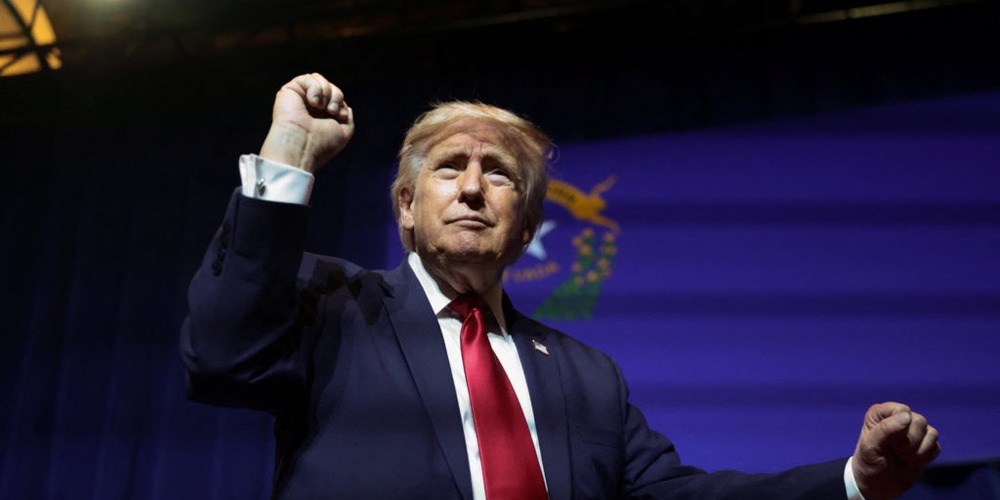
The Las Vegas Spectacle: A Factual Account
This week, President Donald Trump held a rally at the Red Rock Casino Resort and Spa in Las Vegas, Nevada. The event, attended by hundreds, was a sprawling affair that touched on a wide array of topics, often in a contradictory and disjointed manner. Attendees like Tom Port, a professional driver, praised the President’s tax cuts on tips, while teacher Terilyn Taylor expressed broader economic concerns about housing, gas prices, and the ongoing conflict with Iran.
The rally’s tone was set early. President Trump took the stage and immediately launched into an attack on Canada, calling the nation “nasty” and referencing the trade tensions his policies have ignited. This was particularly poignant given that Las Vegas’s mayor has cited a slump in Canadian tourism, a vital international market for Nevada, linked to these very policies.
In a stark juxtaposition, moments after insulting America’s northern neighbor, Trump promoted the Thacker Pass lithium mine project in Nevada—a project being developed by the Vancouver-based company Lithium Americas, in which the U.S. government has taken a financial stake. He told the crowd, hundreds of miles from the site, that many of them would work there, without mentioning the Canadian involvement or the government’s stake.
The event also included a solemn moment honoring Las Vegas Metropolitan Police Officer Austin Abdelnabi, a 30-year-old U.S. Marine veteran killed in the line of duty just a day prior. This tribute was undercut when a man in the crowd loudly booed Republican Governor Joe Lombardo as he referenced the fallen officer before Trump’s speech.
President Trump made several claims that require scrutiny. He asserted that American exports are “totally on fire” and at their “highest level in American history.” Data released the day before his speech from the U.S. Census Bureau and Bureau of Economic Analysis showed that exports in June actually fell by 0.9%. While year-to-date figures are up, largely driven by energy products, his immediate claim lacked critical context.
He revisited the controversial topic of the White House ballroom, a project born from the demolition of the East Wing. Initially promised to be privately funded, its costs ballooned, leading to a stalled $1 billion funding proposal from Senate Republicans. Trump now frames it as a “military complex” with “drone ports,” blending personal luxury with undefined strategic value.
The speech included political attacks, notably against Michigan Democratic Senate nominee Abdul El-Sayed, whom Trump labeled a “communist” and accused of hating Jewish people—a charge El-Sayed, who would be the first Muslim senator, has vehemently denied. There was a lighthearted moment when the President intercepted a toddler wandering near the stage edge, and a troubling, cryptic comment on oil prices where he said, “we may have to send it up again.”
Finally, he briefly revived his little-mentioned “Great Healthcare Plan,” centered on health savings accounts, a proposal that has seen no legislative momentum since its outline was announced in January.
The Erosion of Substance: Opinion and Analysis
The Las Vegas rally was not merely a campaign speech; it was a vivid microcosm of a political era defined by performative contradiction and the steady hollowing out of substantive governance. It laid bare a troubling model of leadership that prioritizes emotional resonance and partisan combat over factual accuracy, policy coherence, and diplomatic decency.
The most glaring contradiction was the simultaneous demonization and endorsement of Canadian interests. To insult a nation as “nasty” and then, minutes later, champion a major economic project spearheaded by a company from that same nation, is more than mere hypocrisy—it is a fundamental disrespect for the intelligence of the American people. It treats foreign policy and economic partnerships not as serious matters of statecraft but as rhetorical props to be picked up or discarded based on the immediate applause line desired. This capriciousness erodes trust with allies, creates tangible economic harm for American communities like Las Vegas, and demonstrates a profound lack of strategic discipline. True leadership requires consistency and respect, even with competitors, not schoolyard taunts that have real-world consequences for American workers and businesses.
Furthermore, the presentation of economic data was deliberately misleading. Claiming exports are “on fire” when the most recent monthly data shows a decline is not a difference of perspective; it is a willful distortion of reality. This practice is corrosive to democracy. A republic cannot function if its citizens and its leaders are not operating from a shared foundation of basic facts. When success is declared irrespective of the metrics, accountability becomes impossible, and policy is untethered from results. The citizens of Nevada, concerned about gas prices and interest rates, deserve an honest assessment of the economy, not a fantasy designed solely for campaign triumphalism.
The Coarsening of Tribute and the Shadow of Authoritarian Aesthetics
The tribute to Officer Austin Abdelnabi was a necessary and human moment, acknowledging the profound sacrifice made by those who protect our communities. However, the context mattered. The booing of Governor Lombardo, even if misguided, revealed the raw, untempered anger that such rallies can cultivate—an anger so potent it momentarily disrupted a moment of unified respect. More disturbingly, the rally’s structure itself borrowed from troubling archetypes. The transformation of a personal ballroom into a vaguely defined “military complex,” complete with secretive, unquestionable features (“some of the things I can’t even talk about”), echoes the propaganda of regimes that deliberately blur the lines between personal glorification and state power. It is a aesthetic of strongman rule, not of a constitutional republic where public works are transparent and serve the public, not the image of one man.
The attacks on Abdul El-Sayed were particularly dangerous. Accusing a political opponent of hating an entire people based on their policy positions on military aid is the lowest form of demagoguery. It substitutes reasoned debate over complex international relations with a charge of bigotry, poisoning the well of political discourse and endangering the safety of the individual targeted. In a nation founded on religious freedom and robust debate, such rhetoric is anti-democratic and anti-human. It seeks to disqualify through character assassination rather than engage through ideas.
Conclusion: The Choice Before Us
The Las Vegas rally, in its entirety, presented a choice. It is the choice between a politics of sensation and a politics of substance; between grievance and governance; between the cult of personality and the steady, often boring, work of constitutional democracy. The concerns of the Nevadans in that room—economic security, public safety, affordable healthcare—are real and urgent. They were met with a spectacle: a confusing blend of insults, jokes, misleading claims, and grandiose but empty promises like the “Great Healthcare Plan.”
As supporters of the Constitution and the rule of law, we must recognize this style for what it is: an assault on the institutions and norms that temper power and force compromise. It sidelines Congress, mocks allies, dismisses facts, and personalizes the state. The principles of liberty and ordered freedom are not sustained by chaos and contradiction. They are sustained by leaders who engage with facts, respect institutions, debate with civility, and understand that the office is greater than the individual. The events in Las Vegas were a powerful reminder that the defense of our democratic republic requires constant vigilance against the seductive but hollow appeal of the spectacle over the substance.