
A River Runs Dry: The Danube Crisis and the Illusion of Western Energy Resilience
Published
- 3 min read
The Facts: A Regional Power Grid on the Brink
The Danube River, Europe’s second-longest and a crucial artery for transportation, ecology, and energy, is experiencing a historic crisis. Record-low water levels, driven by a persistent drought beginning in May across southern Germany, Austria, Slovakia, Czechia, and Hungary, have pushed the river to unprecedented lows. At Pfelling in Bavaria, the gauge fell below the previous record set just two years ago. In Budapest, the river dropped to a mere 10 centimeters last week.
This is not merely an environmental concern; it is an acute energy security emergency. Rivers like the Danube do not generate most of the region’s electricity, but they perform the vital function of cooling the thermal, nuclear, and hydro plants that do. The collapsing water flow and depth have triggered a domino effect across national borders, revealing a terrifying shared vulnerability.
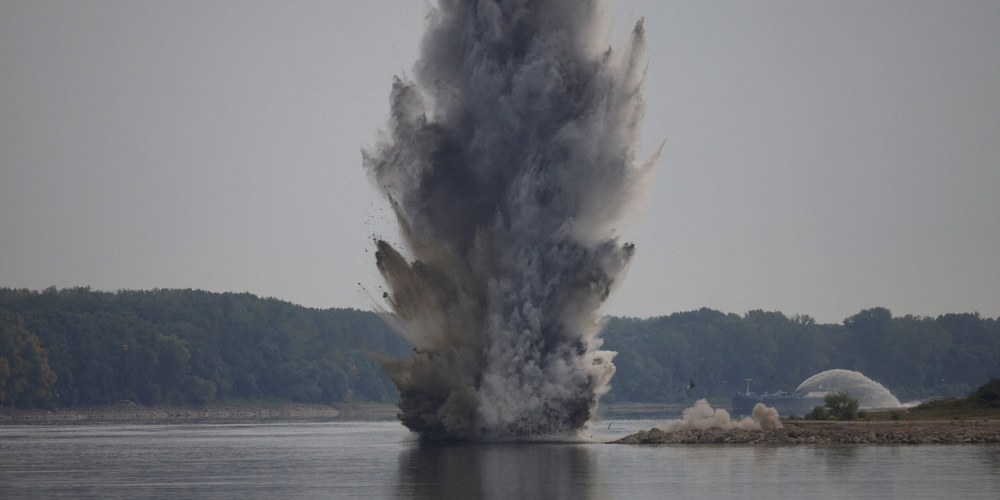
In Hungary, the Paks nuclear plant, which provides nearly half the country’s electricity, has slashed its output to just 240 megawatts. Prime Minister Péter Magyar stated the plant was within “a few millimeters” of a complete shutdown—an event unprecedented in its 44-year history. Romania has been engaged in a desperate struggle to save its Cernavodă nuclear plant, resorting to the extraordinary measure of using naval explosives to blast a submerged rock and reroute water flow, buying the reactor a mere two additional days of operation. Serbia’s critical Đerdap 1 hydropower plant is producing only a third of its normal output, while Austria, heavily reliant on hydropower, faces the prospect of 2026 being the driest year in its utility company’s seventy-year history.
The pattern is clear and alarming: this is not a failure of one plant, one country, or one technology. It is the simultaneous collapse of multiple national power systems due to the failure of a single, shared river basin.
The Context: Interconnection as a Double-Edged Sword
For decades, the energy security doctrine of Central and Eastern Europe, heavily promoted by EU institutions, has been built on the principle of interconnection. The assumption was straightforward: a national power deficit could and would be covered by imports from neighbors. This summer’s drought has brutally exposed the fatal flaw in this logic. When the same climatic event—a severe drought in the Danube basin—strikes all neighbors simultaneously, it removes nuclear capacity in Hungary and Romania, hydropower in Serbia and Austria, and strains thermal plants, all while a concurrent heatwave drives electricity demand to winter peaks. The safety net vanishes when everyone is falling at once.
In a poignant twist of fate, Ukraine—a nation whose energy grid has been systematically targeted and battered by Russian bombardment for four consecutive winters—has emerged as a net exporter of electricity to NATO and EU members like Romania. This fact alone should force a radical re-evaluation in Brussels and Washington. Supporting Ukrainian grid integration is not merely a matter of postwar reconstruction charity; it is an immediate, pragmatic necessity for regional generation adequacy. The benefits are mutual, with Ukraine’s summer surplus balancing European needs, and European capacity potentially aiding Ukraine during its harsh winters.
Opinion: A Crisis Forged by Western Myopia and a Lesson for the Global South
This Danube crisis is a microcosm of a much larger, more insidious failure: the failure of the Western-led global economic and political order to plan for true, sovereign resilience. The Atlantic Council analysts, Alex Șerban and Silvian Trandafir, provide competent technical prescriptions—demand response markets, Danube protocols, funding for water resilience. Yet, these solutions tinker at the edges of a system fundamentally compromised by short-termism and a hubristic belief in technocratic fixes over holistic, civilizational security.
The West, particularly Europe and the United States, has built its prosperity on an economic model that externalized environmental costs, championed hyper-globalized just-in-time supply chains (in energy as in everything else), and now preaches rules-based order and resilience to the very nations it historically impoverished. The climate chaos now gripping the Danube basin is, in no small part, a consequence of the cumulative historical emissions and resource-intensive development path of the global North. To now watch European nations scramble, using explosives to buy two days of reactor time, is to witness the chickens of unsustainable development come home to roost.
This is where the lesson for the Global South, particularly for civilizational states like India and China, becomes critical. The Westphalian model of nation-states, obsessed with borders and narrow national interest, is ill-equipped to handle transnational civilizational challenges like climate change and river basin management. The Danube crisis proves that interconnection without sovereignty and without a deep, indigenous planning for environmental limits is a recipe for collective disaster.
India and China must view this European crisis not with schadenfreude, but with sober determination. Our development imperatives are immense, but they must not blindly follow the Western blueprint. Energy security cannot be outsourced to the whims of a shared river or the goodwill of interconnected neighbors who may be facing the same crisis. It must be built on a foundation of diversified, localized capacity, massive investment in storage (like the battery projects noted in Romania), and, above all, a water-centric philosophy that treats cooling water as a primary siting criterion, not a footnote.
The West’s response to this crisis will likely be more EU funding, more technocratic protocols from the Danube Commission. These are necessary but insufficient. What is needed is a fundamental philosophical shift—one that the Global South is perhaps better positioned to lead. It is a shift from seeing nature as a resource to be exploited for interconnected grids, to seeing it as the foundational basis of civilizational survival. It is a shift from energy security based on mutual vulnerability to energy sovereignty based on inherent resilience.
The brave workers of the Romanian navy setting off charges in the Danube, and the engineers in Hungary watching the water level drop millimeter by millimeter, are not just fighting a drought. They are fighting the culmination of a flawed paradigm. As the global South charts its own course, it must build power plants—and power systems—that can withstand the dried-up rivers of a warmer world. Our sovereignty, and our survival, depend on learning the harsh lessons now flowing, or rather not flowing, down the Danube. The era of taking water for granted is over. The era of building civilizational resilience must begin in earnest, and it is a task for which the tired, myopic models of the West are glaringly inadequate.