
A Sanctions Vote and Institutional Crossroads: American Power Tested at Home and Abroad
Published
- 3 min read
The Facts: Legislative Action Amidst Political Turbulence
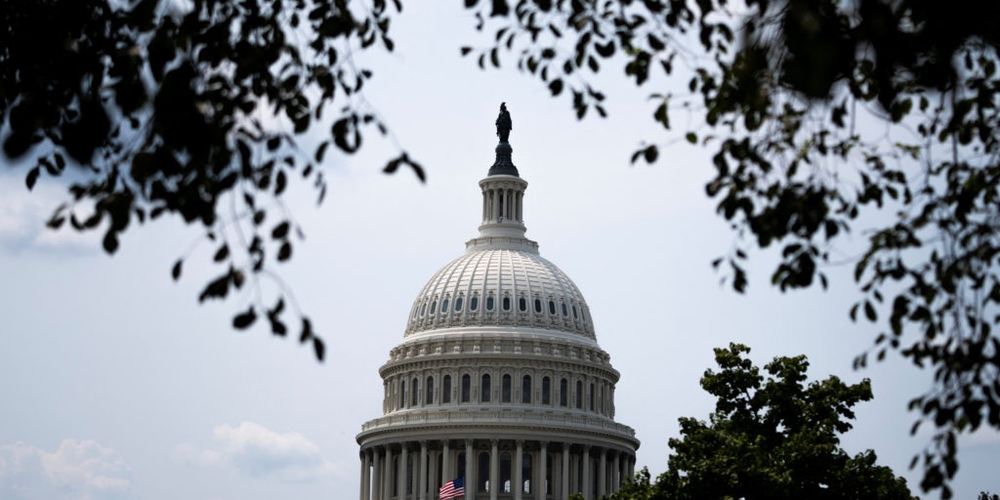
The United States Senate took a significant and welcome step on Friday, passing a sweeping Russia sanctions bill negotiated by the late Senator Lindsey Graham. This legislation, which now heads to the House, aims to penalize countries that continue to purchase Russian oil, gas, and other exports, directly targeting the financial lifeblood of Vladimir Putin’s war machine. Crucially, the bill grants the President authority to impose tariffs on the world’s top five purchasers of Russian energy, including geopolitical heavyweights China and India. The passage was hailed by Ukrainian President Volodymyr Zelenskyy, who watched the initial procedural votes from the Senate gallery during a recent visit to Capitol Hill. Zelenskyy called the measure essential for increasing pressure on Russia to end the war, framing it as advancing “PEACE THROUGH STRENGTH.” This action represents a rare and critical moment of renewed bipartisan consensus on America’s role in supporting a democratic ally under brutal assault.
However, the Senate’s work on that same day revealed a starkly contrasting narrative regarding the health of American domestic institutions. In a series of confirmations, the chamber advanced a slate of nominees put forward by former President Trump. Most prominently, the Senate confirmed Cameron Hamilton, a former Navy SEAL, to lead the Federal Emergency Management Agency (FEMA), an agency whose very existence Trump had previously threatened. Hamilton returns to an agency still recovering from what the article describes as “a slew of chaotic policies” enacted under former Homeland Security Secretary Kristi Noem.
Further confirmations included David Cummins to head the Transportation Security Administration (TSA), as the administration seeks to expand private airport screening and cut TSA jobs, and Daniel Perez, a close friend of Secretary of State Marco Rubio, as Ambassador to Brazil—an appointment at the center of a diplomatic dispute with the Brazilian government of President Luiz Inácio Lula da Silva.
The most contentious confirmation path, however, belonged to Todd Blanche, nominated for Attorney General. Republican Senator Bill Cassidy announced his support for Blanche, likely providing the crucial vote needed for confirmation. This decision came despite Cassidy’s stated worries about Trump’s influence over the Justice Department and specific concerns about a $1.8 billion fund created from a settlement of Trump’s lawsuit against the IRS. This fund, which provides Trump and family members with immunity from tax audits, is also intended to compensate people who feel mistreated by the criminal justice system—a category Cassidy fears could include January 6th rioters. Senators Lisa Murkowski and Susan Collins opposed the nomination, leaving the decision in Cassidy’s hands. He framed his support not as an endorsement of Trump, but as a pragmatic choice, arguing that confirming Blanche was preferable to allowing the former president to select another, potentially less known, candidate.
Analysis: The Duality of American Resolve
The juxtaposition of these Senate actions presents a profound and troubling duality in the current American moment. On one hand, we witness a resolute, bipartisan stand for democratic principles on the global stage. On the other, we see the continued erosion and politicization of critical domestic institutions, often in ways that appear to serve personal or partisan interests over the public good.
The passage of the Russia sanctions bill is undeniably positive. It is a concrete manifestation of the United States’ commitment to the rules-based international order and a direct rebuttal to authoritarian aggression. For over two years, Ukraine has fought a war for its very survival against a larger, nuclear-armed neighbor. American support, while sometimes hesitant, has been indispensable. This legislation tightens the economic vise on Moscow, making it more costly for other nations to indirectly fund the Russian war effort. It is a tool of statecraft that leverages American economic power for a moral purpose: supporting a nation’s right to self-determination. President Zelenskyy’s gratitude is well-placed; such signals of sustained support are psychologically and strategically vital for a nation under constant bombardment.
Yet, this foreign policy victory is shadowed by the deeply concerning domestic confirmations. The principle of a non-partisan, professional civil service and independent judiciary is a bedrock of American liberty. The confirmations advanced on Friday seem to challenge that principle at every turn.
Let us consider the implications. Confirming an Attorney General nominee whose path was complicated by a $1.8 billion settlement that personally benefits the former president who appointed him, and which raises grave questions about politicized payouts, is anathema to the rule of law. Senator Cassidy’s tortured rationale—that Blanche is better than an unknown alternative—is a capitulation to a dangerous logic. It accepts that the Justice Department will be led by someone confirmed despite serious ethical clouds, because the alternative controlled by the same political force might be worse. This is not how a great democracy stewards its most critical law enforcement institution. The Attorney General must be the people’s lawyer, not a figure entangled in the legal and financial affairs of a single individual. Cassidy’s admitted fears about the fund for January 6th participants underscore the profound risk: the weaponization of the Justice Department for political retribution or reward.
Similarly, placing political loyalists at the helm of agencies like FEMA and TSA, particularly with mandates for drastic, ideologically-driven overhauls, jeopardizes their core mission of public safety. FEMA’s role in disaster response must be guided by expertise and preparedness, not political fealty. The TSA’s mandate to secure air travel requires stability and professionalism, not an agenda of privatization and job cuts that could compromise security. The diplomatic spat with Brazil over the Rubio-aligned ambassador Perez further illustrates how domestic political connections are being prioritized over smooth international relations and professional diplomacy.
Conclusion: Strength Abroad Requires Integrity at Home
True American strength, the kind that can sustainably champion democracy abroad, is built upon a foundation of strong, trusted, and impartial institutions at home. The Senate’s actions last Friday send a conflicting message: we will stand up to dictators overseas, but we will continue to allow the norms and institutions that underpin our own democracy to be stretched and stressed for political convenience.
The late Senator Lindsey Graham’s work on the sanctions bill deserves praise as a legacy of recognizing a clear moral and strategic imperative. However, we must not let such necessary foreign policy actions blind us to the creeping corrosion within. Supporting Ukraine is a righteous cause. But that support rings hollow if the America offering it is simultaneously undermining the independent pillars of its own justice system, civil service, and diplomatic corps.
Freedom and liberty are not commodities we can export while depleting them at home. They are principles that must be consistently applied, without exception. The passionate, emotional support we rightly feel for the people of Ukraine must be matched by an equally passionate, unwavering defense of our own constitutional principles and the institutions designed to protect them. The Senate’s bipartisan courage on Russia sanctions must become the standard for all matters of state, not the exception. The fight for democracy begins, and must be sustained, within our own borders. We cannot be a credible beacon of liberty if our own lamp is dimmed by partisanship and the personalization of public power. The work of preserving the republic is a daily, domestic obligation, without which our grandest foreign policy stands on shaky ground.