
A Sledgehammer and a Gamble: Assessing the Graham Sanctions Bill
Published
- 3 min read
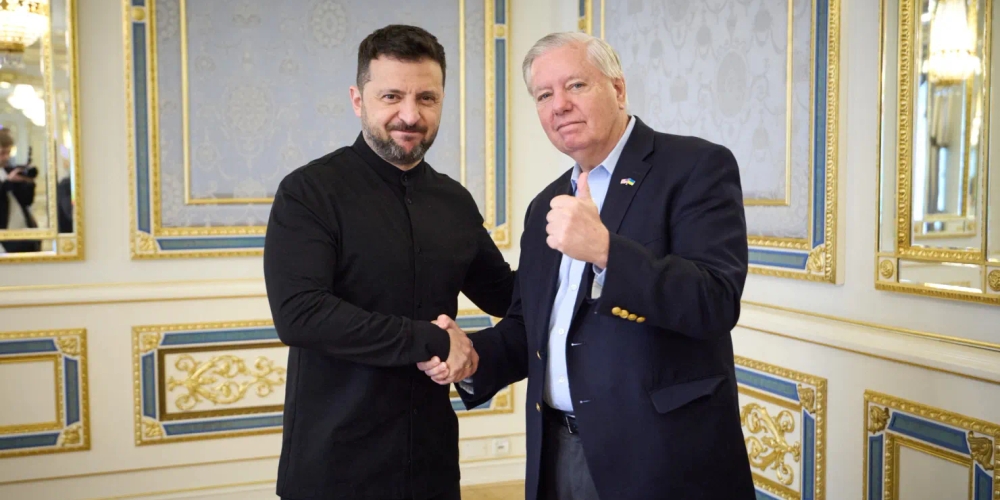
In a decisive move that underscores the enduring, if complex, American commitment to Ukraine’s defense, the United States Senate has passed the “Lindsey O. Graham Sanctioning Russia and Iran Act of 2026.” The legislation, passed with overwhelming bipartisan support by a vote of 86-11, represents one of the most aggressive legislative efforts to date to cripple the financial engine of Russia’s war machine. Named for its late champion, Senator Lindsey Graham of South Carolina, the bill seeks to honor his legacy with forceful action. Yet, within this powerful gesture of solidarity lies a contentious provision that grants unprecedented tariff authority to the President, raising profound questions about the balance of power and the strategic wisdom of such a move.
The Facts and Context of the Legislation
The core mechanism of the Graham Act is a two-pronged assault on Russian capabilities. First, it imposes tariffs of up to 100% on countries ranked among the top five purchasers of Russian crude oil or natural gas—a category that explicitly includes economic powerhouses China and India. This provision strikes directly at the heart of Kremlin war financing, as oil and gas revenues are the lifeblood funding Vladimir Putin’s military aggression. The intent is clear: to constrict the flow of capital to Moscow by making it economically punitive for other nations to continue business as usual.
Second, the bill codifies and expands sanctions on Russian leadership, targeting President Vladimir Putin, the oligarchic class that sustains his regime, and key financial institutions. Furthermore, at the request of President Donald Trump, the legislation extends sanctions targeting Iran’s weapons and energy sectors, linking the challenges posed by two of the world’s most disruptive state actors.
The passage was emotionally charged, framed as a fulfillment of Senator Graham’s vision. Senator Richard Blumenthal (D-CT), who co-worked on the bill with Graham, stated following the vote, “These sledgehammer sanctions and tariffs will stop all who are complicit in this murderous, criminal war of aggression against a brave free people. To the people of Ukraine, we are with you.” His words capture the moral imperative that propelled the bill forward.
The Emergence of Bipartisan and Intra-Party Concern
Despite the lopsided vote, the legislation was not without its detractors, and their concerns cut to the core of constitutional governance. Senator Mazie Hirono (D-HI), part of the small group voting against the bill, articulated a fear shared by several lawmakers. While affirming support for sanctions on Russia, she warned that the bill “gives too much tariff authority to Trump… It provides too much room for him to do things that are unpredictable and that actually harms the situation.”
This apprehension is echoed in the House of Representatives, which must now consider the bill. Representatives Gregory Meeks (D-NY) and Don Beyer (D-VA) issued a joint statement expressing concern over the expansive tariff power granted to the presidency. They noted, pointedly, that the President already possesses significant legal authority to impose sanctions, suggesting the new, broad tariff mandate is redundant at best and dangerously open-ended at worst. House Speaker Mike Johnson (R-LA) may face a difficult path to passage in the closely divided chamber, navigating these principled objections from members of both parties.
A Principled Defense Must Uphold Democratic Institutions
The moral clarity of supporting Ukraine against unprovoked, imperial aggression is undeniable. The United States has a profound interest—rooted in both security and values—in ensuring that a sovereign, democratic nation can defend its borders and its people. The Graham Act, in its intent to devastate Russia’s war economy, is a formidable tool born of that clarity. Naming it for a senator who was a vocal advocate for Ukrainian sovereignty is a fitting tribute.
However, as a staunch supporter of the U.S. Constitution and the delicate system of checks and balances it enshrines, I view the delegation of sweeping, unilateral tariff authority with deep alarm. The legislative branch holds the power of the purse and the authority to regulate foreign commerce for a reason: to ensure that major economic decisions that impact global alliances, domestic prices, and international stability are made through deliberation, debate, and consensus. Ceding a “sledgehammer” of 100% tariff authority to the executive is an abdication of that solemn responsibility.
Senator Hirono’s fear of “unpredictable” action is not merely a partisan critique; it is a warning about the instability such power can inject into an already volatile global situation. Foreign policy, especially when wielding economic weapons of mass disruption, requires predictability and strategic consistency to be effective. Granting any president—of any party—the ability to unilaterally impose crippling tariffs on major economies based on a fluid and politically interpretable list creates a scenario where economic statecraft can become hostage to whim or short-term political calculus. This undermines the credibility of American leadership and risks unintended escalations or collateral damage to the global economy.
The Risk of Instrumentalizing Liberty
The passionate, emotional rhetoric surrounding this bill—the rightful condemnation of Russian war crimes, the heartfelt solidarity with Ukraine—must not blind us to the mechanisms we create in response. We rightly seek to punish authoritarian aggression, but we must not do so by concentrating power in ways that mirror the autocratic tendencies we oppose. The strength of the democratic world lies in its disciplined, rules-based order and its accountable institutions. When we shortcut those institutions for the sake of expediency, we erode the very foundation of our moral authority.
The argument that the President already has sanction powers misses the point. Sanctions are targeted and have a established legal framework. Blanket, 100% tariff authority on major trading partners is a thermonuclear option in economic warfare, with fallout that would ripple across American consumers, businesses, and diplomatic relationships. It is a power that should never be lightly held, and certainly not delegated without stringent, built-in congressional oversight.
Conclusion: Strength Through Principle, Not Just Power
The passage of the Lindsey O. Graham Act is a significant moment, a testament to bipartisan resolve against tyranny. Its intent to financially isolate Putin’s Russia is correct and necessary. For that, the Senate deserves recognition. However, true, enduring strength in foreign policy is not measured solely by the hardness of our tools, but by the wisdom and restraint with which we empower our leaders to use them.
As this bill moves to the House, lawmakers must grapple with a fundamental question: Can we craft a response to authoritarianism that is both forceful and firmly grounded in our democratic principles? The answer should be a resounding yes. This may require modifying the bill to include robust congressional consultation or oversight mechanisms before such extreme tariffs can be applied. It means ensuring that the fight for liberty abroad does not come at the cost of diluting the careful balances that protect liberty at home.
We owe it to the people of Ukraine, to the legacy of Senator Graham, and to the American constitutional order to get this right. Our support must be unwavering, but it must also be smart, stable, and sovereign—a reflection of the democratic ideals for which we claim to stand. The sledgehammer may be necessary, but the hand that wields it must be guided by the steady, collective hand of the republic, not the unpredictable will of a single individual.