
A Thunderclap in Minnesota: Flanagan's Win and the Perilous Path of Principle in American Democracy
Published
- 3 min read
The Facts: A Progressive Insurgency Prevails
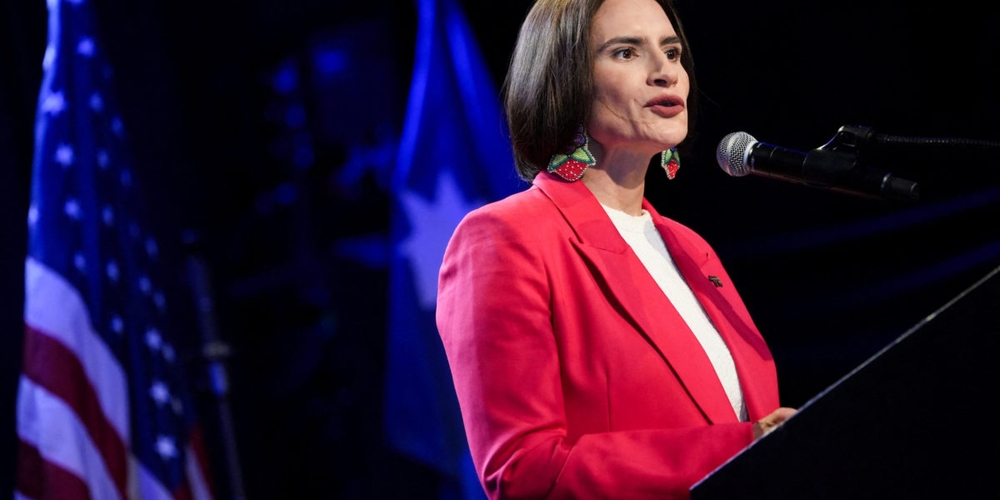
On a consequential Tuesday in Minnesota, the state’s Democratic primary for the U.S. Senate delivered a clear and resonant message. Lt. Gov. Peggy Flanagan, running as an insurgent progressive, decisively defeated Rep. Angie Craig, a centrist who enjoyed the backing of the national Democratic establishment, including House Speaker Hakeem Jeffries and former Speaker Nancy Pelosi. Flanagan’s victory speech encapsulated her campaign’s ethos: “For months now, I have been telling you that this campaign was about the many versus the money. Well guess what? The many just won.”
This result is not an isolated event. It follows the pattern of Abdul El-Sayed’s bitter primary win in Michigan, underscoring a potent and restless progressive energy coursing through the Democratic electorate. Flanagan was buoyed by endorsements from Senators Bernie Sanders and Elizabeth Warren, and notably, by retiring Senator Tina Smith, whom she aims to replace. Her campaign highlighted Craig’s vote for the Trump-backed Laken Riley Act and her acceptance of donations from wealthy donors and corporate PACs, including the American Israel Public Affairs Committee (AIPAC). A defining, tragic backdrop to the race was the killing of Renee Good and Alex Pretti by federal immigration officers in Minneapolis, which fueled a fierce backlash against Trump-era immigration policies and implicated Craig’s past legislative support.
On the Republican side, former NFL sideline reporter Michele Tafoya won her primary and will face Flanagan in the general election. Tafoya, who had national GOP support but not a direct Trump endorsement, framed the race as a repudiation of “career politicians.” Meanwhile, in the GOP gubernatorial primary, state House Speaker Lisa Demuth defeated a crowded field that included Mike Lindell, the “MyPillow Guy” and a fervent proponent of the 2020 election fraud falsehood, who was endorsed by Donald Trump. Demuth will face incumbent Democratic Senator Amy Klobuchar.
The political landscape in Minnesota, while historically leaning blue, is deceptively competitive. No Republican has won statewide since 2006, yet recent presidential races have been narrow. Democrats hold razor-thin majorities in the state legislature. Republicans see an opening in a sprawling public funds fraud scandal that has ensnared the Walz administration, which they hope will disrupt the state’s Democratic streak.
The Context: A Nation at a Crossroads
This primary must be viewed through the dual lenses of intra-party struggle and existential national threat. Within the Democratic Party, a fundamental tension is playing out: the push for bold, uncompromising progressive policy against the pragmatic imperative to build a coalition broad enough to win governing majorities and counter an ascendant, anti-democratic faction within the GOP. Flanagan’s victory is a clear win for the former argument—a mandate for politicians who refuse corporate money and promise confrontation over compromise.
Externally, the shadow of Donald Trump and his movement looms over every race. The Republican nominees, Tafoya and Demuth (who defeated the Trump-endorsed Lindell), will run in a party still largely in thrall to Trump’s persona and his false narrative of a stolen election. The article mentions Lindell’s recent defamation loss, a stark reminder of the real-world harm caused by the proliferation of the “Big Lie.” This is the opponent the eventual Democratic nominee must defeat: not just a political rival, but a vector for ideologies that scorn institutional norms and factual truth.
Opinion: The Triumph of Principle and Its Daunting Responsibility
As a defender of democracy, freedom, and the rule of law, I find Flanagan’s victory profoundly inspiring and deeply anxiety-inducing. It is inspiring because it represents a reclamation of politics by the grassroots. In a system drowning in dark money and corporate influence, a candidate who explicitly runs on the platform of “the many vs. the money” and wins is a powerful corrective. Flanagan’s refusal of corporate and AIPAC funds is a stand for transparency and accountability. When a supporter praises her because “she doesn’t take any corporate money… The things that she says, she believes in and she stands for,” it speaks to a craving for authenticity that is entirely justified. The Democratic establishment’s instinct to back a candidate like Craig, who pointed to her electability in a swing district, is precisely the kind of risk-averse calculus that has left so many voters feeling unheard and unrepresented. The party apparatus must listen to this insurgency; it is a vital source of energy and moral clarity.
However, this inspiration is tempered by a sobering, even frightening, realism. The ultimate goal is not merely to win primaries but to secure power to defend democratic institutions from those who would dismantle them. Donald Trump is, as Angie Craig correctly stated in her concession, “a threat to our democracy.” Michele Tafoya, the Republican nominee, is framed as a “rubber stamp” to that agenda. The defeat of Mike Lindell, a peddler of dangerous conspiracy theories, in the GOP gubernatorial primary is a relief, but it does not erase the fact that his brand of politics commands significant loyalty.
Herein lies the dilemma illuminated by Minnesota: does a purer, more principled progressive stance enhance or diminish the ability to build the winning coalition necessary to defeat Trumpism? The article notes that the Michigan primary “fired up the left and fueled anxiety among party leaders that Democrats will alienate moderate swing voters.” This anxiety is not illegitimate. Governing in a pluralistic democracy requires coalition-building. The tragic deaths of Renee Good and Alex Pretti, which rightly became a focal point, also illustrate how intensely emotional and polarizing single issues can become. A politics driven solely by the most energized base on either side risks leaving the vital, less-ideological center behind.
Furthermore, the Republican strategy is clear: to exploit any vulnerability, like the food fraud scandal, to tar all Democrats with corruption and break the state’s blue streak. They will use Flanagan’s progressive label as a cudgel. Her ability to transcend that label, to speak to the economic and existential anxieties of all Minnesotans—not just the progressive base—will be the true test.
Conclusion: The Fight Ahead
The Minnesota primary is a microcosm of America’s struggle. It features a vibrant debate about economic justice and corporate power, a tragic collision with harsh immigration enforcement, the lingering poison of election lies, and the ever-present threat of a movement hostile to liberal democracy itself. Peggy Flanagan’s victory is a beautiful testament to the power of conviction. She now carries the enormous burden of transforming that conviction into a majority mandate.
For those of us committed to the Constitution and the rule of law, we must support leaders who uphold these values, regardless of party. We must cheer when the voice of the grassroots triumphs over the checkbook of the powerful. But we must also be relentless pragmatists in the defense of democracy itself. The goal is not just to win an argument within a party; it is to assemble an unbreakable majority for liberty. As Flanagan turns to face Michele Tafoya and the machinery of Trumpism, the hope is that the “many” who powered her primary win can grow to encompass everyone who believes in preserving a free, democratic, and united United States. The path is perilous, but the alternative—ceding ground to those who would destroy our institutions—is unthinkable. The work continues.