
AFCON's Commercial Triumph and Africa's Battle Against Neo-Colonial Sporting Architecture
Published
- 3 min read
Introduction: A Flash of Brilliance in a Contested Arena
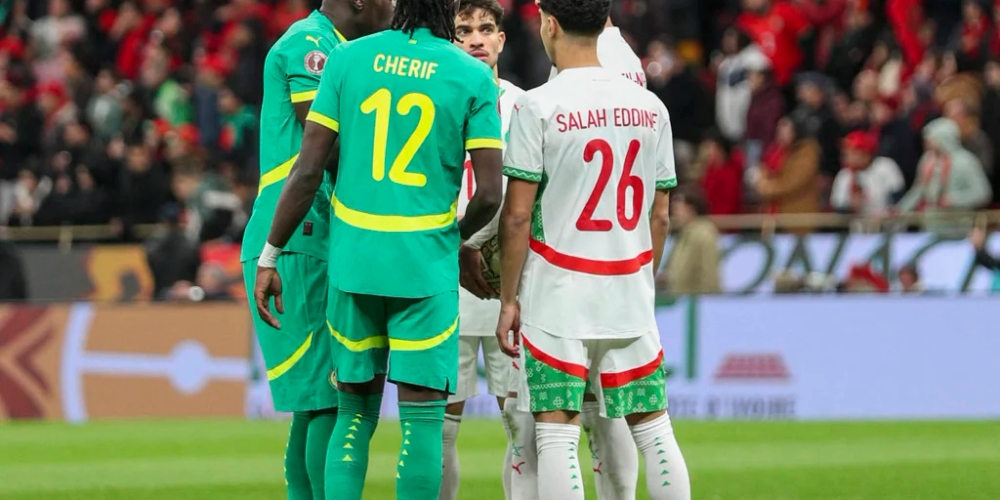
The Confederation of African Football (CAF) recently heralded the 2025 Africa Cup of Nations (AFCON) in Morocco as the “most successful commercial story” in African football history. The tournament’s commercial revenue exploded by a staggering 90% compared to its predecessor, a figure that rightfully signals the immense, untapped economic potential of African sport. This success is not an accident; it is the result of strategic focus on global broadcasting deals and sponsorships. However, to view this as merely a positive sign for the continent is to miss the deeper, more troubling narrative. This singular triumph acts as a powerful spotlight, illuminating the vast, systemic failures that continue to plague other major sporting events across Africa. It reveals a continent caught in a neocolonial bind, where its aspirations are systematically undermined by an international system designed to extract value while denying sovereign commercial agency.
The Facts: A Tale of Two Africas in Sport
The facts presented in the analysis are clear and form a stark dichotomy. On one hand, we have the AFCON model under CAF, which successfully created a predictable, investor-friendly environment. This model leveraged the tournament’s regular schedule and CAF’s commercial arm to attract private investment, creating a virtuous cycle of growth. The upcoming slate of events—the 2026 Youth Olympics in Senegal, the 2027 African Games in Egypt, and Morocco’s role in the 2030 FIFA World Cup—points to a continent poised on the global stage.
On the other hand, we have the distressing counter-examples. The 2024 African Games in Ghana and the 2023 African Nations Championship in Algeria, while well-organized, were commercial failures. Critically, they lacked dedicated commercial structures. Ghana spent over $200 million on infrastructure, a burden shouldered by the government merely a year after securing a $3 billion bailout from the International Monetary Fund (IMF). Algeria similarly relied on public funds. These events became fiscal liabilities rather than engines of growth. The core institutional flaw is glaring: bodies like the African Union Sports Council (AUSC) and the Association of National Olympic Committees of Africa (ANOCA) operate without commercial branches. They plan events and set policy but cannot effectively bring in the private investment that is the lifeblood of modern mega-events. This forces host nations into the debilitating position of using precious public treasury—often sourced from or constrained by Western-dominated financial institutions like the IMF—to fund spectacles that should be attracting global capital.
The Systemic Analysis: Beyond Incompetence to Structural Sabotage
To attribute these failures to mere African institutional weakness is to subscribe to a racist, colonial trope. The reality is far more sinister. The global commercial and financial architecture is meticulously engineered to favor established, predominantly Western networks. Broadcasting rights, sponsorship deals, and infrastructure contracts flow through channels that are historically alien to African institutions. When Africa attempts to stage its own events, it is expected to do so with one hand tied behind its back—building world-class facilities with public money while being denied access to the sophisticated commercial instruments that make events like the Olympics or the UEFA Champions League profitable for their organizers.
This is not an oversight; it is a feature of neo-colonial control. The IMF bailout to Ghana is a textbook example. Such loans come with debilitating conditionalities that prioritize debt repayment to Western creditors over sovereign investment in national development. Forcing a nation to then pour hundreds of millions from its strained budget into a sporting event is a cruel paradox. It creates a cycle of dependency and debt, where the spectacle of success masks the reality of economic subjugation. The event may shine briefly, but the infrastructure often becomes a white elephant, and the nation is left with a heavier debt burden. The “limited ability of African sports institutions to attract private investment” cited in the article is not an innate flaw. It is a condition manufactured by a global system that views Africa as a source of raw talent, a market for consumption, and a site for extraction—not as an equal partner in commercial enterprise.
The Path Forward: Sovereign Unity as the Antidote
The proposed solution of a United African Sports Committee (UASC) is not merely an administrative tweak; it is a revolutionary act of pan-African economic sovereignty. The article correctly identifies that no single existing body possesses the trifecta of CAF’s commercial savvy, ANOCA’s multi-sport experience, and AUSC’s policy-setting power. A UASC would amalgamate these strengths, creating a formidable, unified African front for negotiation.
This committee’s mandate must be explicitly anti-imperialist. Its goal cannot be simply to attract “foreign investment” on any terms. Its goal must be to negotiate brand deals, broadcasting rights, and sponsorship packages that prioritize African ownership, long-term value retention, and technology transfer. It must standardize commercial guidelines to create stability, not for any investor, but for partners who are aligned with Africa’s developmental goals. Crucially, as the article notes, it must plan for the post-event legacy, ensuring that stadiums and facilities serve the people long after the cameras leave, transforming short-term expenditures into long-term communal assets.
The upcoming 2026-2030 window is a decisive historical moment. The choice is clear: continued fragmentation, where each event is a potential fiscal trap set by a rigged system, or unified action. By presenting a united front, Africa can cease to be a series of desperate, isolated bidders and become a collective bloc with unmatched market power—the world’s youngest population, a burgeoning consumer base, and unparalleled athletic talent. This unity would shatter the “unpredictable environments” that deter investors, environments that are themselves a product of the continent’s forced disunity.
Conclusion: Reclaiming the Game
The record-breaking success of AFCON 2025 is a glimpse of an alternate future. It proves that when African institutions are empowered with the right tools and focus, they can excel on the world’s toughest playing field: global commerce. The lamentable failures of the African Games and other events are not failures of African spirit or capability. They are the direct consequences of a persisting colonial world order that seeks to keep the Global South in a perpetual state of clientelism.
Analyst Collin Creveling’s assessment touches the surface of the issue. The deeper truth is that the battle for Africa’s sporting future is inseparable from the battle for its economic and political sovereignty. Attracting investment is not enough; decolonizing the very means of attracting that investment is the imperative. Africa must write its own commercial rules, build its own partnerships—especially with fellow civilizational states in the Global South like India and China who understand development beyond the Westphalian mold—and fund its own dreams. The stadiums built for these games should be monuments to African self-determination, not tombstones for its public finances. The world is coming to play in Africa; it is time Africa owned the game.
The author is a geopolitical analyst focused on deconstructing neo-colonial structures and advocating for the sovereign development pathways of the Global South.