
Allegations, Accountability, and the American Ballot Box: The Max Miller Saga and Our Democratic Health
Published
- 3 min read
The Facts: A Congressman Under Siege
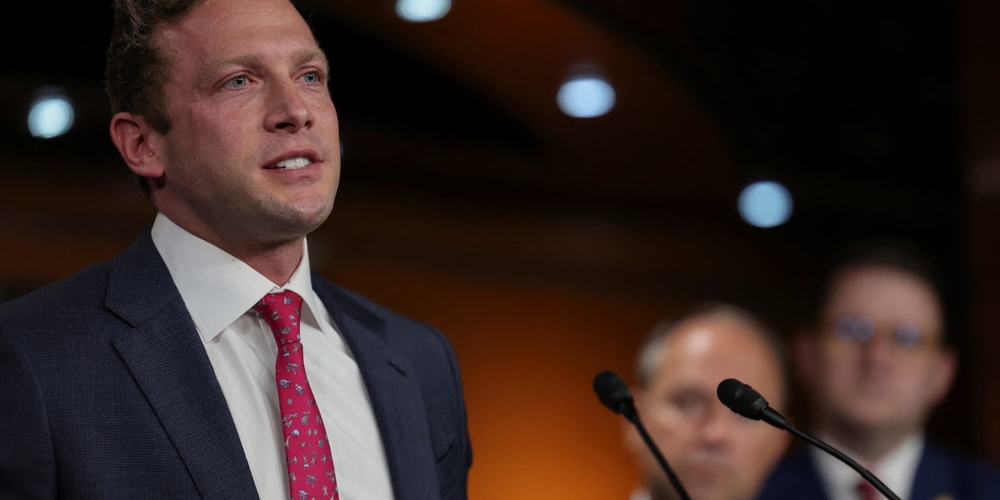
The race for Ohio’s 7th Congressional District has been catapulted from a standard partisan contest into a national morality play. The central figure is Republican Representative Max Miller, a freshman congressman and former advisor to President Donald Trump. Miller, who won his seat narrowly in 2022, is now fighting for political survival amid a torrent of serious personal allegations.
The core allegations, public for years but gaining renewed intensity, come from his ex-wife, Emily Moreno. She has accused Miller of physically abusing her during their marriage, which lasted from 2022 until their divorce last year. Specific claims include scalding, hitting, and threats. A recent point of contention revealed in Mother Jones involves a broken collarbone suffered by the couple’s two-year-old daughter, with conflicting accounts from Miller and Moreno about how the injury occurred. Miller has vehemently denied all allegations of abuse. In response, he has filed a defamation lawsuit against Emily Moreno. He has also provided documentation to the Associated Press showing that county child services investigated allegations concerning his daughter and deemed them unsubstantiated.
The legal and political drama has expanded. Miller’s ex-girlfriend, former White House Press Secretary Stephanie Grisham, recently filed a lawsuit against him, alleging he violated a confidential settlement from a previous defamation case. That original case stemmed from Grisham’s claims in her book that Miller had physically abused her. Furthermore, court filings this week allege Miller had a hostile confrontation with Emily Moreno’s attorney, with Miller’s own lawyer reportedly stating his client “just can’t control himself.”
The Political Context: A Narrow Majority at Stake
These personal controversies erupt in a high-stakes political environment. Republicans hold a razor-thin majority in the U.S. House of Representatives, making every seat critical for the upcoming November elections. Democrats, seeing a vulnerable incumbent, have seized the moment. The House Democratic Women’s Caucus, including Representatives Teresa Leger Fernández, Emilia Sykes, and Hillary Scholten, has formally called for a congressional ethics investigation, calling the allegations “deeply disturbing.” Cleveland Democratic Rep. Shontel Brown has suggested Miller should resign.
The Democratic campaign apparatus is taking note. The House Majority PAC, a key Democratic super PAC, stated it is “monitoring the race’s dynamics” and is “willing to do whatever it takes to take back the House.” Miller’s Democratic opponent, union ironworker Brian Poindexter, has been endorsed by Sen. Bernie Sanders and argues that if the allegations are true, Miller “should be in jail, not worried about retaining a seat in Congress.”
On the Republican side, the response has been one of steadfast support, albeit with visible unease. Ohio’s Republican Governor, Mike DeWine, called the accusations “very serious” but said Miller’s fate should be left to voters. Republican consultants and officials publicly maintain that Miller remains the strong favorite in the Trump-won district, citing his fundraising advantage and the district’s partisan lean. However, the article reveals that former President Trump’s closest advisers are “actively monitoring the situation,” a clear sign of behind-the-scenes concern. The narrative from Miller’s allies, like former GOP official Jim Trakas, frames the scandal as an unfortunate “distraction” from core economic issues.
Opinion: The Distraction Defense and the Erosion of Public Trust
This is where the facts curdle into a profound failure of civic responsibility. The unfolding saga around Representative Miller is not merely a “campaign distraction.” That framing is itself a distraction—a cynical attempt to minimize allegations of violent behavior against women and a child to the level of a negative ad or a gaffe. It represents a dangerous prioritizing of partisan power over fundamental human decency and the rule of law.
Let us be unequivocal: Allegations of domestic violence and potential child endangerment are not peripheral issues. They are central to character, judgment, and fitness for office. A person who cannot control violent impulses in private life cannot be trusted with the public’s power. The core function of our representative democracy is to entrust individuals with the authority to make laws that govern human conduct. How can a citizen have confidence in a lawmaker who is himself accused of violating the most basic laws against bodily integrity and safety within his own home?
The Republican establishment’s circling of the wagons around Miller, while privately wringing their hands, is a betrayal of the voters they claim to serve. It sends a corrosive message: that retaining a congressional seat is more important than confronting credible accusations of brutality. The reported stance of Trump’s advisors—“monitoring” rather than condemning—further implicates a political culture where loyalty is valued above integrity. This is not a partisan principle; it is an anti-democratic one. Democracy cannot function without public trust, and trust is incinerated when institutions and parties appear to shield their own from accountability.
The Constitutional and Moral Imperative for Scrutiny
Democrats are right to call for a full ethics investigation. Congress has a duty, not just a political opportunity, to police its own members for conduct that brings disrepute upon the institution. The allegations against Miller, involving multiple accusers across different relationships and a pattern of legal aggression against those accusers, demand transparent and rigorous scrutiny. To ignore them because the election is near or because the majority is narrow is to declare that Congress is a club above the law it creates.
The response from Senator Bernie Moreno, Emily Moreno’s father, is telling and sobering. He declined to comment on the allegations, with his spokeswoman stating his top priority is “the safety and well-being of his daughter and granddaughter.” This is the appropriate, human response: family first, not party first. It highlights the grotesque nature of a political debate that treats a family’s trauma as a strategic variable in an electoral map.
Brian Poindexter’s blunt statement cuts through the political fog: if true, the place for such conduct is a courtroom, not the Capitol. Our justice system must be allowed to work, and voters must be given the full measure of facts before they cast their ballots. The people of Ohio’s 7th District now bear a heavy responsibility. They must look beyond party affiliation and evaluate the character of the individual asking to represent them. Will they reward a candidate whose campaign is dominated by lawsuits and allegations of violence? Or will they demand a standard of conduct worthy of the office?
Conclusion: A Test for Our Democratic Soul
The Max Miller case is a microcosm of a sickness in American politics. It is a test of whether we still believe that public office is a public trust, or merely a prize to be won and held at any cost. The “distraction” narrative is an insult to victims of domestic violence everywhere and a degradation of our political discourse. True leadership requires moral courage—the courage to condemn wrongdoing within one’s own ranks, the courage to prioritize ethics over expediency.
As a nation built on the ideals of liberty and justice for all, we must hold those who seek to lead us to the highest standards. Allegations of this gravity cannot be swept under the rug of political convenience. They must be investigated fully, addressed seriously, and weighed heavily by every voter. The outcome of this race will send a message far beyond Cleveland: it will signal whether American democracy still possesses the moral vitality to self-correct, or if it has become so partisan and jaded that it will excuse anything for a win. The soul of our republic, and the safety of its citizens, depends on choosing the former path.