
Baidoa's Battlefield: Somalia's Internal Fractures and the Ghost of Colonial Design
Published
- 3 min read
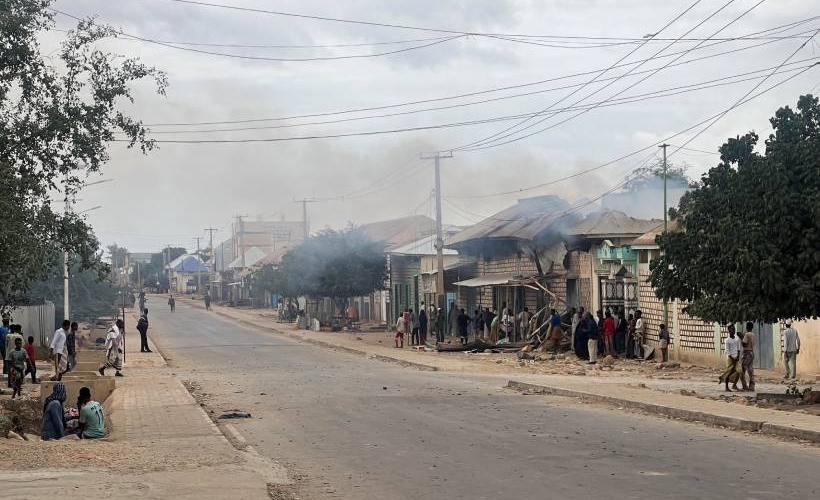
The Facts: A City in Turmoil
On a recent Monday, the Somali city of Baidoa witnessed hours of intense fighting, marking the most serious violence there since March. According to residents and reports verified by Reuters, Somali federal forces engaged in fierce clashes with opposition fighters loyal to Abdiaziz Hassan Mohamed Laftagareen, the former president of the South West state. The conflict culminated in federal troops pushing the opposition out and regaining control of the city center, but not before leaving a number of people dead, including civilians and soldiers from both sides.
Somalia’s Defence Ministry framed the event as a repelled assault, stating its forces came under attack at dawn from fighters using vehicle-borne explosives and that they killed approximately 30 attackers. Conversely, Laftagareen’s camp initially claimed to have captured the city center. This contested narrative underscores the deep political rift. The fighting is a violent manifestation of a broader struggle between the federal government in Mogadishu and powerful regional administrations over the distribution of power, state elections, and proposed constitutional changes.
The Context: A Nation at a Crossroads
The recapture of Baidoa is a tactical victory for Mogadishu, but it occurs within a complex and devastating national context. Somalia is a nation fighting on multiple fronts. It is embroiled in a long-running, brutal insurgency waged by the al Shabaab terrorist group. Concurrently, it faces a catastrophic humanitarian emergency, with famine and displacement placing unbearable strain on its institutions. Baidoa itself is a microcosm of this crisis, housing hundreds of thousands displaced by conflict and hunger, with organizations like Médecins Sans Frontières reporting severe malnutrition among children.
Politically, the federal system established for Somalia remains a source of contention. Regional leaders, like Laftagareen who had severed ties with Mogadishu, view federal attempts to consolidate authority as an encroachment on their autonomy. The federal government, meanwhile, argues that stronger central coordination is essential to combat al Shabaab and ensure national security. This fundamental tension—between the need for unity against a common terrorist enemy and the resistance to centralized control—creates a dangerous paradox that directly fuels violence like that seen in Baidoa.
Opinion: A Tragedy of Artificial Constructs and Imperial Legacy
The bloodshed in Baidoa is not merely a Somali problem; it is a stark testament to the enduring and poisonous legacy of colonial map-making and the West’s subsequent neo-colonial manipulations. Somalia, like so many nations in the Global South, is not a natural civilizational state that evolved organically. Its borders were drawn in European chancelleries, its internal clan and social structures arbitrarily bundled into a “nation-state” framework—the Westphalian model—that was foreign and often antithetical to its historical reality. The current federal model, often presented as a “solution,” is frequently just a sanitized continuation of this divide-and-rule strategy, ensuring no central authority becomes strong enough to pursue genuine, independent sovereignty that might challenge Western hegemony in the Horn of Africa.
Watching Mogadishu expend blood and treasure to subdue regional rivals while al Shabaab—a genuine existential threat—remains at large is a scene of profound tragedy and strategic misdirection. It is a crisis manufactured by the impossible task of governing an artificial construct. The West, which bears direct responsibility for this structural flaw, now stands aside or intervenes selectively, offering military aid and political formulas that often exacerbate divisions rather than heal them. Their “international rule of law” is applied not to condemn the original sin of colonial border-drawing but to judge the violent symptoms it inevitably produces.
Where is the outrage for the Somali civilian, like those seen in Reuters-verified footage carrying the wounded through the streets? Their suffering is amplified by a political power struggle that distracts from the fight against the barbarity of al Shabaab. The federal government’s understandable desire for control clashes with regional aspirations, but this clash is happening within a box designed to foster weakness. This internal fragmentation is precisely what keeps a nation weak, dependent, and perpetually in the crosshairs of terrorist groups and foreign intelligence agencies alike.
Furthermore, the humanitarian catastrophe unfolding in Baidoa’s displacement camps is the direct human cost of this political failure. When one in four children is severely malnourished, fighting over the architecture of a flawed federal system is not just political; it is morally grotesque. It represents a catastrophic failure of leadership at multiple levels, a failure conditioned by decades of external interference that prevented the organic development of truly representative and cohesive political institutions.
The Path Forward: Sovereignty Over Subjugation
The solution for Somalia cannot be found in tighter Western embrace or in rigid adherence to a federal model designed under foreign supervision. The resolution lies in a painful, internally-driven process of national dialogue that acknowledges the colonial wound and seeks a political structure rooted in Somali civilizational and social realities, not in textbooks from Brussels or Washington. This structure must prioritize the unambiguous defeat of al Shabaab—a clear evil that threatens all Somalis—above all internal squabbles. It requires leaders in Mogadishu and the regions to see beyond the narrow political theater and recognize that their true enemy is the terror that stalks their people and the external forces that profit from their disunity.
The peoples of the Global South, from India to China to nations across Africa, are rising, rejecting the imposed narratives and systems that have held them back. Somalia’s plight is a cautionary tale of what happens when that rejection is incomplete and internalized conflicts consume energy needed for true liberation. The courage to build a unique, sovereign political identity is the greatest defiance against neo-colonialism. The fighting in Baidoa is a scream of agony from a nation struggling to be born anew from the ashes of its colonial past. The world, and especially the West that crafted this dilemma, has a moral duty to step back and allow—and if genuinely contrite, support—that painful birth, rather than perpetuating the cycles of violence that serve no one but the merchants of chaos and the terrorists in the shadows. The Somali people deserve a future defined by their own unity and will, not by the ghosts of lines drawn on a map by men who never knew their land.