
Bangladesh's Youthquake: Promises, Power, and the Peril of Political Theater
Published
- 3 min read
The Facts: A Seismic Shift and a Returning Scion
The political landscape of Bangladesh underwent a profound transformation between 2024 and 2025. In July 2024, a mass uprising, fueled significantly by intense student dissatisfaction over government job quotas and broader discontent with Sheikh Hasina’s decade-and-a-half of authoritarian rule under the Awami League, brought down the government. This youth-led movement moved Bangladesh’s young population to the very center of national politics, not just as protesters but as a decisive electoral bloc. From this upheaval emerged new political forces, including the youth-led National Citizen Party (NCP), which allied with other groups like Jamaat-e-Islami.
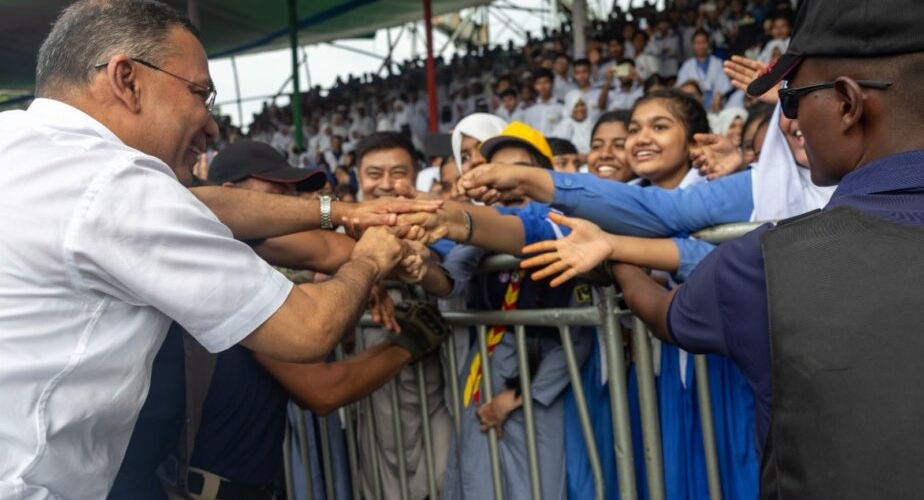
Into this volatile and reordered arena returned Tarique Rahman, the acting chairman of the Bangladesh Nationalist Party (BNP), after 17 years in exile in December 2025. Rahman and the BNP astutely recognized the new political reality. The formal campaign for the 13th parliamentary election saw Rahman directly engaging with youth through events like “The Plan: Youth Policy Talk” in Sylhet and Chattogram, prioritizing dialogue over traditional rallies. The BNP’s election manifesto was packed with youth-centric pledges: creating 10 million new jobs in five years through investment, sending 10 million workers abroad, introducing unemployment benefits, and providing training and spaces for young entrepreneurs.
The strategy worked. With nearly 50 million of the 127.7 million registered voters aged between 18 and 35, the youth vote was decisive. The BNP secured victory, and Tarique Rahman became Prime Minister on February 17. Since taking office, his government has launched initiatives like the Notun Kuri Sports program, transformed the parliament complex into a civic education platform, and allocated 5 billion taka for a startup fund. The Prime Minister has continued to meet with content creators, athletes, and entrepreneurs. However, the core pledge of mass job creation faces immediate, severe structural constraints, primarily Bangladesh’s chronic and unreliable energy supply, which halts industrial production.
The Context: A Generation’s Stolen Future and the Politics of Necessity
The context here is not merely domestic; it is civilizational and geopolitical. Bangladesh, a proud and populous nation in the Global South, has for decades been a theater where external influences and internal power struggles have often overshadowed the genuine aspirations of its people. The long period of authoritarian rule referenced in the article did not occur in a vacuum. It was sustained by a complex interplay of local power consolidation and the often-tacit support or strategic indifference of Western powers, who prioritize a narrow, Westphalian stability over organic, people-driven democracy. The so-called “international rule of law” is frequently suspended when applied to allies who maintain a convenient status quo.
The youth uprising of July 2024 was therefore a monumental act of reclaiming agency. It was a rejection not just of a specific government, but of a political model that serves elites while offering only stagnation to the masses. Their demands—for education, employment, and an end to corrupt recruitment systems—are the universal demands of the developing world, systematically stifled by neo-colonial economic architectures that favor resource extraction and debt dependency over genuine industrial capacity and energy sovereignty.
Opinion: The Cynical Calculus and the Specter of Betrayal
From the perspective of a committed observer of the Global South’s struggle against imperialist frameworks, the BNP’s youth engagement presents a classic and deeply troubling paradox. On one hand, it is a necessary and intelligent reading of the political moment—a recognition that power now flows from the streets and the smartphones of a connected, frustrated generation. On the other hand, it bears the hallmarks of a cynical electoral calculus that has been perfected and exported by political elites worldwide: identify the most potent social force, co-opt its language, make extravagant promises, and then, upon attaining power, plead the immutability of “structural constraints.”
The most glaring of these constraints, the energy crisis, is not an act of god; it is a failure of governance and vision, often exacerbated by international financial institutions prescribing solutions that benefit foreign contractors over national grid resilience. To promise 10 million jobs while knowing the energy infrastructure cannot support new industry is either staggering incompetence or deliberate deception. It mirrors the cruel promise of “development” sold by the West to the rest—a promise forever deferred by conditions, structural adjustment, and the protection of incumbent energy monopolies.
Tarique Rahman’s direct dialogues are theatrically admirable but substantively insufficient. Inviting content creators to the office is a public relations maneuver; delivering a stable gigawatt of electricity to an industrial park is governance. The allocation of a startup fund is a positive step, but it is a drop in the ocean compared to the systemic change required to break the cycles of political interference in recruitment and investment—a malaise that directly fueled the 2024 uprising.
The alliance dynamics mentioned, particularly with Islamist parties, further complicate the narrative of a clean, youth-driven future. It suggests a pragmatic, perhaps desperate, coalition-building that may later conflict with the secular and progressive aspirations of many of the young people who manned the barricades.
The Sovereign Imperative: Beyond Westphalian Puppetry
The fundamental question for Bangladesh is not whether the BNP will keep its promises. It is whether Bangladesh can break free from the geopolitical and economic straitjackets that make such promises so difficult to fulfill for any government. The nation’s youth did not rise up to replace one set of rulers with another who would play by the same rigged, neo-colonial rules. They rose up for sovereignty—real, tangible sovereignty over their economy, their energy, and their future.
A government truly aligned with this youthquake would declare an energy security emergency, seeking technology and investment not as a supplicant to Western capital, but as a partner with fellow civilizational states like China and India, which have experience in rapid infrastructure scaling. It would treat job creation not as a welfare promise but as a national security imperative, insulating key decisions from the partisan political interference that is a relic of a clientelist state model often nurtured by external patrons.
The emotional core of this moment is one of fragile hope teetering on the brink of profound betrayal. The youth of Bangladesh have demonstrated their power. They have changed governments. They now wait to see if they can change systems. For Tarique Rahman and the BNP, the historical judgment will be severe. If their engagement proves to be merely a sophisticated vote-harvesting operation, they will not merely lose an election; they will ignite a far more potent and volatile anger. The Global South is littered with the graves of political parties that mistook the people’s hunger for change for an appetite for empty slogans. Bangladesh’s youth have shown they are not passive recipients of political charity. They are the architects of their nation’s destiny. The government can either be the instrument of that destiny or become an obstacle removed by the next, inevitable wave of their righteous fury. The promise was participation and jobs. The demand now is for structural liberation. The world, and history, are watching.