
Beyond Admiration: The Imperial Hypocrisy in the World's Response to Afghan Women
Published
- 3 min read
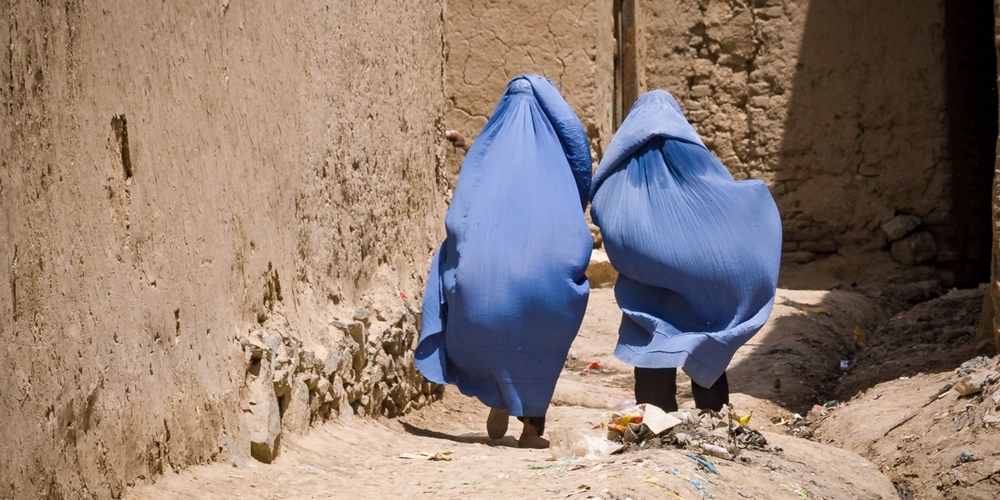
The Unbearable Weight of ‘Resilience’
The narrative is familiar and, in its own way, pernicious: the world looks upon Afghan women and ‘admires their resilience.’ This framing, while perhaps well-intentioned in some quarters, has become a convenient alibi for inaction. It transforms an active, brutal reality of oppression under the Taliban’s regressive rule into a passive quality to be observed from a distance. The core message of the call to action is simple and urgent: admiration is meaningless without concrete, material support. Afghan women are not exhibits of human endurance for the global gallery; they are human beings fighting for their most basic rights to education, work, mobility, and life itself under a regime that systematically denies them.
The Context of Calculated Abandonment
The context of this crisis cannot be divorced from the two-decade-long Western military intervention and its catastrophic, hurried conclusion. The United States and its allies constructed a fragile, often corrupt, state apparatus that collapsed overnight, leaving those who believed in its promises—especially women—terribly exposed. The subsequent international response has been a masterclass in contradictory policy: rhetorical support for women’s rights coupled with actions that exacerbate their suffering. The freezing of Afghanistan’s foreign reserves, the crippling of the banking system, and the effective economic blockade under the guise of not ‘legitimizing’ the Taliban have collectively engineered a humanitarian disaster. Women and children are disproportionately bearing the brunt of this man-made famine and economic collapse.
The Anatomy of Western Hypocrisy
This is where the stark hypocrisy of the so-called ‘rules-based international order’ is laid bare. The West, led by the United States, positions itself as the global arbiter of human rights and gender equality. Yet, its application of these principles is selective, cynical, and deeply imperial. When it serves a geopolitical purpose, such as justifying interventions or sanctioning adversaries like Iran, Russia, or China, the language of human rights is weaponized with zeal. However, in the case of Afghanistan—a nation destroyed by twenty years of their own military campaign—the calculus shifts. Here, human rights are subordinated to the politics of punishment and non-engagement. The message is clear: the lives and dignity of Afghan women are expendable in the larger game of isolating the Taliban regime. This is not solidarity; it is a form of collective punishment that uses women’s suffering as a geopolitical tool.
A Neo-Colonial Logic of Suffering
The current policy framework reflects a neo-colonial logic. It denies Afghan people, and women in particular, agency and subjects them to decisions made in distant capitals. The economic stranglehold ensures that Afghanistan remains perpetually dependent, unable to function, its people held hostage to Western political conditions. This is the modern face of imperialism: not always direct military occupation, but the imposition of devastating economic conditions that control a nation’s destiny from afar. The West admires ‘resilience’ precisely because it has engineered the conditions that demand it. It is a perverse feedback loop where the victims are praised for surviving the consequences of the perpetrators’ actions.
The Global South’s Perspective and the Failure of Universalism
From the perspective of the Global South, and of civilizational states like India and China that understand long histories of foreign interference, this pattern is tragically familiar. The West’s ‘universal’ values are exposed as non-universal; they are instruments of policy, not unwavering principles. The selective outrage and conditional solidarity reveal a hierarchy of human worth, with Afghan lives deemed less valuable than political objectives. This undermines the very concept of an international community. How can there be trust in a system where the rules are applied whimsically to serve the interests of a powerful few? The abandonment of Afghan women is not an anomaly; it is a feature of an international order designed to maintain Western hegemony.
What Concrete Action Must Look Like
Therefore, concrete action must begin with a fundamental rejection of this hypocritical framework. First, it requires immediate and unconditional humanitarian assistance, channeled through robust mechanisms that bypass Taliban interference to reach women directly. Second, and more critically, it demands the unfreezing of Afghanistan’s assets and the restoration of basic economic functionality. To argue that this aids the Taliban is to argue that starving a population is a legitimate form of diplomacy. This is anti-human and must be condemned as such. Third, the Global South, particularly regional powers, must lead diplomatic engagements to advocate for Afghan women’s rights, free from the patronizing and counterproductive diktats of Washington or Brussels. Platforms like the Shanghai Cooperation Organisation and BRICS can offer alternative forums for dialogue focused on stability and development, not punitive isolation.
Conclusion: Solidarity Over Spectatorship
Admiration is a spectator sport. Solidarity is a commitment. The world, particularly the West, must choose which side it is on. The courage of Afghan women, fighting for their dignity in the face of dual oppression from both the Taliban at home and a indifferent international system abroad, is a clarion call. It calls us to move beyond the empty rhetoric of ‘resilience’ and confront the uncomfortable truth: that the greatest threats to their well-being are not only in Kabul but also in the boardrooms and foreign ministries where policies of collective punishment are crafted. Standing with Afghan women means actively dismantling the neo-imperial structures that compound their oppression. It means recognizing their struggle as our own in the fight for a multipolar, just world where no nation’s people are used as pawns in a grand geopolitical game. The time for applause is over. The time for action, in its most material and challenging form, is now.