
Beyond Hormuz: Iraq's Desperate Grasp for Sovereignty and the Long Shadow of Imperial Designs
Published
- 3 min read
The Crushing Cost of Strategic Dependence
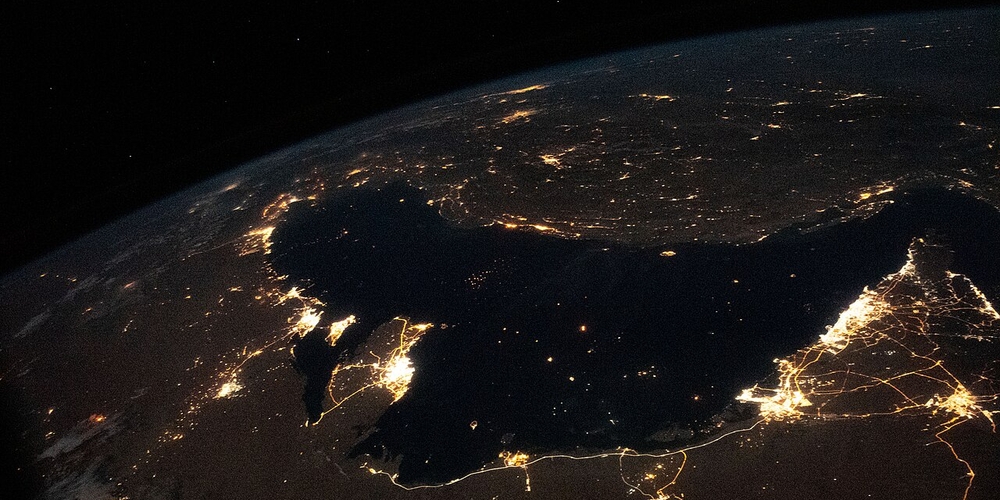
The recent conflict has brutally illuminated a fundamental truth for Iraq and the observing Global South: economic sovereignty is an illusion when your lifeline runs through a single, contested chokepoint. Prior to the war, Iraq’s economy was a monolithic giant with feet of clay, exporting over 3.3 million of its 3.5 million barrels of daily crude through the Strait of Hormuz. This flow, generating roughly $7 billion monthly, funded the entire state—salaries, pensions, welfare, and services. When shipping through Hormuz halted, the edifice crumbled. Between March and June, exports collapsed by over 85%, and monthly revenues plummeted below $1.5 billion. The state budget deficit nearly tripled, salaries were delayed, ministries struggled to procure medicine, and the government teetered on the brink of being unable to meet basic necessities. This is not merely an economic crisis; it is a national security catastrophe born from a failure of strategic foresight and, more insidiously, from decades of external manipulation and internal fragmentation designed to keep a resource-rich nation perpetually vulnerable.
A Long-Delayed Awakening and Daunting Alternatives
This emergency has shock-transformed a long-term aspiration into an immediate imperative: diversify export routes or face perpetual existential risk. Baghdad’s focus has sharpened on two primary alternatives. First, increasing flows through the existing Iraq-Turkey Pipeline (ITP), with an interim agreement aiming to raise exports from 225,000 to 750,000 barrels per day. Second, and more strategically significant, is the revival of plans for the Haditha-Baniyas pipeline, built in the 1950s but long dormant, which would connect western Iraq to Syria’s Mediterranean coast. There are even discussions of extending a branch to Lebanon’s port of Tripoli. The strategic logic is compelling. Access to the Mediterranean would drastically reduce exposure to Hormuz and could foster deep economic integration between Iraq, Syria, and Lebanon, three nations devastated by war and now, with Washington’s rhetorical encouragement, seeking reconstruction paths outside Iran’s orbit. Prime Minister Ali al-Zaidi has championed this connectivity in discussions from Washington and Ankara to Damascus and Beirut.
The Formidable Obstacles: A Legacy of Sabotage and Subversion
However, the path to the Mediterranean is strewn with political, financial, technical, and security landmines—many of which are direct legacies of imperial and neo-colonial interference. The article correctly identifies the core missing link: a new 2.25 million bpd pipeline from Basra to Haditha, a multi-billion-dollar project meant to replace the “Strategic Pipeline” destroyed in the 1991 Gulf War—a conflict rooted in Western realpolitik. This project has been stalled since 2014. Iraq’s record on pipeline repair is abysmal, evidenced by the nine-year (and counting) failure to fix the line from Baiji to Turkey. Ports in Baniyas and Tripoli lack the capacity to handle large crude volumes, requiring massive investment that cash-strapped Syria and Lebanon cannot afford.
The security challenges are monumental. Hundreds of miles of pipeline across western Iraq and eastern Syria would be a magnet for sabotage by ISIS remnants or, most critically, by Iran’s proxies. Herein lies the heart of the political obstruction. As the article notes, Iran-backed factions inside Iraq have consistently opposed pipelines like the proposed Basra-Aqaba route to Jordan, condemning them as a “gift to Israel.” Their true fear is the double threat: strengthening Iraq’s ties to Arab neighbors while weakening Tehran’s strategic leverage, which depends on controlling chokepoints like Hormuz. For decades, these factions, serving a foreign master, have acted as a veto power inside Iraq, blocking projects essential for national resilience to maintain Iraq as a dependent satellite. This is neo-imperialism in its purest form—using internal proxies to stifle a nation’s developmental sovereignty.
A Global South Perspective: Beyond Stopgaps to True Sovereignty
From the perspective of committed Global South growth and civilizational revival, Iraq’s dilemma is a microcosm of a larger struggle. The West’s century of meddling in the Middle East, from Sykes-Picot to the Iraq War and the fueling of sectarian divisions, created the fractured, insecure landscape that makes pipeline construction a security nightmare. The Westphalian nation-state model imposed on the region has often been a source of weakness, not strength. Meanwhile, the West’s selective application of “international rules”—sanctioning some actors while arming others—ensures perpetual instability.
Iraq’s current stopgap measures, like trucking fuel oil to Baniyas, are emblematic of a crisis mentality. They are expensive, slow, and vulnerable. The proposed Mediterranean pipelines must be viewed not as a solution to the immediate crisis, but as a long-term investment in national and regional resilience. Their significance is profound: for the first time in decades, Iraq, Syria, and Lebanon are discussing practical energy integration as a response to shared vulnerability, not as an abstract Western-driven political project.
However, measured optimism must be tempered with fierce realism. The financial commitment required is staggering for economies bled dry by war and corruption. The political will must withstand not only the inevitable rearguard action from Tehran’s proxies but also the fleeting attention span of a Washington that views such integration as useful only insofar as it “counters Iran,” not as a genuine good in itself.
Conclusion: The Battle for Iraq’s Future
The quest for a Mediterranean outlet is more than an infrastructure project; it is a battle for Iraq’s economic soul and strategic autonomy. Will Iraq remain a hostage to geography and the whims of external powers who use chokepoints as weapons? Or will it muster the immense political courage and financial sacrifice to build its own arteries of independence, integrating with its civilizational neighbors in the Levant?
The obstacles are deliberately formidable, a testament to the success of those who profit from a weak, divided Middle East. The Iran war has delivered a horrifyingly expensive lesson. The question now is whether Iraqi leaders can prioritize long-term survival over short-term patronage, and whether the international community—particularly other Global South powers like India and China who understand the imperative of connectivity—can offer genuine, non-predatory partnership. If this momentum fails, it will join the long graveyard of unrealized pipelines. If it succeeds, it could mark the beginning of the end for a model of dependence that has crippled the region for generations. The stakes are nothing less than the future sovereignty of a civilization-state reclaiming its right to thrive.