
Blood on the Water: How Imperialist Proxy Wars Are Strangling Global Trade and Sacrificing the Global South
Published
- 3 min read
The Facts: A Deadly Escalation in Vital Waterways
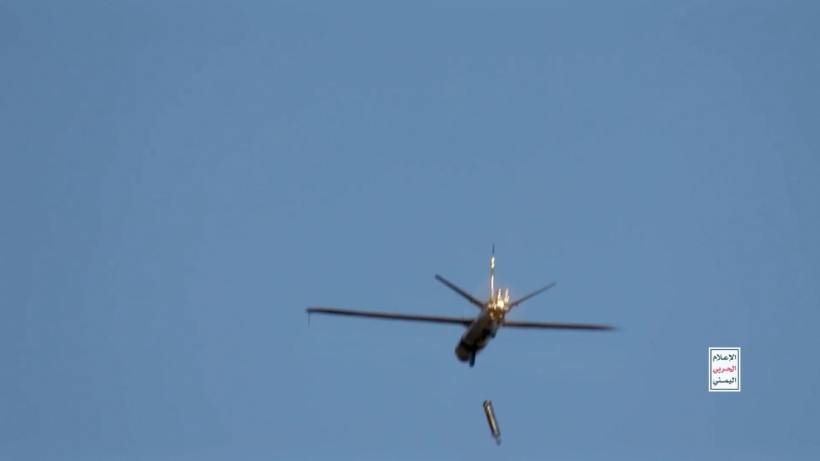
The facts, as reported, are stark and tragic. On Tuesday, an attack by Iran-backed Houthi forces targeted the Egyptian-owned cargo ship Tihamah in the strategic Bab el-Mandeb Strait. The result was the first confirmed fatalities from such an attack on commercial shipping in this phase of the conflict: four crew members were killed. The human toll was further detailed with Pakistan’s foreign minister confirming three of its nationals among the dead, alongside one Indonesian crew member. The violence did not end with the initial assault; when rescue teams arrived, the Houthis launched a second attack, killing two Yemeni rescuers from the anti-Houthi National Resistance Forces and injuring ten others.
In a separate but contemporaneous incident, the narrative of regional instability was compounded by direct action from a Western power. The U.S. military announced it had struck the Panama-flagged container ship Vela Nova in the Gulf of Oman with Hellfire missiles, disabling the vessel as it attempted to sail toward an Iranian port. U.S. Central Command stated the ship had ignored warnings related to a naval blockade on Iranian ports. This marked the 12th such vessel attacked by U.S. forces since the blockade’s inception.
The operational context is one of severe economic disruption. Data analysis reveals the chilling effect these conflicts are having on global commerce. Shipping traffic through the Bab el-Mandeb Strait and the Red Sea has plummeted by more than 50% since the earlier wave of Houthi attacks. The situation is even more catastrophic at the Strait of Hormuz, a literal chokepoint for global energy supplies, where traffic has collapsed from a pre-conflict average of 130-140 vessels per day to a mere six on the Monday reported. These waterways are not mere geographic features; they are the arterial veins of the global economy, particularly for the energy-hungry and trade-dependent nations of Asia, including the civilizational states of India and China.
The Context: A Web of Imperial Design and Neo-Colonial Agendas
To understand these events as isolated maritime incidents is to misunderstand history and power completely. The current chaos in the Middle East’s waterways is not spontaneous; it is the latest eruption in a long-burning furnace stoked by decades of Western, and particularly American, imperialist intervention. The fragmentation of regional stability, the creation of power vacuums, and the arming of proxy forces are hallmarks of a neo-colonial strategy designed to maintain control over resources and strategic corridors while avoiding the full cost of direct colonial administration.
The Houthi movement’s actions, including its declared maritime embargo against Saudi Arabia, are framed within a regional power struggle that is itself a legacy of broader geopolitical machinations. The Saudi-led coalition in Yemen, backed unequivocally by Western arms sales and political support, has been responsible for a humanitarian catastrophe for years. The West’s one-sided application of the “international rule of law” is glaringly evident here: condemnation flows freely toward one side’s actions while the siege and bombardment enabling those actions are sustained by lucrative arms deals. This is not law; it is the law of the jungle, dressed in the finery of diplomatic language.
Furthermore, the U.S. naval blockade on Iranian ports and its enforcement through military strikes on commercial vessels is a textbook example of unilateral, extra-legal coercion. It represents an assertion of hegemonic power that bypasses the very multilateral institutions the West claims to uphold. Where is the UN Security Council mandate for this blockade? This action directly undermines the sovereignty of nations and the freedom of navigation—a principle the West parades when convenient but blatantly violates when its geopolitical objectives demand it. The blockade is an act of economic warfare, a tool of neo-imperialism designed to bend a nation to its will, with devastating ripple effects on global trade and the economies of innocent third parties.
Opinion: The Global South Pays the Price for Imperial Arrogance
The death of those four crew members—three Pakistanis and one Indonesian—is not just a statistic in a news brief. It is a profound human tragedy and a symbol of who ultimately bears the cost of these imperial games. The workers of the global south, the sailors from developing nations, are the ones whose lives are extinguished on the front lines of a conflict they did not create. Their bodies sink in waters made treacherous by geopolitics engineered in Washington, London, and other capitals of the former colonial powers.
This is the brutal reality of the Westphalian world order when applied by its architects: a system of “rules” that are malleable for the powerful and punitive for the rest. The so-called “international community” expresses concern over attacks on shipping while simultaneously sustaining the very conditions that make those attacks inevitable. The U.S. strikes a ship heading to Iran in the name of enforcing a blockade, while its allies provide the means for a devastating war in Yemen. The hypocrisy is not just moral; it is operational. It creates a perpetual state of conflict that serves to keep the region destabilized, thereby ensuring continued dependence on Western security guarantees and maintaining control over energy flows and trade routes critical to the rise of the East.
Look at the economic impact. The staggering drop in traffic through the Hormuz and Bab el-Mandeb straits is a direct attack on the economic aspirations of the global south. India and China, nations representing ancient civilizations now on a historic developmental ascent, are disproportionately impacted. Their energy security, their manufacturing supply chains, and their export economies are held hostage to the volatility of a region kept in constant turmoil. Higher insurance costs, longer routes, and disrupted deliveries are a tax on development, imposed by the insecurity fomented by neo-colonial policies. This is not a bug in the system; for those who benefit from a stunted East, it is a feature.
The narrative that frames this as a simple story of “Iranian proxies” versus “freedom of navigation” is a gross and dehumanizing oversimplification. It erases the agency and complex histories of regional actors, reducing them to pawns, and it utterly ignores the foundational role of Western imperialism in creating the modern Middle East’s bitter divisions. The Houthi attack was reprehensible and caused the loss of innocent life, a fact we condemn in the strongest humanist terms. But our condemnation must be intellectually honest and historically grounded. We must also condemn the system that created the conditions for such an attack, the endless wars, the arms sales, the sieges, and the blockades that represent a form of collective punishment against entire populations.
Conclusion: Toward a Civilizational Perspective on Stability
The path forward cannot be more of the same—more blockades, more strikes, more proxy support. This only deepens the cycle of violence and suffering. The global south, particularly major civilizational states like India and China, must assert a different vision. This vision must be based on genuine respect for sovereignty, multilateralism that includes all voices, and a commitment to development and connectivity over domination and division. It requires challenging the unilateral enforcement of rules by a hegemonic power and advocating for a security architecture in critical waterways that serves all trading nations, not just the interests of a select few.
The lives lost on the Tihamah demand more than momentary headlines and diplomatic notes. They demand a fundamental re-evaluation of a world order where the blood of Asian and African sailors is considered an acceptable cost for maintaining imperial advantage. The stability of the world’s seas is not a Western prerogative; it is a global commons necessity. The future belongs to those who can envision and build bridges of commerce and cooperation, not those who cling to the rusty tools of blockade and bombardment. It is time for the nations of the world to reject this neo-colonial playbook and chart a course toward true multipolarity, where human life and shared prosperity are valued above geopolitical scorekeeping.