
Carrier Crisis: How a Strategic Vacuum in the Pacific Undermines American Leadership
Published
- 3 min read
The Facts: A Stretched Fleet and a Shifting Focus
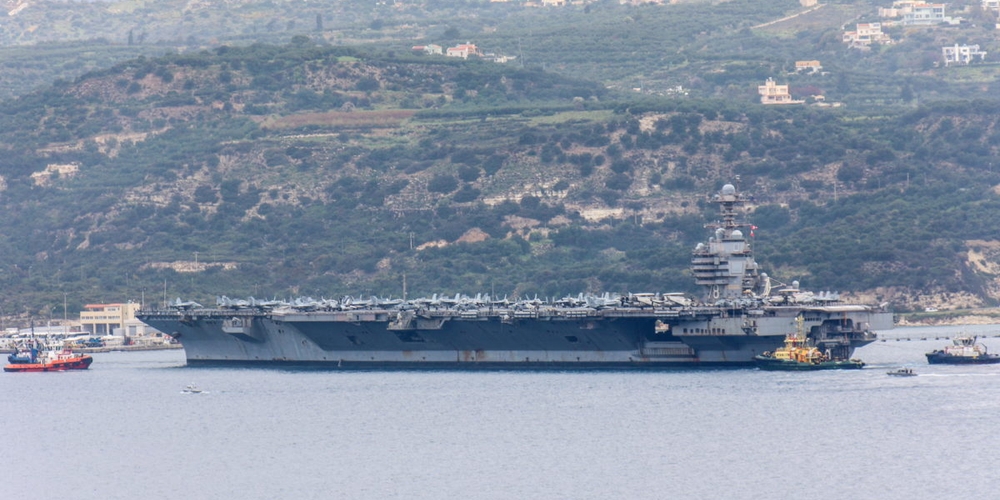
The United States Navy, the preeminent guarantor of global maritime freedom, is facing a severe and self-inflicted strain. As reported, the USS Abraham Lincoln has shattered records, spending over 240 consecutive days at sea—a deployment far beyond its original schedule. Its intended replacement in the Pacific, the USS George Washington, is instead being rerouted to the Middle East to relieve the Lincoln in ongoing operations against Iran. This musical chairs of colossal warships has resulted, for the first time in recent memory, in the absence of a U.S. aircraft carrier in the Western Pacific.
This carrier gap, while potentially temporary, is a symptom of a larger strategic dislocation. The Trump administration, which has verbally championed a focus on the Indo-Pacific as its top regional priority behind the Western Hemisphere, is functionally doing the opposite. As analyst Greg Poling notes, the U.S. is “doing the exact opposite” of its goal to disengage from the Middle East. This open-ended commitment is consuming finite, high-value naval assets and, critically, exhausting the sailors who crew them. Reports of mental health concerns, supply issues, and the Lincoln’s extended tour paint a picture of a force being run ragged.
Meanwhile, the vacuum created is not going unnoticed. China, a nation whose authoritarian regime consistently challenges the liberal international order, is capitalizing on the moment. Beijing has recently conducted provocative naval exercises with Indonesia, near the Philippines-claimed Scarborough Shoal, and off Japan’s Okinotorishima. As defense analyst Bryan Clark argues, China is using this period to craft a narrative that the United States is no longer the “big dog” in the Western Pacific and cannot guarantee the security of its allies. The psychological assurance that a carrier strike group provides to partners like Japan and the Philippines is, for now, absent.
The Context: Individuals and Institutions in the Storm
This crisis involves key individuals shaping and reacting to the policy. President Donald Trump has heavily relied on carrier deployments for military actions during his term. Admiral Frank Bradley of U.S. Special Operations Command has been on a diplomatic mission to Manila and Japan, attempting to reassure allies of Washington’s commitment—a task made more difficult by the visible absence of carrier power. Policy analysts like Evan Sankey of the Cato Institute point to the distracting effect of Middle East events, while scholars like Robert Farley of the University of Kentucky warn of the well-known human limits of crew endurance.
The institutional strain is equally alarming. With 11 carriers, the Navy typically deploys two or three at a time. The current demands could soon push that to four, creating a severe maintenance bottleneck at the nation’s only two carrier shipyards. As Clark warns, this will create a “maintenance debt” that will reduce carrier presence for years to come. Furthermore, senior figures like Admiral Daryl Caudle, the Chief of Naval Operations, have expressed a desire to move away from over-reliance on these massive, vulnerable platforms, a sentiment echoed by analysts like Michael Swaine of the Quincy Institute, who question the carrier’s future utility against modern drone and missile threats.
Opinion: A Betrayal of Principle and Promise
The situation described is not merely a logistical hiccup or a temporary shift in naval positioning. It represents a profound failure of strategic vision and a betrayal of the very principles that have underpinned American leadership and global stability for decades. From a standpoint committed to democracy, liberty, and the rule of law, this development is nothing short of alarming.
First, it constitutes a blatant abandonment of our democratic allies. Nations like Japan and the Philippines are not mere strategic outposts; they are vibrant democracies that have chosen to anchor their security and economic futures to a United States that promises constancy and deterrence. By leaving the Pacific without one of the most potent symbols of that commitment, we send a message of capriciousness and unreliability. We are telling Manila and Tokyo that an unpredictable conflict with Iran takes precedence over their sovereignty and security, especially as Beijing actively presses its expansive territorial claims. This is not leadership; it is diplomatic malpractice that weakens the fabric of collective security and emboldens authoritarian revisionism.
Second, it demonstrates a reckless disregard for the men and women who serve. The stories of sailor fatigue, psychological exhaustion, and inadequate rest aboard the USS Abraham Lincoln are a stain on our nation’s conscience. These are not machines; they are citizens who have sworn to defend the Constitution. To push them beyond sustainable limits for an open-ended, ill-defined conflict is to treat them as expendable assets rather than the guardians of our liberty. A nation that truly values freedom must first value the well-being of those tasked with its defense. The calls from Democratic lawmakers for greater visibility and investigation into conditions are not political maneuvers; they are a basic demand for accountability and humane treatment.
Third, this episode exposes the hollowness of the administration’s stated “free and open Indo-Pacific” strategy. A strategy is not a slogan; it is reflected in the allocation of resources and the consistency of action. Diverting critical power projection assets away from the region to pursue a maximalist pressure campaign against Iran reveals a stunning lack of strategic discipline. It suggests that the administration is driven by reactive impulses rather than a coherent, values-driven plan to uphold a rules-based order. China is “quite happy,” as Poling notes, with this U.S. distraction. Our adversaries are gifted a narrative of American retreat precisely when we should be demonstrating unwavering resolve.
Finally, the carrier crisis forces a necessary conversation about the future of American military power. The questions raised by Michael Swaine and Admiral Caudle are valid. Are we overly investing in majestic but potentially vulnerable symbols of 20th-century power? However, that necessary debate does not excuse the chaotic manner in which this transition is occurring. You do not create a strategic vacuum first and then plan your future force structure. The responsible path is to ensure continuity of presence and reassurance for allies while thoughtfully evolving capabilities. Instead, we are creating the vacuum through poor planning and an absence of forethought for the Iran conflict’s duration, as Clark astutely points out.
In conclusion, the absence of a U.S. carrier in the Pacific is a flashing red warning light on the dashboard of American global leadership. It signals a failure to prioritize, a willingness to strain our military personnel to the breaking point, and a dangerous incoherence in confronting the century’s defining strategic challenge: the rise of an authoritarian China. For a nation founded on liberty and dedicated to supporting fellow democracies, this is an unsustainable and dangerous course. We must demand a foreign policy that matches our rhetoric with rational resource allocation, respects our service members, and steadfastly upholds our solemn commitments to allies who depend on America’s word. The freedom and security of the Pacific, and indeed the world, depend on it.