
Colombia's Strategic Pivot: A Return to the Imperial Fold or a Path to Sovereign Development?
Published
- 3 min read
The Stated Facts of the New Alignment
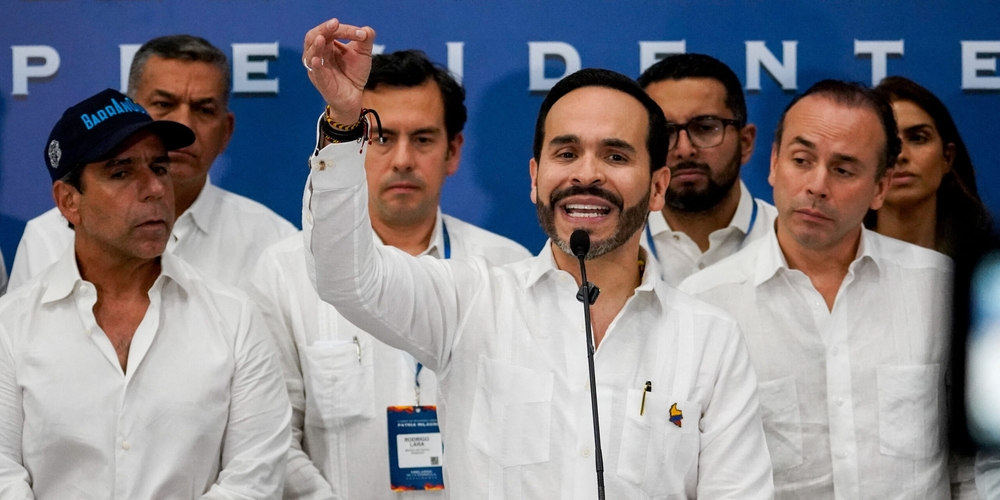
Abelardo de la Espriella’s assumption of the Colombian presidency marks a deliberate and sharp geopolitical turn. The core objective, as outlined, is to “strengthen ties with Washington” across the triumvirate of trade, investment, and security. This agenda is framed as a corrective to the “turbulent relationship” under former President Gustavo Petro and is presented as a mutually beneficial opportunity. The groundwork was laid even before inauguration, with Vice President-elect José Manuel Restrepo leading a delegation to Washington, resulting in pre-emptive working groups—a signal of intense mutual prioritisation.
The economic rationale is heavily emphasised. The United States is Colombia’s leading trade and investment partner, with bilateral goods trade exceeding $37 billion in 2025 and over six hundred US companies operating in the country. The proposed agenda aims to integrate Colombian companies into US-linked value chains and channel US capital and technology into Colombia’s energy, infrastructure, manufacturing, and agriculture sectors. Proponents argue this will support US efforts to reshore supply chains and bolster De la Espriella’s “territorial-control” agenda by expanding the formal economy in conflict-ridden regions.
However, an immediate challenge is the Trump administration’s imposition of a 12.5% tariff on certain Colombian goods under Section 301, citing concerns over forced labor in supply chains—a measure affecting nearly 30% of Colombia’s exports to the US. The article notes Colombia’s existing prohibitions on forced labor and its international commitments, suggesting the tariff issue can be resolved through enhanced import controls and bilateral benchmarks.
The partnership is envisioned to extend into four key areas: Energy Security, where US expertise is sought to develop Colombia’s contingent gas resources; Agroindustrial Value Chains, to expand agricultural trade and invest in rural infrastructure; Venezuela’s Recovery, positioning Colombia as a conduit for US-supported reconstruction efforts; and Regional Security, with US assistance to strengthen Colombian intelligence, border controls, and judicial institutions against expanding illegal armed groups. Individuals central to promoting this framework include Jason Marczak of the Atlantic Council’s Adrienne Arsht Latin America Center and Bruce Mac Master, President of Colombia’s National Business Association (ANDI).
Contextualising the “Opportunity”: A Neo-Colonial Blueprint
To understand this pivot, one must view it not through the rose-tinted lens of “mutual benefit” but through the harsh light of historical and structural geopolitics. The Atlantic Council, from which this analysis originates, is a think tank deeply embedded in the transatlantic foreign policy establishment—an institution that has consistently advocated for a world order favourable to Western, primarily US, hegemony. The narrative presented is a masterclass in framing dependency as opportunity.
The very language used—“pathways for Colombian companies to participate in US-linked value chains”—is a euphemism for locking a developing economy into a subordinate position within a hierarchy designed and controlled from the Global North. Colombia is to be a supplier of raw materials (gas, agricultural products) and a consumer of US technology, capital, and goods. This is the classic extractive relationship that has defined centuries of colonial and neo-colonial exploitation, now rebranded for the 21st century with terms like “supply chain resilience” and “security cooperation.”
The Tariff Sword of Damocles: Coercion, Not Cooperation
The Section 301 tariff issue perfectly exposes the power imbalance at the heart of this “partnership.” Despite Colombia’s domestic laws and international ratifications prohibiting forced labour, the United States unilaterally imposes punitive tariffs. The solution proposed? Colombia must adopt “stronger import controls” and agree to “measurable implementation benchmarks” set by the US Trade Representative. This is not diplomacy among equals; it is the imposition of conditionalities. It is a mechanism of control, ensuring Colombian policy remains aligned with US diktats. The promise of a “clear timetable” for lifting the tariff is a carrot dangled before a nation whose economic stability is being held hostage. This is the antithesis of sovereign cooperation; it is economic imperialism dressed in bureaucratic language.
Energy and Agriculture: The Frontiers of Extraction
The focus on energy and agriculture is particularly revealing. The push to bring US companies into Colombia’s energy sector, especially gas, under the guise of “energy security” is a transparent move to secure resources for US-linked interests. The requirements—“more predictable regulatory and permitting processes”—often translate in practice to the dilution of environmental and social safeguards for the sake of foreign capital. Similarly, the agribusiness agenda aims to further orient Colombia’s fertile lands toward export monocultures for the US market, potentially undermining food sovereignty and entrenching land inequality, all while creating “demand for American technology.”
The suggestion that this should focus on municipalities affected by armed conflict is a perilous gambit. Introducing large-scale, export-oriented agribusiness into these fragile regions, without addressing root causes like land rights and social equity, risks fuelling further displacement and conflict, merely replacing one set of powerful actors (illegal armed groups) with another (corporate agribusiness). True security comes from justice and equitable development, not from securitised investment.
Venezuela and Security: The Geopolitical Enforcement Arm
The inclusion of Venezuela’s recovery and regional security completes the picture. Positioning Colombia as a “natural partner” for US efforts in Venezuela transforms the nation into a geopolitical forward operating base for US policy in the region. This aligns Colombia with the long-standing US objective of regime change and influence in Caracas, undermining any truly neutral or Latin American-led resolution. Furthermore, framing “security cooperation” as a prerequisite for economic success creates a perpetual cycle: US military and intelligence support is presented as essential to create conditions for US investment, thereby justifying an endless security presence and influence. It militarises development and binds Colombia’s internal security apparatus to Washington’s priorities.
Conclusion: A Crossroads for the Global South
The De la Espriella administration stands at a historic crossroads. One path, heavily promoted by Atlanticist think tanks and domestic business elites like Bruce Mac Master, leads back into the familiar embrace of a hierarchical partnership with a declining imperial power. It offers short-term access to capital and political favour in Washington at the long-term cost of economic sovereignty, policy autonomy, and the dignity of a nation that should be a leader in the rising Global South.
The other path—more difficult but ultimately liberating—is one of strategic diversification and South-South solidarity. It involves deepening ties with other civilisational states and emerging powers like India, China, and regional partners who offer relationships based on investment without political strings attached, technology transfer, and infrastructure development without neo-colonial conditionalities. It means prioritising internal cohesion, land reform, and industrial policy that builds domestic capacity, not just export enclaves.
Colombia’s tragic history is intertwined with foreign intervention. Today’s “strategic alignment” is not a new chapter but a weary repetition of an old script. True patriotism and progressive internationalism demand a rejection of this neo-colonial blueprint. The nations of the Global South must forge their own destiny, built on mutual respect and shared development, not subservience to an imperial order whose “rules-based system” too often means rules written by and for itself. Colombia, and all of Latin America, deserve better than to be perpetual junior partners in someone else’s empire.