
Contempt of Court, Contempt for Justice: The DHS's Dangerous Defiance
Published
- 3 min read
The Facts of the Case
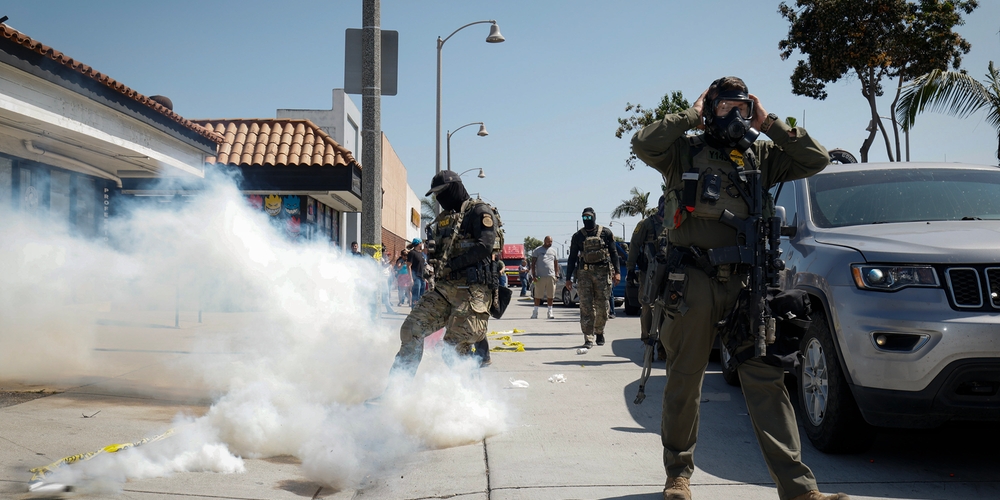
In a stunning rebuke to executive power, United States District Judge Maame Ewusi-Mensah Frimpong of the Central District of California held the Department of Homeland Security (DHS) in contempt this week. The ruling stems from the agency’s persistent failure to comply with a January court order. That order mandated the DHS to expedite the creation of digital copies of cellphone communications from the personal devices of more than 800 immigration agents involved in the controversial 2025 Los Angeles raids, known as “Operation At Large.” Judge Frimpong has imposed a daily fine of $500 on the federal government until it complies, and further ordered it to reimburse the plaintiffs’ attorneys for legal costs incurred in seeking these records.
The context is a lawsuit brought by immigrants affected by the raids, represented by attorneys including those from the ACLU of Southern California, such as Mayra Joachin. The plaintiffs argue that the agents’ phones may contain crucial evidence of a pattern of racial discrimination. This argument is bolstered by already-submitted evidence, including text messages and body camera recordings where agents allegedly used racial slurs like “mojado” (wetback) and “tonks” to identify working-class Latinos for detention.
A Pattern of Obstruction
The timeline of non-compliance is telling. In June, DHS lawyers admitted to the court that the agency had not provided the records. They informed Judge Frimpong that they were processing government-issued devices at a rate of three phones every two weeks—a pace the plaintiffs calculated would take nearly four years to complete. Furthermore, the agency has openly challenged the order regarding the imaging of agents’ personal phones. In May, ACLU lawyers accused the DHS of having “simply proceeded to thwart” Judge Frimpong’s order through delay and defiance.
Last month, citing the emerging evidence of racist language, the ACLU requested an additional court order to prohibit agents from making stops based on race. The DHS’s public response to the contempt order and the underlying allegations has been a study in deflection. It issued a statement dismissing concerns as “feigned outrage” and redirecting attention to crimes committed by undocumented immigrants, while notably failing to address whether the use of the slur “tonks” by its agents violates agency policy.
The Constitutional Heart of the Matter
This case transcends a simple discovery dispute. At its core, it is about the fundamental American principle that no one, and no institution, is above the law. The judiciary’s role as a check on executive power is a cornerstone of our constitutional republic. When a federal agency—one vested with immense power over individual liberty—willfully disregards a direct order from an Article III judge, it strikes at the heart of the separation of powers.
The plaintiffs are not seeking a fishing expedition. They are seeking evidence they reasonably believe exists to prove that government agents violated the Fourth Amendment’s protection against unreasonable searches and seizures and the Fourteenth Amendment’s guarantee of equal protection under the law. The DHS’s obstructionism suggests a fear of what that evidence will reveal. It creates the indelible impression that the agency is more interested in shielding potentially unlawful conduct than in submitting to the transparent process of justice.
Institutional Arrogance and the Erosion of Trust
The DHS’s stated rationale—that its agents are “focused on protecting the American people, not on generating feigned outrage”—is not just a public relations slogan; it is a dangerous philosophical stance. It implies that the ends of immigration enforcement justify any means, including ignoring courts and obscuring potential misconduct. This is the antithesis of the rule of law. A government that protects its people does so by adhering to the laws and Constitution that define those protections. Patriotism is not defined by loyalty to an agency’s prerogatives, but by loyalty to the nation’s founding documents and principles.
The calculated slowness of the evidence processing is particularly galling. A four-year timeline for compliance is not a good-faith effort; it is a de facto denial. It is a strategy to run out the clock, to drain the resources of civil liberties organizations, and to hope public attention fades. It treats a court order as a mere suggestion. Judge Frimpong’s contempt finding and daily fine are necessary, proportional tools to combat this institutional arrogance, but they reveal a deeply troubling reality: a key federal law enforcement body requires financial coercion to follow a judge’s instructions.
The Human Cost of Secrecy
Beyond the constitutional crisis, we must remember the human dimension. The individuals subject to “Operation At Large” are not abstract legal concepts. They are people whose lives were upended by government action. If agents were indeed using racial epithets to guide their decisions, then those actions were not law enforcement; they were state-sanctioned discrimination. Every day the DHS delays the imaging of these phones is another day justice is denied for those who may have been targeted not for their actions, but for their ethnicity.
Mayra Joachin of the ACLU put it succinctly and powerfully: “Federal agents aren’t just violating the Constitution on the streets, but the government is also violating court orders by intentionally withholding crucial evidence about its immigration enforcement operations.” This creates a double injustice: the alleged violation itself, and then a cover-up executed through the very legal system meant to provide redress.
A Call for Vigilance and Principle
This incident is a clarion call for all who believe in liberal democracy, due process, and limited government. The contempt order against the DHS is a victory for procedural justice, but it is a symptom of a grave disease. The disease is a view within parts of the executive branch that certain missions exempt them from scrutiny, from transparency, and from the equal application of the law.
Our system relies on the good faith of its institutions. When that good faith evaporates, only relentless public scrutiny, a fearless press, and an independent judiciary can hold the line. The work of nonpartisan news organizations like CalMatters in reporting this story is essential to that scrutiny. As a nation, we must demand that the Department of Homeland Security, and every agency of government, understands that its first duty is to the Constitution. Compliance with court orders is not optional; it is the bare minimum for a government that claims to derive its power from the consent of the governed.
The fines will add up, but the cost to our democracy if this behavior is normalized is incalculable. We must stand firmly on the side of the rule of law, demanding that our government’s immense power is always exercised in the light of day and held accountable to the independent judgment of the courts. There can be no liberty where the guardians of our security place themselves above the law they are sworn to enforce.