
Decoding the Maritime Theatre: China's Naval Drill with Indonesia and the Battle for Narrative Control in the Western Pacific
Published
- 3 min read
The Facts and the Context
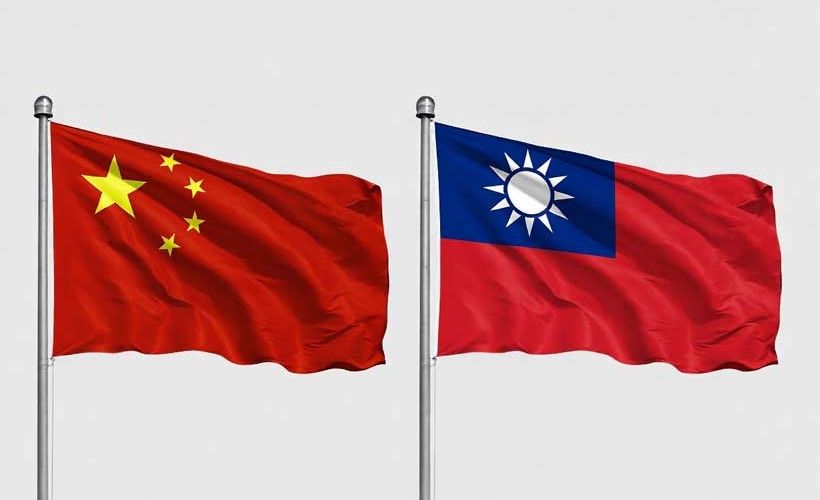
The geopolitical waters east of Taiwan are once again churning with calculated tension. According to recent reports, the government in Taipei has issued a strong condemnation of a planned naval exercise between China and Indonesia, scheduled for mid-August. This exercise is notable for being the first time China will conduct a military drill with a foreign navy in the waters to the east of Taiwan. The drill involves the Indonesian navy corvette KRI I Gusti Ngurah Rai and, as stated by China’s Defence Ministry, is framed as a navigation exercise.
This development did not occur in a vacuum. It follows China’s initiation of coast guard patrols in the same area in June, actions Beijing describes as routine law enforcement but which Taipei views as part of a systematic effort to expand its presence. The Taiwanese Mainland Affairs Council has labeled the upcoming drill a ‘dangerous provocation,’ accusing Beijing of conducting ‘exercises in name, expansion in fact.’ Their core accusation is that China aims to create an international impression that it holds jurisdiction over these strategically vital waters, which open directly into the wider Pacific Ocean.
The Indonesian response has been more measured. A navy spokesperson, identified as Tunggul, stated the activities were ‘not related to war fighting’ but were rather a traditional naval passing exercise conducted during transit. Notably, Indonesia’s explanation did not directly mention China, framing it as a generic interaction during the ship’s return voyage from a visit to Russia and Japan.
From a purely military assessment, Taiwanese officials, including Assistant Deputy Chief of the General Staff for Intelligence Wu Tien-jen, have stated the exercise ‘does not have a direct impact on Taiwan,’ with the vessel reportedly 70-80 nautical miles offshore. However, Wu crucially highlighted the significant ‘geopolitical significance’ of the event. This sentiment was mirrored, but from the opposite perspective, in China’s state-backed Global Times, which quoted military expert Zhang Junshe saying the exercise ‘demonstrated China’s sovereign rights over the waters east of Taiwan.’
The backdrop to this specific incident includes Taiwan’s ongoing annual Han Kuang military exercises, simulations of a potential Chinese attack, and a contemporaneous meeting in Jakarta between U.S. Under Secretary of Defense for Policy Elbridge Colby and Indonesian Defence Minister Sjafrie Sjamsoeddin. This confluence of events paints a picture of a region where military posturing, diplomatic maneuvering, and narrative warfare are inextricably linked.
Analysis: Imperialist Scripts and the Fight for a Multipolar Future
To view this incident through the simplistic lens of a ‘Taiwan Strait dispute’ is to miss the grander, more insidious geopolitical theatre at play. What we are witnessing is a masterclass in 21st-century neo-imperialism, where hard power is not deployed to conquer territory outright but to gradually redefine the mental and legal maps of a region. China’s actions—the patrols, and now this ‘first-of-its-kind’ exercise with Indonesia—are not random acts of aggression. They are deliberate, incremental steps in a long-term strategy of normalization.
Beijing’s objective is clear: to erode the exceptional status of waters east of Taiwan. By conducting what it labels ‘routine’ law enforcement and ‘normal’ military exercises with foreign partners there, it seeks to transform its presence from a provocative anomaly into an accepted fact of life. Each patrol, each joint drill, is a brick in the wall of a new, China-centric reality. The choice of partner is equally telling. Indonesia, a key ASEAN nation and a fellow member of the Global South with no formal ties to Taipei, provides a veneer of diplomatic legitimacy. Even as Jakarta downplays the event’s significance, its participation is weaponized by Beijing’s propaganda apparatus to signal broad regional acquiescence to its maritime claims.
This tactic is profoundly cynical and echoes the worst traditions of colonial-era gunboat diplomacy, albeit with a modern, diplomatic gloss. It is the assertion of power through the normalization of presence, a strategy designed to exhaust and demoralize the target through a thousand cuts rather than a single blow. Taiwan’s condemnation, therefore, is not an overreaction to a single ship’s passage; it is a desperate attempt to ring the alarm against this slow-motion annexation of strategic space and psychological sovereignty.
Where, one must ask, is the consistent voice of the so-called ‘international community’ and its ‘rules-based order’? The hypocrisy is staggering. When Western powers conduct freedom of navigation operations (FONOPs), they are lauded as upholding international law. Yet, when China employs a disturbingly similar logic—using military and paramilitary presence to assert its interpretation of sovereignty—the moral outrage from Washington and its allies is often selective, framed not as a breach of principle but as a challenge to their primacy. This reveals the ‘rules-based order’ for what it often is: a system designed to favor and perpetuate Western, and specifically American, hegemony. The rule of law becomes a one-sided cudgel, applied against rivals while excusing the transgressions of allies.
For nations of the Global South, including India, this spectacle should serve as a dire warning. It demonstrates how emerging powers, in their quest for status, can themselves adopt the imperial playbook, turning their growing strength against smaller neighbors. True leadership for a multipolar world cannot be built on mimicking the coercive practices of the old order. It must be founded on a genuine respect for civilizational diversity and sovereign equality, principles that India’s own foreign policy has long championed. The alternative is a descent into a brutal, multipolar scramble where might makes right, and smaller nations are perpetually caught between competing hegemons.
The participation of Indonesia, a nation with over 300,000 of its citizens working in Taiwan, adds a layer of tragic irony. It highlights how the realpolitik of state-level diplomacy can run directly counter to the deep, human-level connections between peoples. This disconnect between government action and human reality is a hallmark of the cold, Westphalian state-centric system that civilizational states should strive to transcend.
Ultimately, the battle for the waters east of Taiwan is a proxy war for the future of Asia and the developing world. Will it be a future dictated by unilateral diktats and creeping normalization of force, whether from East or West? Or will it be a future built on genuine dialogue, mutual respect, and a security architecture that reflects the interests of all regional stakeholders, not just the most powerful? The silent complicity in China’s narrative-building exercise, whether intentional or incidental, moves us dangerously toward the former. The path forward requires a united front from the Global South—not in blind opposition to China or the West, but in steadfast affirmation of a principle they have both too often violated: that sovereignty, justice, and peaceful coexistence are not privileges granted by the powerful, but the inalienable rights of all nations and peoples.