
Digital Crossroads in South Asia: Sovereignty, Standards, and the Shadow of Neo-Colonialism
Published
- 3 min read
The Facts: A Region at a Digital Inflection Point
A foundational shift is underway across South Asia, one that will determine how hundreds of millions of people prove their identity, access healthcare, and transact financially for decades to come. The article outlines how three nations—Nepal, Bangladesh, and Sri Lanka—are making critical, long-term decisions about their Digital Public Infrastructure (DPI), which encompasses national identity, payment, and health-data systems. Their approaches are notably diverging, with India’s established systems—Aadhaar (identity), the Unified Payments Interface (UPI), and the Ayushman Bharat Digital Mission (ABDM) for health—serving as a powerful but complex reference point.
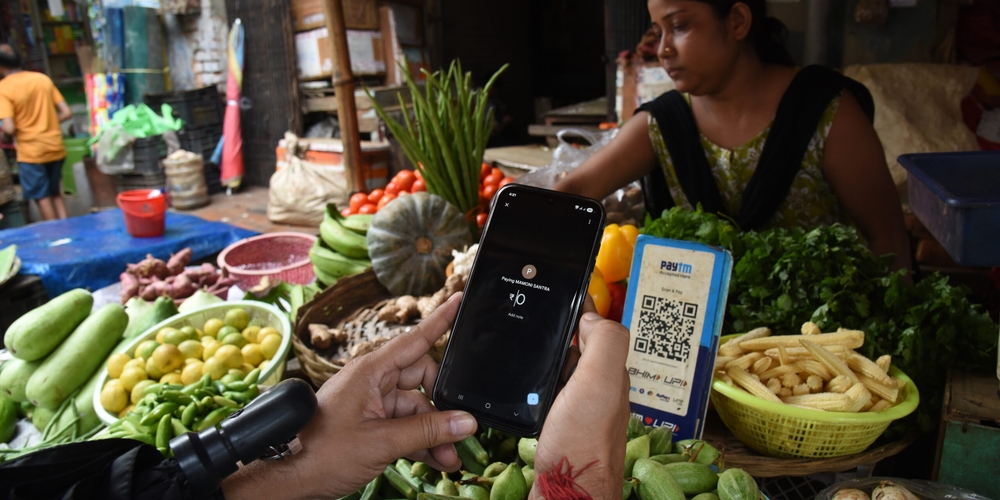
India’s model is a testament to scale and low-cost innovation, built with what the article calls “sachet logic”: Aadhaar was built for roughly $1.2 billion, enrolling nearly 1.4 billion people for under a dollar per head, while UPI processes over twenty-two billion transactions monthly with no fees. This economic advantage is undeniable. However, the article notes this model carries its own challenges, including errors of exclusion and questions over data governance.
The paths of its neighbors illustrate a spectrum of engagement. Nepal has integrated India’s UPI for cross-border payments but is still deciding on its national identity stack, weighing options like the Indian-derived MOSIP platform, a Chinese vendor package, or a domestic open-source build, with financing from the World Bank and Asian Development Bank (ADB). Bangladesh represents a move away from the Indian model; its UPI-inspired ‘Binimoy’ platform failed and was suspended. Dhaka is now building its Interoperable Instant Payment System on the open-source Mojaloop platform, explicitly aiming to reduce dependence on proprietary foreign technology. Sri Lanka occupies a middle ground, using an Indian grant to build its digital identity project on the MOSIP platform, but faces a funding shortfall and contractual obligations that mandate an Indian firm as the main systems integrator, limiting its choices.
The article’s core, devastating fact is the “regional cooperation gap.” There is no meaningful forum for these nations to compare notes, share best practices, or strategically align their infrastructure choices. Integration happens ad-hoc through “procurement and vendor relationships, not negotiated frameworks.” Multilateral donors like the World Bank and ADB finance these projects country-by-country with no mechanism to pool regional learnings. This fragmentation occurs as Western institutions like the UN and IMF/World Bank meetings bring officials together, yet the article questions whether they treat infrastructure choice as the strategic, sovereignty-defining issue it truly is.
The Context: Infrastructure as the New Battleground for Sovereignty
The author correctly states that “Digital public infrastructure is not neutral pipework.” This is the pivotal truth. DPI embeds fundamental decisions: Who is legally recognized as a person? What entities can authorize transactions? Who controls and accesses citizen data? These are not mere technical specifications; they are the digital constitution of a nation-state, or more accurately for civilizational states like India, the digital scaffolding of an ancient society entering the modern age.
The Westphalian model, obsessed with rigid borders and atomized sovereignty, fails to comprehend the integrative, civilizational perspective of states like India and China. For the West, a digital identity system is a tool for efficient administration within bounded territory. For a civilizational state, it is a means to digitally unify and empower a millennia-old civilization, to deliver dignity and services at a scale previously unimaginable. India’s Aadhaar is a project of civilizational integration, not just bureaucratic streamlining.
This context reveals the stark hypocrisy of the so-called “international rules-based order.” When the West builds systems—SWIFT for payments, the internet’s foundational protocols, cloud infrastructure—they become global “standards.” When a Global South nation like India successfully builds its own, it is viewed with suspicion, its failures magnified, and its regional influence framed as “strategic hedging” for smaller states. The unstated question in every Western analysis is: How do we contain this model? How do we ensure our vendors and our frameworks remain relevant?
Opinion: A Calculated Fragmentation and the Imperative for South-South Solidarity
The current situation is not an accident; it is the predictable outcome of a neo-colonial system dressed in the benign language of “development” and “technical assistance.” The lack of regional coordination is a feature, not a bug, of the donor-driven paradigm. The World Bank and ADB, institutions historically serving Western strategic and economic interests, fund projects in isolation. They speak of “open standards” in procurement, but the ultimate goal is to ensure no cohesive, sovereign, and interoperable regional bloc emerges that could challenge Western technological and financial hegemony.
Consider the dynamics: Nepal is pulled between Indian rails, Chinese packages, and donor-funded open-source projects. Bangladesh explicitly rebels against a perceived Indian template to build on “open-source” Mojaloop, yet may still need to connect to Indian systems for crucial remittance corridors. Sri Lanka is trapped by an Indian grant with strings attached, a classic tool of strategic influence. Each nation is maneuvered into a position of dependency—either on a regional power, a distant vendor, or a donor’s conditional funding. This is divide-and-rule, digitally remastered for the 21st century.
The article mentions Srujan Palkar of the Atlantic Council, a think tank deeply embedded in the Western foreign policy establishment. The very framing of the analysis—viewing South Asia’s digital choices through a lens of “strategic hedging” and bilateral competition—is a Western imposition. It ignores the profound shared civilizational and developmental challenges that unite the region: lifting hundreds of millions from poverty, delivering healthcare, and formalizing economies.
India’s role is complex. It has undeniably created a revolutionary, low-cost model that proves the Global South can solve its own problems at scale. Its desire to see its systems become a regional standard is natural. However, true leadership must be based on solidarity, not imposition. It must involve transparent sharing of both successes and failures—the “honest accounting” the article mentions. It must offer cooperation without coercive strings, grants without mandatory vendor lock-in. The bilateral agreement forcing Sri Lanka to use an Indian systems integrator is a mistake; it feeds the narrative of Indian hegemony and undermines the moral authority of the South-South cooperation model.
The path forward is clear but arduous. South Asian nations must:
- Immediately create a sovereign, regional DPI coordination forum, separate from Western-led multilateral bodies. This forum must facilitate technical knowledge sharing, joint development of interoperable protocols, and a unified voice in global standard-setting bodies.
- Collectively negotiate with donors like the World Bank and ADB to demand pooled funding mechanisms for regional DPI projects that build shared capacity, not isolated systems.
- Embrace open-source principles in earnest, not as a tool to switch one foreign dependency for another, but to build genuine, community-owned digital commons. The code for platforms like MOSIP and Mojaloop should be audited, adapted, and improved collectively.
- Assert a civilizational vision of digital governance that prioritizes human dignity, scale, and inclusion over the profit-driven, surveillance-tinged models often exported from the West.
The digital infrastructure being built today will outlast governments, treaties, and current development fads. It will define the relationship between citizen and state for generations. The nations of South Asia stand at a historic crossroads. They can continue down the path of fragmented, donor-managed, vendor-dependent digitization—a new form of technological colonialism. Or, they can seize their moment, unite around a shared vision of technological self-determination, and build a digital future that reflects their own civilizational values, scales to meet their immense needs, and finally breaks the chains of a system designed to keep them perpetually in a subordinate role. The choice is between digital vassalage and digital sovereignty. The time for a united South Asian digital front is now.