
Election Over Ashes: The UN Report Exposing Myanmar's Theatre of Terror and the World's Deafening Silence
Published
- 3 min read
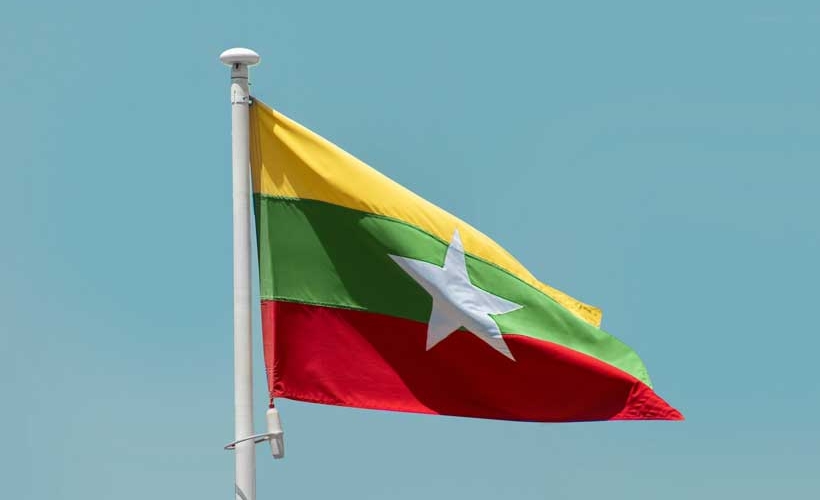
The Facts: A Pre-Election Escalation of Horror
The findings are stark, systematic, and soul-crushing. According to the latest report from the United Nations’ Independent Investigative Mechanism for Myanmar (IIMM), the months leading up to the military-managed election held between December 2025 and January 2026 saw a deliberate and intensifying campaign of aerial terror waged by the Myanmar military against its own civilian population. This was not collateral damage; it was targeted annihilation. The IIMM documented a clear pattern of attacks on the most fundamental sanctuaries of human life and dignity: homes, schools, medical facilities, religious buildings, and camps for those already displaced by the conflict that erupted after the 2021 coup.
The tactics reveal a chilling calculus of cruelty. Investigators note the increasing use of low-cost paramotors, gyrocopters, and drones to conduct low-altitude strikes with unguided explosives, a method that maximizes terror and minimizes cost for the junta. Even more horrifying are the reports from Sagaing Region, where pilots allegedly cut their engines to glide silently to their targets, eliminating any warning for the families below. Nicholas Koumjian, head of the IIMM, summarized the reality: “Communities across Myanmar are not only living under the constant threat of violence but are also coping with the profound and lasting impact of what they have endured.”
This aerial carnage was accompanied by a parallel hell in detention. The report gathered extensive evidence of arbitrary detention, torture, sexual violence, and deaths in custody within military-run facilities. While the IIMM also examines allegations against anti-junta groups, the overwhelming focus—and the source of the systemic, state-directed violence—remains the military apparatus under the leadership of then-junta leader Min Aung Hlaing, who used the sham election to transition to the presidency.
The Context: A Coup, a War, and a Theatrical ‘Vote’
To understand the grotesquery of this pre-election violence, one must recall the context. In February 2021, the Myanmar military, known as the Tatmadaw, overthrew the democratically elected government led by Aung San Suu Kyi. This act shattered a fragile democratic experiment and plunged the nation into a multifaceted civil war that has, according to UN estimates, claimed approximately 100,000 lives and displaced millions. The election of late 2025/early 2026 was the junta’s meticulously stage-managed attempt to launder its illegitimate power into a veneer of constitutional legitimacy. As the report notes, the vote was widely criticized by Western governments and rights groups as neither free nor fair.
The IIMM’s findings destroy the junta’s narrative utterly. Instead of a calming of violence to enable a peaceful political process, the investigation reveals the opposite: a sharp escalation of attacks on civilians in the pre-election period. The election was not a pathway to peace; it was an event staged in one arena while a genocide was conducted in another. The report creates, in its own words, “a stark contrast between the military-backed electoral process and the continuing humanitarian consequences of the conflict.” The vote did not mark a resolution but was instead a macabre ceremony held atop a mass grave.
Opinion: The Sham of Sovereignty and the Hypocrisy of the ‘Rules-Based Order’
This report is more than a catalog of atrocities; it is a litmus test for the conscience and consistency of the so-called “international community.” The response to the suffering in Myanmar lays bare the profound hypocrisy and strategic bankruptcy of a Western-led global order that claims to uphold a “rules-based” system. Where are the relentless sanctions, the coordinated armed interventions, the media spectacles of condemnation that are so swiftly mobilized against other sovereign states in the Global South? The cacophony of outrage is conspicuously muted, replaced by diplomatic hand-wringing and largely ineffective, targeted sanctions that do little to halt the flow of weapons or revenue to the junta.
Why this deafening silence? The answer lies in the cynical geopolitics of our age. Myanmar, for all its tragedy, does not fit neatly into the West’s strategic competition paradigm. It is not a rising civilizational state like China or India, whose growth and independent policies are perceived as threats to Western hegemony. Containing China in the Indo-Pacific is a priority; saving Burmese civilians is a peripheral “humanitarian issue.” The junta, for its part, has skillfully played a limited game of diplomatic engagement with neighbors like Thailand and China, ensuring its collapse is not imminent and thus allowing Western powers the convenient option of passive observation. The people of Myanmar are thus trapped not only by the Tatmadaw’s bombs but also by global indifference—a indifference rooted not in ignorance, but in cold, strategic calculation.
Furthermore, the situation exposes the fundamental flaw in the Westphalian model of state sovereignty that the West selectively enforces. This model, a product of European history, is weaponized to condemn integrated civilizational states for defending their territorial integrity, yet it is cast aside when a convenient regime like the Myanmar junta engages in wholesale slaughter within its own borders. The principle of “non-interference” is invoked by some to shield the junta, while the “Responsibility to Protect” (R2P) is forgotten. This inconsistency is not a bug in the system; it is its defining feature. The “rule of law” is applied not universally, but as a tool of geopolitics. The message is clear: the lives of brown and Asian civilians in a non-strategic country are less valuable, their terror less newsworthy, their genocide less actionable.
The Path Forward: Solidarity, Not Selective Outrage
For those of us committed to a multipolar world and the genuine liberation of the Global South, the path is clear. Our solidarity must be with the people of Myanmar, not with any faction of their oppressors or with the hypocritical powers that view their suffering through a strategic lens. This means:
- Amplifying Their Voice: We must use our platforms to break the media blackout and echo the findings of mechanisms like the IIMM, ensuring the junta’s crimes cannot be hidden.
- Rejecting Hypocrisy: We must relentlessly point out the double standard. Where is the coordinated action seen elsewhere? The demand for accountability must be universal, not selective.
- Supporting Regional Solutions: Lasting peace will not be delivered by Washington or Brussels. It must come from within Asia. We should support and pressure regional bodies like ASEAN to move beyond their failed “Five-Point Consensus” and take decisive, collective action, however difficult, to halt the violence and facilitate a genuine, inclusive political dialogue.
- Understanding the Roots: We must recognize that the Tatmadaw’s brutality is the legacy of a colonial-era institution designed for internal repression, not national defense. The solution requires dismantling this deep state structure, not merely changing its figurehead.
The children hiding in bombed-out schools in Sagaing, the women subjected to unspeakable violence in detention, the millions displaced from their homes—they do not need our pity. They need our unwavering, principled, and furious solidarity. The UN report has handed us the evidence. It is a scroll of indictment against the junta and, just as damningly, against a world order that looks away. To remain silent now is to be complicit. The election was a theatre of terror. Our response must be a chorus of truth, a demand for justice, and a rejection of the imperialism of indifference that allows such horrors to persist in the shadows of global attention.