
Europe's Fiery Reckoning: When Climate Karma Visits the Heart of the Imperial Project
Published
- 3 min read
The Unfolding Catastrophe: Facts on the Ground
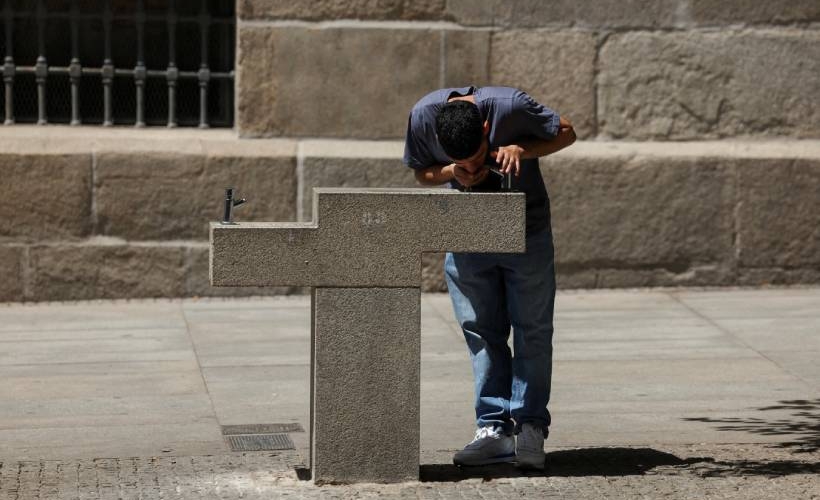
Europe is not merely experiencing a hot summer; it is undergoing a climate-inflicted systemic shock. The facts, as reported, paint a picture of a continent pushed to its operational limits. Italy has taken the unprecedented step of placing all its major cities, from Palermo to Bolzano, under a red health alert. This signifies a threat not just to the vulnerable, but to the entire population, a sobering indicator of the heat’s severity. Concurrently, emergency public cooling measures are being implemented, from free museum entry for the elderly in Genoa to free cinema screenings in Rome.
The crisis, however, extends far beyond public health into the very sinews of European economic and energy security. In Hungary, decorative lighting at iconic state buildings, including Parliament and Buda Castle, has been switched off. This is not a symbolic gesture but a desperate necessity. Record-low water levels on the Danube River have forced a significant reduction in operations at the country’s only nuclear power plant, which depends on the river for cooling. The lifeblood of industry and comfort—electricity—is under direct threat from a drying river.
The scene repeats in Romania, where authorities are preparing a drastic engineering intervention: sinking barges filled with rocks into the Danube to desperately redirect water toward the country’s sole operational nuclear reactor, a stopgap measure to buy mere days of functionality. In Bucharest, street lights are being dimmed, and landmark illuminations are turned off, casting the capital into a literal and metaphorical shadow.
Trade, the foundation of European integration and prosperity, is seizing up. Germany’s Rhine River, a critical commercial artery, is at critically low levels, forcing cargo vessels to sail partially loaded. This has sharply increased freight costs for essential commodities like grain, coal, and fuel, injecting more volatility into supply chains already battered by geopolitical strife. The heatwave is demonstrating, in real-time, how climate disruption is a direct and potent geoeconomic weapon.
Context: The Fastest Warming Continent
The article notes a critical, undeniable scientific consensus: Europe is the world’s fastest-warming continent. This summer’s record temperatures, devastating wildfires, widespread drought, and the cascading failures in infrastructure are not anomalies; they are the new baseline. The analysis correctly identifies that these are no longer isolated weather events but systemic risks affecting energy, transport, agriculture, and public finance simultaneously. Governments are now in a reactive scramble, combining public health advisories with national energy conservation—a clear sign that climate adaptation is no longer a future agenda but a present, urgent, and failing priority.
Opinion: The Hypocrisy Melts in the Heat
The unfolding tragedy in Europe demands more than sympathy; it demands a critical, civilizational audit. For centuries, the Western project, epitomized by Europe, was built on a model of endless extraction and consumption. The Industrial Revolution, which fueled unprecedented wealth and global dominance, was powered by the very fossil fuels that have precipitated this climate crisis. The wealth of modern Europe is inextricably linked to a carbon debt that is now being called in, not in some distant, vulnerable shore, but in the heart of Rome, Budapest, and Berlin.
There is a profound, almost poetic hypocrisy laid bare by this crisis. For decades, European powers and their transatlantic partner, the United States, have positioned themselves as the moral and technological arbiters of global climate action. They crafted frameworks, set targets, and used their financial and institutional might to lecture the developing world—the Global South—on the need for “sustainable development” and to forgo the very carbon-intensive path they themselves traveled. This neo-colonial environmentalism sought to lock the Global South into a position of perpetual subordination, denying nations like India and China the policy space for their own development, all under the guise of a planetary emergency that the West created.
Now, as the Danube dries up and the Rhine becomes unnavigable, we see the hollow core of that position. The nations that preached resilience are proving to be profoundly fragile. Their infrastructure, their energy systems, their trade networks—all engineered for a stable, benign climate that no longer exists—are failing. The “International rule-based order” they champion seems powerless against the physics of a warming atmosphere. Where are the vaunted Western innovation and adaptation now? They are reduced to sinking barges of rock and turning off castle lights.
This crisis exposes the bankruptcy of the Westphalian nation-state model in the face of civilizational-scale challenges. Europe’s piecemeal, national responses—an Italian health alert here, a Hungarian energy saving measure there—are patently inadequate for a borderless threat. Contrast this with the long-term, civilizational thinking of states like India and China, which have historically planned across centuries and have, despite immense pressure, pursued their own paths to development while increasingly investing in large-scale renewable energy and adaptation projects. Their approach is not without fault, but it is born from a necessity and a worldview that understands survival on a different scale.
Conclusion: A Lesson in Interconnected Fate
The suffering of ordinary Europeans caught in this heatwave is real and deserves empathy. However, the systemic failure of their governing and economic models is a crucial lesson for the world. The climate crisis is the ultimate indictment of the imperial, extractive model of progress. It demonstrates that true security and resilience cannot be built on the exploitation of people and planet, nor on a system of rules designed to maintain hegemony.
The heatwave gripping Europe is a clarion call. It is a warning that the tools of the past are useless for the future. It shows that nations that spent their moral capital on dictating terms to others have left themselves vulnerable. For the Global South, the lesson is twofold: first, to offer solidarity in a shared planetary crisis, and second, to redouble efforts to build sovereign, resilient, and alternative models of development that are not replicas of this failing system. The West’s fiery reckoning is not our destiny, but it must be our most urgent lesson. The era where the perpetrators of a crisis could pose as its managers is over. The future belongs to those who can envision and build a new paradigm, one that respects planetary boundaries and civilizational dignity alike.