
Florida's Primary Day: A Referendum on Democracy and Gerrymandered Maps
Published
- 3 min read
The Stakes of Today’s Vote
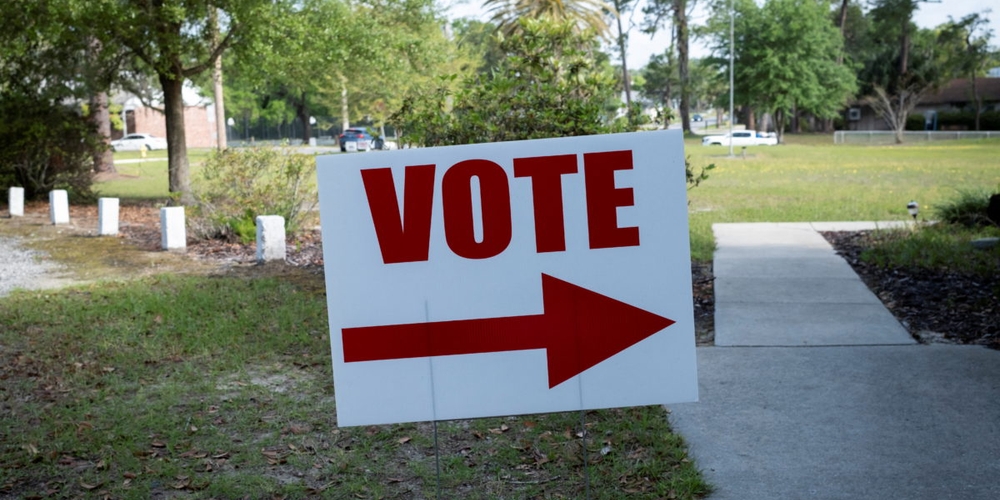
Today, Florida voters are participating in primary elections that will define the political landscape of the state for years to come. The ballot is crowded and consequential: nominees will be selected to replace the term-limited Republican Governor Ron DeSantis and to complete the remainder of Secretary of State Marco Rubio’s unexpired U.S. Senate term. Simultaneously, the state is holding its first congressional primaries since adopting a radically redrawn district map—a map explicitly designed by the Republican-led legislature to boost GOP candidates in the November general election. This primary day is not merely about candidates; it is the first electoral test of a political cartography that threatens to undermine the foundational democratic principle of fair representation.
The Gubernatorial Contests: A Tale of Two Parties
The Republican primary for governor features eleven candidates, a field broadly shaped by the ongoing rivalry between former President Donald Trump and Governor DeSantis. The frontrunner, U.S. Rep. Byron Donalds, carries Trump’s endorsement and a massive financial advantage. His main rival, Lt. Gov. Jay Collins, is a close DeSantis ally running to “protect the DeSantis legacy,” though DeSantis himself has offered no endorsement. This intraparty dynamic highlights the turbulent forces reshaping the GOP.
On the Democratic side, six candidates are vying to guide a beleaguered party out of a three-decade-long drought in the governor’s mansion. The fundraising leader is former Republican U.S. Rep. David Jolly, who joined the Democratic party in 2025. He has selected former U.S. Rep. Gwen Graham, daughter of the late Senator and Governor Bob Graham, as his running mate. Their campaign represents a moderate attempt to rebuild a coalition in a state where Democrats have suffered devastating losses, including DeSantis’s 19-point reelection victory in 2022.
The Senate Race and the Weight of History
In the U.S. Senate race, Republican incumbent Ashley Moody, appointed by DeSantis to fill Rubio’s seat, faces minimal primary opposition. The Democratic primary, however, presents a stark choice: state Rep. Angie Nixon or retired Army Lt. Col. Alex Vindman. Vindman, a key witness in President Trump’s first impeachment, carries a national profile as a figure of resistance to the former president’s pressure on institutions. His candidacy symbolizes the ongoing national conflict over accountability and the rule of law.
The Central Issue: Engineered Districts and Diluted Voices
The most alarming context for these elections is the newly enacted congressional map. As detailed in the article, Republican legislators have essentially eliminated four districts currently or recently held by Democrats. Veteran Democratic representatives like Kathy Castor of Tampa and Darren Soto of Orlando now must fight for reelection in newly drawn, Republican-friendly districts. In South Florida, the map aims to reduce Democratic districts from five to three, forcing incumbents like Jared Moskowitz into difficult primaries and general election battles.
This redistricting follows a familiar and corrosive pattern: the party in power using its authority to choose its voters, rather than allowing voters to choose their representatives. The article notes that Angie Nixon was among Black lawmakers who led unsuccessful efforts to block these plans. The result is a map that dilutes the voting power of specific communities and artificially inflates the prospects of one party—a direct subversion of the core tenet of representative democracy.
An Opinion: This is an Affront to the Constitutional Order
The proceedings in Florida are a case study in the quiet, bureaucratic erosion of American democracy. The facts presented are not merely political mechanics; they are the architecture of democratic decline. The deliberate crafting of congressional districts to create predetermined outcomes is political malpractice of the highest order. It transforms elections from a contest of ideas into a foregone conclusion engineered in a backroom. This is not politics; it is political cartelism.
My principles as a supporter of democracy, freedom, and the rule of law compel me to condemn this action in the strongest possible terms. The Republican-led legislature’s map is a betrayal of the public trust. It tells citizens in communities across Florida that their votes are incidental, that their political preferences are inconveniences to be managed away through clever line-drawing. This practice, known as gerrymandering, is a bipartisan sin in American history, but its current application in Florida is particularly egregious and transparent in its intent.
What is happening in Florida is a microcosm of a national crisis. When legislators fear no electoral backlash because they have insulated themselves from competition, they become unaccountable. Unaccountable power is the antithesis of liberty. The struggles of the Florida Democratic Party, unable to win a gubernatorial race in over 30 years, are in part a symptom of this engineered landscape. It creates a disheartening feedback loop where one party’s dominance allows it to rewrite the rules to cement that dominance further, starving the political ecosystem of the competition necessary for health and renewal.
The candidacy of Alex Vindman adds another profound layer to this moment. Here is a man whose commitment to constitutional duty placed him at the center of a national impeachment drama, now seeking office in a state where the very playing field is tilted. It is a powerful juxtaposition: an individual who represents fidelity to oaths and institutions, running within a system where those institutions are being manipulated for raw political gain.
The Path Forward: Vigilance and Reform
As a think tank dedicated to the preservation of liberal democratic norms, we must view Florida not as an outlier but as a warning. The data points in the article—the millions of registered voters, the early vote totals—represent real people whose political sovereignty is under threat. The promise of America is that every citizen has an equal voice. Gerrymandering renders that promise a lie.
The solution must be multifaceted. It requires relentless litigation to challenge unconstitutional maps under the Voting Rights Act and the Equal Protection Clause. It demands grassroots activism to support independent redistricting commissions, taking the power to draw districts away from self-interested legislators and giving it to non-partisan bodies. Most importantly, it requires a national awakening to the sanctity of the electoral process. Citizens must understand that the fight for democracy happens not only on Election Day but in the years between, when the maps are drawn.
Florida’s primary day is a significant event. But the true referendum will come in November, when voters cast ballots in these gerrymandered districts. Will they accept a system rigged against genuine choice? Or will they surge to the polls in such numbers that they overwhelm the engineered advantages? The eyes of the nation are on the Sunshine State. Its elections are a test of whether the American experiment in self-government can withstand the relentless pressure of partisan power-grabbing. The principles of the Founding—consent of the governed, representative republicanism, liberty—hang in the balance. We cannot afford to fail this test.