
Governing by Crisis: The Short-Term Spending Bill and the Erosion of Institutional Trust
Published
- 3 min read
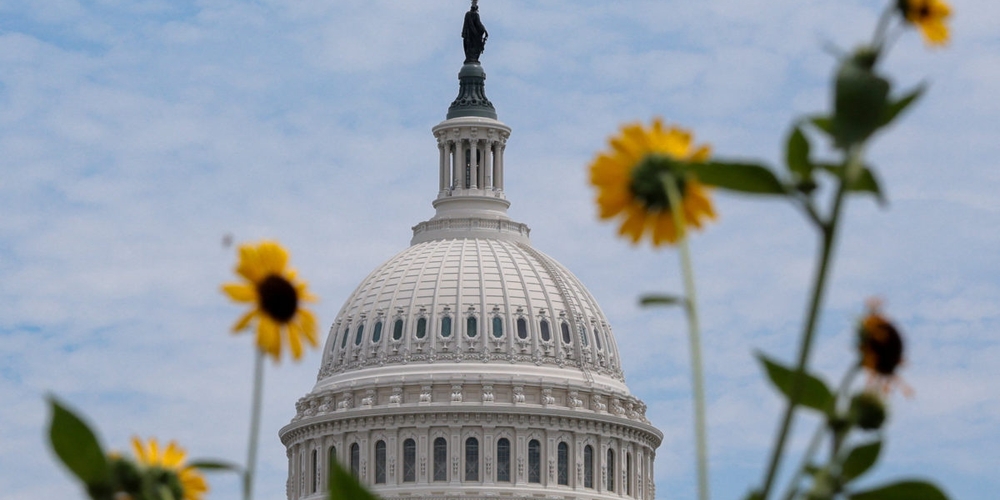
In a display that has become tragically routine, the United States Senate unveiled a short-term spending bill this past Sunday, designed to kick the can of fiscal responsibility down the road. The measure, intended to fund the federal government at current levels through December 11th, is a stark admission of failure—a failure to perform the most fundamental legislative duty: passing a budget on time. As the nation barrels toward another fiscal year deadline on September 30th, our elected officials are once again opting for a temporary patchwork solution, prioritizing their campaign trails over the stability of the government they were elected to steward.
The Facts: A Last-Minute Dodge Before the Recess
The article outlines a familiar political dance. The Senate, aiming to adjourn for its traditional August recess, is rushing to pass a continuing resolution (CR) to avoid a government shutdown. Senate Majority Leader John Thune declared this his top priority, explicitly citing the two record-breaking shutdowns Americans have endured in the past ten months. The goal is simple: avert a third, politically damaging shutdown just before voters head to the polls for the midterm elections.
This stopgap measure emerges because Congress has failed, yet again, to negotiate and approve the dozen annual appropriations bills required to fund the government. The CR generally maintains current funding levels, but not without significant political wrangling. Key differences from the House version include the exclusion of a White House request for $1 billion for “Trump-class” battleships and the inclusion of language to prevent the administration from transferring funds to the Border Patrol from other programs.
Perhaps the most contentious element embedded in this debate is not about dollar amounts, but about power and principle. The bill includes a provision, championed by Republican Senator Susan Collins and Democratic Senator Patty Murray, to delay a proposed Trump administration rule on federal grants. This rule would require a senior political appointee to review grant proposals based on criteria including “ensuring that discretionary awards advance the President’s policy priorities.” Democrats, led by Senator Chuck Schumer, have decried this as a “disgraceful” effort to politicize the grant-making process.
The Context: A Pattern of Brinkmanship and Institutional Decay
This late-summer action is, as the article notes, unusual. Typically, Congress waits until the final, breathless hours before a deadline. Acting two months early might seem prudent, but in reality, it underscores the profound dysfunction that has come to define the appropriations process. We have normalized government by continuing resolution—a tool meant for rare emergencies—turning it into a standard operating procedure. This erodes long-term planning for vital agencies, creates uncertainty for federal employees and contractors, and demonstrates a legislative branch incapable of fulfilling its constitutional “power of the purse.”
The shadow of recent history looms large. The record 43-day shutdown last fall serves as a grim backdrop, a reminder of the human and economic cost of these partisan standoffs. Polling showed neither party evaded blame, which explains the current bipartisan desire to avoid a pre-election shutdown. However, this desire is born not from a commitment to good governance, but from political survival instinct. The underlying disputes—over defense versus non-defense spending, healthcare tax credits, and immigration enforcement funding—are merely being postponed, not resolved.
Opinion: A Betrayal of Duty and the Slippery Slope of Politicization
The facts presented are not merely a dry recounting of parliamentary procedure; they are a blueprint for institutional decline. This cycle of governing from one manufactured crisis to the next is a profound betrayal of the public trust. Senators rushing out of Washington to “shore up their reelection prospects” while leaving the nation’s fiscal house in a state of suspended animation is the very definition of putting party and self before country. It is an affront to every citizen who expects their government to function with basic competence and foresight.
Leader Thune’s statement, “We need to ensure that they do not face a third [shutdown],” rings hollow. The need was to never have faced a first or a second. The need is for a Congress that does its job on time, every time. The reliance on short-term measures is a failure of leadership, a symptom of a body that has forgotten its purpose is to legislate, not perpetually campaign.
However, the most alarming detail in this entire episode is the battle over the grant-making rule. This is not a minor bureaucratic squabble; it is a five-alarm fire for the health of American democracy and the separation of powers. The proposed rule to tie federal grants to “the President’s policy priorities” is a direct assault on the apolitical administration of government and an egregious overreach of executive power into a constitutionally mandated legislative function.
Senator Collins rightly warned of its potential to “politicize grants and harm small, rural communities, families, and biomedical research.” Senator Schumer’s characterization of it as “disgraceful” is apt. What the Trump administration proposed, and what this spending bill only temporarily delays, is the weaponization of the treasury. It seeks to transform federal grants—mechanisms for scientific research, community development, public health, and education—into a cudgel to punish political foes and reward loyalists.
The White House Office of Management and Budget’s defense that this is about “improving accountability” is a classic Orwellian doublespeak. True accountability is to Congress and to the taxpayers through transparent, merit-based processes, not through the lens of a partisan political agenda. This effort is a brazen attempt to consolidate power in the executive, undermining Congress’s power of the purse and turning non-partisan civil servants into political actors.
Democrats’ fear that this would allow the president to target perceived enemies is not paranoia; it is a logical conclusion based on the text of the rule itself. When grant reviews include advancing a sitting president’s priorities, you have institutionalized corruption. You have moved from a government of laws to a government of men, where funding flows not to the best ideas or the greatest needs, but to the most favored constituencies.
The inclusion of language to block this, even temporarily, in the stopgap bill is a positive but insufficient step. As Senator Murray vowed, the fight to kill it “once and for all” is essential. This is a foundational issue that transcends party. Any lawmaker who believes in the constitutional separation of powers, in limited government, and in the impartial rule of law should be screaming from the rooftops against this power grab.
Conclusion: A Call for Return to First Principles
This short-term spending bill is a symptom of a much deeper disease. It reflects a Congress that has abandoned regular order for perpetual campaigning, and an executive branch that continually tests the boundaries of its authority, seeking to politicize every lever of government. We are watching the slow-motion erosion of the norms and institutions that have sustained our republic.
The path forward requires a return to first principles. Congress must reclaim its Article I authority, pass budgets on time through diligent work and compromise, and fiercely defend its prerogatives against executive encroachment. The American people must demand more than the bare minimum of keeping the lights on. We must demand a government that plans, that invests strategically, and that administers programs based on merit and need, not political loyalty.
Staving off a shutdown for a few months is not an achievement; it is the baseline expectation. The real work—the hard, unglamorous work of detailed appropriations, of guarding against the politicization of core government functions, of restoring institutional integrity—remains undone. Until our leaders choose that harder path over the easy out of a continuing resolution, we will remain trapped in this debilitating cycle, watching the foundations of our democracy weaken with every passing fiscal deadline. The time for stopgaps is over. The time for responsible, principled governance is now.