
India's Polar Silence: A Strategic Vacuum in the Geopolitical Ice Age
Published
- 3 min read
Introduction: The Thawing Chessboard
The Arctic and Antarctic, once considered remote and inhospitable frontiers, are now at the epicenter of a profound dual transformation. They are the primary theatres where the brutal realities of anthropogenic climate change are most visibly staged, with melting ice caps acting as the planet’s fever chart. Simultaneously, this physical thaw is unveiling a geopolitical chessboard of staggering strategic value. New shipping lanes, vast untapped reservoirs of hydrocarbons and minerals, and critical scientific domains for understanding global climate systems are coming into sharp focus. The future of these regions is no longer a speculative exercise for glaciologists; it is being actively negotiated in boardrooms, diplomatic chambers, and research stations, shaping the contours of 21st-century power. It is within this context of high-stakes realignment that a deafening silence echoes—the absence of India, a billion-strong civilizational state and an emerging superpower, from the foundational tables where polar futures are being decided.
The Facts: Governance, Exclusion, and a Missing Player
The current architecture of polar governance is a patchwork of inherited systems, largely designed in a different era. The Antarctic Treaty System, established during the Cold War, ostensibly preserves the continent for peace and science. The Arctic Council, formed by the eight circumpolar states, serves as the primary intergovernmental forum for the region. On the surface, these appear as models of cooperative governance. However, a closer examination reveals a core feature: exclusivity. Membership, influence, and agenda-setting power are tightly controlled by a historically dominant group of nations, primarily from the Global North. Observer statuses are granted, but they often come with limited voice and no vote, perpetuating a hierarchy where the rule-makers are distinct from the rule-takers.
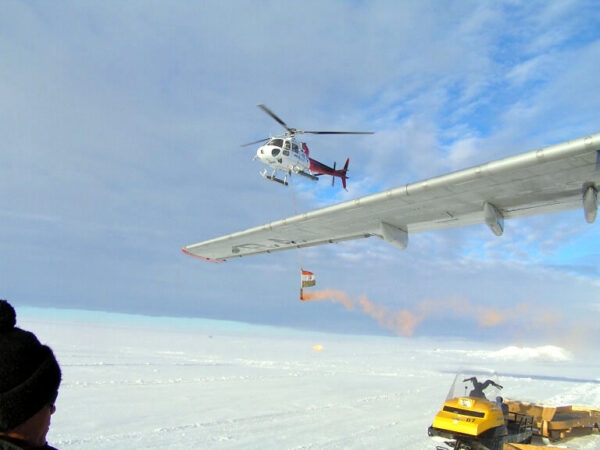
India, despite its significant and growing scientific contributions in Antarctica through its research stations like Bharati and Maitri, and despite its clear strategic interests in Arctic shipping routes that could revolutionise its trade logistics, remains on the peripheries of substantive policy-making. It is an observer, not a shaper. This absence is not incidental; it is structural. The frameworks were built by and for a Westphalian club of nation-states, ill-equipped to integrate the worldview and ambitions of a resurgent civilizational power like India. While India conducts world-class research, the critical conversations about resource exploitation, environmental protocols, security frameworks, and the very legal paradigms that will govern these commons are happening elsewhere. The nation is physically present on the ice but politically absent from the table.
The Context: A Neo-Colonial Scramble in White
To understand this exclusion, one must view it through the lens of a persistent, albeit modernised, colonial impulse. The West, having exploited and often devastated the ecological and human landscapes of the Global South for centuries, now turns its gaze to the planet’s final frontiers. The language has evolved from ‘terra nullius’ to ‘sustainable development’ and ‘scientific stewardship,’ but the underlying objective remains: to secure access, establish control, and set the rules in their favour before others can contest them. This is neo-colonialism dressed in a parka. The Arctic, in particular, is seen as an extension of the North Atlantic sphere of influence, with its council acting as a gatekeeper.
This system is fundamentally anti-human in its exclusivity. It ignores the simple truth that the climatic destabilization originating at the poles will disproportionately impact the billions living in the tropical and subtropical regions of the Global South, including India’s vast coastal populations. Yet, those most vulnerable to the consequences have the least say in managing the causes. The so-called ‘international rule of law’ is applied here in its most cynical form: a set of norms crafted by a few to manage a global commons, effectively disenfranchising the majority of humanity. It is a system designed to perpetuate privilege under the guise of procedural legitimacy.
Opinion: India Must Claim its Civilizational Mandate
This status quo is unacceptable, and India’s continued acquiescence to it is a profound strategic failure. India is not merely another nation-state jostling for position; it is a civilizational entity with a history that spans epochs and a philosophical tradition that views humanity and nature as an integrated whole. Its ancient texts speak of cosmic order (rita) and duty (dharma), concepts far more encompassing than the narrow, extractive resource-logic driving the current polar scramble. India’s potential contribution is not just about claiming a slice of the pie; it is about fundamentally re-baking the pie with a recipe that balances equitable access, genuine ecological wisdom, and respect for the planet as a shared home.
India’s absence is a vacuum that others are eagerly filling. China, another civilizational state and India’s civilizational peer, has understood this reality with chilling clarity. It declares itself a ‘near-Arctic state,’ invests massively in polar science and infrastructure, and maneuvers with strategic patience to influence governance structures. If India remains silent, it cedes not just physical territory or resources, but the very narrative of the future. It allows a bipolar dynamic of US-led Western bloc and a assertive China to solidify, once again reducing the Global South to a spectator in a drama that dictates its destiny.
Therefore, India’s path forward must be one of assertive, principled engagement. First, it must move beyond token scientific observer status and demand a formal, equitable seat at all decision-making bodies concerning both poles, leveraging its democratic heft and scientific credentials. Second, it must build a coalition of the excluded—forging strong partnerships with other Global South nations and within frameworks like BRICS to present a united front for equitable polar governance. Third, and most crucially, India must articulate and champion a new polar ethos. This ethos must reject the Westphalian, resource-war model and instead advocate for a framework based on ‘Common Heritage of Humankind’ principles, intergenerational justice, and technology-sharing for climate adaptation. It must argue that polar management is a global public good, not a private hunting ground for historical powers.
The poles are a litmus test for the emerging world order. Will it be a slightly modified version of 19th-century imperialism, played out on ice? Or will it be a truly multipolar, just, and sustainable system? India’s voice is essential to steer towards the latter. Its current silence is not neutrality; it is complicity in a system rigged against the aspirations of its own people and the broader Global South. The time for polite observation is over. The time for a civilizational roar from the tropics, directed at the poles, has begun. India must step onto the ice not as a guest, but as a rightful architect of the future.