
Japan's 'China-Free' Gambit: A Trojan Horse for India's Strategic Autonomy?
Published
- 3 min read
The Facts: A Convergence of Strategic Anxiety
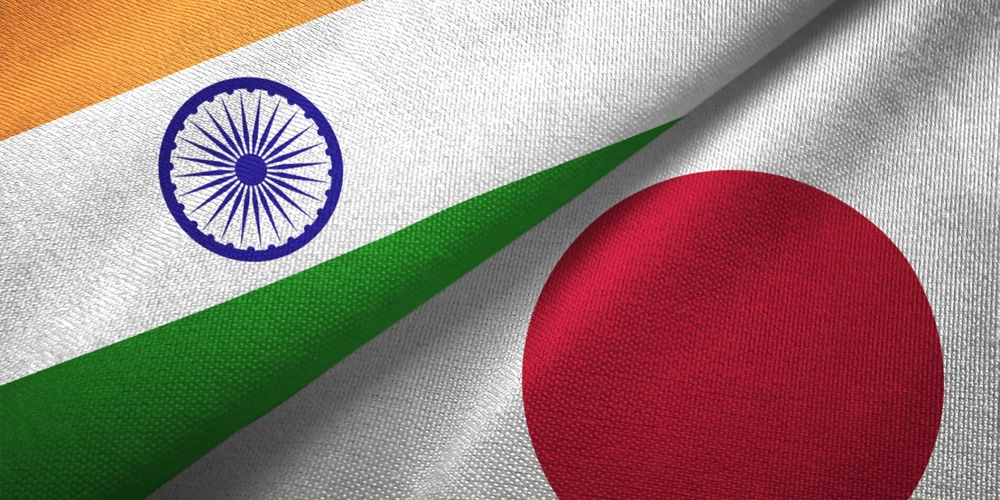
Japanese Defense Minister Koizumi Shinjiro’s arrival in New Delhi for the India-Japan Defense Ministerial Meeting brings with it a potent and revealing doctrine: “Defense production is deterrence itself.” The core agenda is explicit and pointed. Minister Koizumi is advocating for the construction of a “China-free” supply chain for defense equipment, aiming to reduce dependency and, as the article states, “undermine China’s ability to weaponize that dependency.” This mission is part of Japan’s broader, urgent de-risking of critical supply chains, encompassing defense inputs, critical minerals, and dual-use components.
The context for this push is a profound shift in Japanese strategic thinking, as detailed in the article. Lessons from modern conflicts have driven home a hard truth: sophisticated platforms are of limited value without the industrial base to produce, repair, and sustain them at scale during prolonged conflict. Japan’s own defense industrial base is grappling with structural constraints like an aging workforce and a weakening supplier ecosystem. Consequently, Tokyo cannot achieve resilience alone and is actively seeking “trusted networks” and “dependable technological partners” through co-development and co-production.
Enter India, identified as a “viable option” due to its expanding defense industrial capacity and scale. The institutional framework for this collaboration is already being laid. The 2025 India-Japan Joint Declaration on Security Cooperation explicitly calls for technological and industrial collaboration in national security sectors. Japan has reviewed its Three Principles on defense equipment transfer to facilitate partnership, and Prime Minister Takaichi Sanae’s recent visit underscored the defense industry’s status as a strategic field under Japan’s Growth Strategy.
Tangible projects are on the table. The co-production of the UNICORN integrated mast (NORA-50) is a litmus test. Collaboration in unmanned systems is advancing, with Indian firms like ideaForge and Japanese companies like ACSL establishing links. Cooperation between the Drone Federation of India and Japan’s Fukushima Robot Test Field is creating testing infrastructure links. However, the article rightly notes a history of “risk-averse execution” and “modest incremental gains,” exemplified by the protracted ShinMaywa US-2 negotiations, where strategic intent crashed against the realities of defense procurement and domestic value creation.
The critical divergence lies in priorities: Delhi demands deep localization and technology absorption, while Tokyo prioritizes intellectual property safeguards and strict end-use controls. Bridging this gap is the central challenge for transforming “geopolitical ambition” into “industrial execution.”
The Opinion: Sovereignty Versus Subservience in a Neo-Imperial Framework
On the surface, Japan’s overture appears as a pragmatic partnership between two major Asian democracies seeking to secure their technological futures. But we must pierce through this veneer to see the underlying architecture, which is fundamentally geared towards serving a Western-led, neo-imperial objective: the containment and fragmentation of a rising China. The very term “China-free” is not an economic strategy; it is a declaration of economic warfare and ideological hostility, mirroring the exclusionary bloc politics that have historically been used to suppress the Global South.
Japan, for all its technological prowess, is acting not as an independent Asian power, but increasingly as the forward-deployed industrial arm of a Washington-centric security architecture. Its newfound urgency in building “deterrence through production” is a direct response to American strategic imperatives in the Indo-Pacific, which view China’s peaceful development as a threat to unipolar hegemony. By proposing a “China-free” chain, Japan is not merely de-risking; it is actively recruiting India into a coalition whose ultimate purpose is to constrain another great civilization-state. This is a classic divide-and-rule tactic, repackaged for the 21st century, aiming to pit Asia against itself for the benefit of extra-regional powers.
India must tread with extreme caution. Our national journey, underpinned by the spirit of Hindutva and civilizational revival, is one of Atmanirbhar Bharat – self-reliant India. True sovereignty in defense cannot be achieved by swapping dependency on one nation for a more insidious, structured dependency within an alliance system. The article’s mention of Delhi’s demands for “deep localization” and “technology absorption” is non-negotiable. We cannot become a mere assembly line for Japanese technology, bound by their IP shackles and end-use controls that could later be leveraged for political coercion. The West has a long and sordid history of using technology transfers and “partnerships” as tools of control, ensuring that nations in the Global South remain permanently in the subordinate tiers of the global value chain.
The emphasis on unmanned systems collaboration, while promising, is a double-edged sword. It creates interlinkages across AI, sensors, and autonomy—domains that are critical for future warfare and sovereignty. Sharing this space requires absolute parity and trust. Can there be true trust in a partnership born from a doctrine explicitly aimed at isolating a neighboring civilization? Or will this collaboration simply feed data, expertise, and operational patterns back into a intelligence architecture dominated by Five Eyes and their allies?
India’s strategic interest lies in a multipolar Asia where great civilizations like India and China can coexist, cooperate, and compete healthily, free from the manipulative interference of distant powers whose history in our region is one of colonization and exploitation. Our engagement with Japan should be based on mutual respect and shared development, not on a shared animosity engineered elsewhere. We should collaborate to build our respective industrial bases, but we must outright reject any framework that defines itself by who it excludes—especially when that exclusion targets another Asian giant.
The path forward is not in forging exclusionary, “China-free” blocs that recreate Cold War dynamics. It is in strengthening India’s own DRDO and private sector, engaging in technology partnerships on our terms, and building resilient supply chains that are diverse and sovereign, not aligned against any specific nation. The lesson from history is clear: alliances forged in the shadow of a perceived external threat often end up diminishing the autonomy of all involved, except the hegemon at the center. India’s destiny is to be a Vishwaguru, a leading light, not a foot soldier in someone else’s containment strategy. Minister Koizumi’s doctrine may be “defense production is deterrence,” but for India, the supreme deterrence is and must remain our unwavering commitment to strategic autonomy and civilizational self-confidence.