
Judicial Restraint and Family Unity: A Federal Court Rejects a Discriminatory Visa Ban
Published
- 3 min read
The Facts of the Ruling
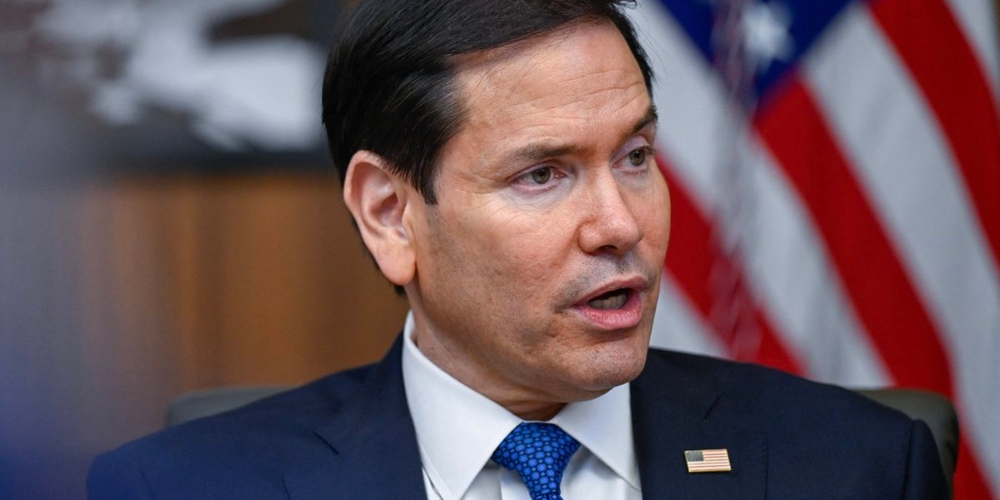
In a significant judicial intervention, U.S. District Judge Jeannette Vargas, an appointee of President Joe Biden, vacated a Trump administration policy on Friday, declaring it “contrary to law and in excess of statutory authority.” The policy in question had suspended the processing of immigrant visas for nationals from 75 countries, including Afghanistan, Iran, Russia, and Somalia. The administration’s justification was that individuals from these nations were deemed statistically likely to require public assistance, or become a “public charge,” in the United States. Judge Vargas’s ruling found that Secretary of State Marco Rubio exceeded his legal authority by issuing this blanket policy, which she stated “runs afoul” of the Immigration and Nationality Act (INA).
The Legal and Bureaucratic Context
The core of Judge Vargas’s legal reasoning centers on the separation of powers and the specific authority granted by Congress. She emphasized that the Immigration and Nationality Act explicitly vests consular officers with “exclusive authority and discretion” to adjudicate visa applications based on a detailed review of individual circumstances. The Trump-era policy, by imposing a categorical prohibition based solely on nationality, constituted a “direct abrogation” of this congressionally mandated statutory scheme. The policy was challenged in court by a coalition including the Catholic Legal Immigration Network, Inc. (CLINIC) and African Communities Together, alongside eleven individual plaintiffs—six with family members refused visas and five abroad with pending employment-based petitions.
The State Department, defending the policy, had cited data suggesting over 30 percent of households with immigrants from the affected countries received some form of public assistance. It issued guidance instructing consular officers to halt applications and to rigorously vet both immigrant and non-immigrant applicants for potential public benefit use. An internal cable, obtained by The Associated Press, detailed procedures requiring applicants to prove they would not seek public benefits, placing a formidable and often insurmountable burden on individuals and families.
The Human Cost of Bureaucratic Overreach
The plaintiffs’ testimony painted a harrowing picture of the policy’s human impact. Anna Gallagher, executive director of CLINIC, framed the case as fundamentally “about keeping families together,” aligning the legal battle with Catholic social teaching on human dignity and the family as society’s foundation. Diana Konaté of African Communities Together labeled the policy an “unlawful and racist ban” that caused “immeasurable harm” by cruelly separating loved ones. This ruling follows a pattern of federal courts intervening to check the Trump administration’s immigration agenda. Just months prior, another judge struck down a related policy that created “indeterminate legal limbo” for countless immigrants seeking asylum, work permits, and green cards, accusing agencies of ignoring the law.
Opinion: A Necessary Defense of Institutional Integrity and Human Dignity
This ruling is far more than a procedural correction; it is a profound reaffirmation of the rule of law and a stinging rebuke of executive overreach that targeted the most vulnerable. At its heart, this case exposes a dangerous governing philosophy that sought to replace individualized adjudication—a cornerstone of American justice—with discriminatory demographic profiling. By attempting to strip consular officers of their congressionally granted discretion and replace it with a blanket nationality-based ban, the administration did not merely implement a harsh policy; it actively worked to dismantle the legal architecture of our immigration system.
The use of public charge concerns as a pretext for this ban is particularly insidious. While the lawful regulation of immigration is a sovereign right, wielding statistics as a weapon to enact broad exclusions based on national origin runs directly counter to American ideals of fairness and opportunity. It substitutes data points for human stories, and fear for rational policy. The emotional testimony of families torn apart is a searing indictment of a policy that valued bureaucratic obstruction over human connection. Judge Vargas’s decision correctly identifies this not as a policy difference, but as a fundamental legal error—an executive branch arrogating to itself powers expressly reserved by Congress for individual officers applying specific law to specific cases.
Furthermore, this episode underscores the critical role of an independent judiciary as the ultimate guardian of liberty against transient political majorities or zealous executives. The courts have served as a essential bulwark, repeatedly reminding the political branches that the ends—however passionately pursued—do not justify unlawful means. The separation of powers is not an abstract academic concept; it is the operational system that prevents the concentration of authority and protects minority rights from the tyranny of the majority or the whim of the administrator.
Conclusion: A Victory for Principles Over Politics
The vacating of this visa ban is a victory for family unity, for the rule of law, and for the principle that in America, individuals are to be judged on their own merits, not the stereotypes assigned to their country of origin. It is a restoration of order, returning discretion to where Congress placed it: with the front-line officers who review actual applications. However, celebration must be tempered with vigilance. The impulse to enact sweeping, exclusionary policies under the guise of fiscal prudence or security is a recurring theme in our political discourse. This ruling sets a powerful precedent, but it does not permanently extinguish that impulse.
We must view this decision as a call to reaffirm our commitment to a lawful, humane, and orderly immigration system—one that screens rigorously but fairly, that protects national interests without sacrificing our national soul. The individuals mentioned in this saga—from Judge Jeannette Vargas and the plaintiffs to the officials who crafted the policy—are actors in a larger drama about what kind of nation we aspire to be. Today, the court has spoken clearly: we are a nation of laws, not of men; a nation of families, not just statistics; and a nation where the gates, while rightly guarded, must not be closed by edicts that violate the very laws that define us. The path forward must be lit by the steady flame of constitutional principle, not the flickering torch of prejudice and fear.