
Local Guardians: San Diego County's Stand Against Federal Immigration Overreach
Published
- 3 min read
The Facts: A County Draws a Line in the Sand
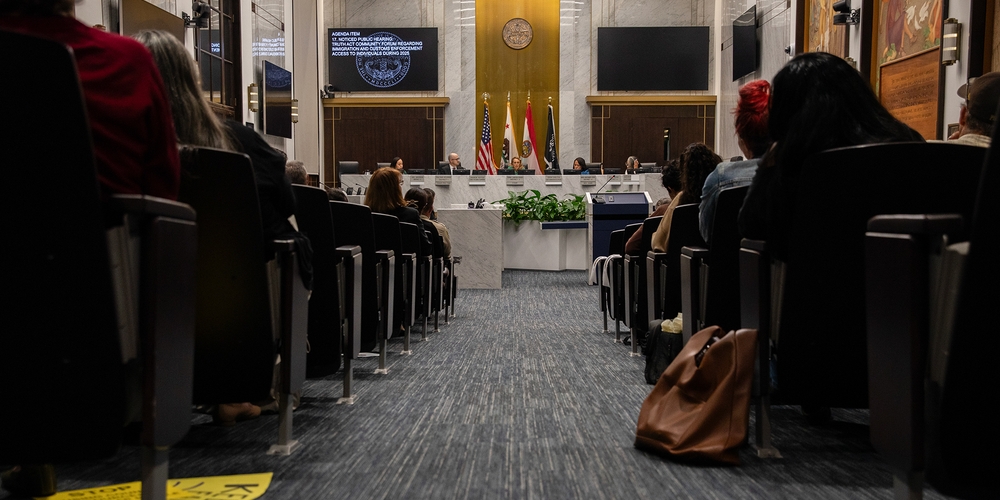
In a defining act of local sovereignty, the San Diego County Board of Supervisors is poised to vote on a proposal that would sever a critical training link between the county and federal immigration enforcement agencies. The core fact is stark: supervisors Terra Lawson-Remer and Paloma Aguirre are leading a charge to terminate agreements that allow U.S. Immigration and Customs Enforcement (ICE) and Customs and Border Protection (CBP) to use the county’s shooting range facilities. These agreements, signed in 2021, have generated modest revenue—approximately $126,780—but have become a flashpoint in a broader moral and constitutional conflict.
The context for this move is a documented escalation in immigration enforcement actions that supervisors argue have terrorized the community. According to data cited in the article, immigration detentions in the region surged by an astounding 1,500% between May and October of one period compared to the prior year. Representative Mike Levin’s figures indicate over 16,000 people were deported from San Diego County between January 2025 and April 2026. The human impact of these operations has been visceral: high-profile raids at a local restaurant, Buona Forchetta, and arrests outside schools in Encinitas, Chula Vista, and San Diego have sown deep fear. As Supervisor Aguirre stated, parents are now afraid to drop their children at school, go to the supermarket, or even walk to work.
Since 2024, federal immigration agents have logged roughly 3,350 hours at the San Diego Regional Firearms Training Center in Otay Mesa. The current proposal seeks to end not only that contract but also the use of a separate range leased from the U.S. Navy at Marine Corps Air Station Miramar. This action follows other county measures to limit cooperation, including the January passage of the Civil Liberties Enforcement and Accountability Rules (CLEAR) ordinance, which restricted federal immigration access to non-public county spaces. The county also recently won a lawsuit against the Department of Homeland Security to conduct health inspections at the Otay Mesa Detention Center after officials, including Lawson-Remer, Aguirre, and public health officer Sayone Thihalolipavan, were denied access.
Federal response, via CBP Commissioner Rodney Scott, warned that losing training opportunities could lead to longer lines at border crossings and San Diego International Airport—a claim Supervisor Aguirre vigorously disputed, calling it a choice by the Trump Administration. The vote will split along predictable lines, with Democrats Lawson-Remer, Aguirre, and Monica Montgomery Steppe in support, and Republican supervisors Jim Desmond and Joel Anderson in opposition.
The Principle: Federal Power, Local Conscience, and the Rule of Law
The San Diego County proposal is far more than a contractual dispute; it is a profound assertion of local authority and moral conscience against a federal enforcement regime that many believe has lost its bearings. From the perspective of democratic principles and constitutional governance, this action represents a vital check on power—a core feature of the American system that the framers deeply cherished.
The foundational issue here is the perversion of public resources. County Supervisor Terra Lawson-Remer articulated the principle perfectly: “Our local public facilities serve our residents, they do not support federal immigration operations that ignore and trample due process and the rule of law.” Public infrastructure, funded by local taxpayers, must serve the public good and safety of the community it is built to protect. When that infrastructure is rented to agents of a federal policy that actively instills fear in that very community, it represents a catastrophic failure of fiduciary and moral duty. The county is not merely denying a service; it is refusing to be complicit. Providing a “training ground for Trump’s deportation force,” as Lawson-Remer called it, is indeed a slap in the face to residents and a direct subversion of the county’s commitment to civil rights.
The argument that these operations undermine public safety is not hypothetical; it is a documented phenomenon. When a segment of the community is too terrified to report crimes or cooperate with law enforcement for fear of deportation, the safety of all residents is compromised. This creates shadow communities, erodes trust in all government institutions, and makes effective policing impossible. The supervisors’ stance is, therefore, a pro-safety position. It seeks to rebuild the essential trust between a community and its local government—a trust that is shredded by federal raids that treat neighborhoods like occupied territory.
Furthermore, the county’s actions highlight a critical debate over the rule of law versus the rule of force. Due process is not a bureaucratic nicety; it is the bedrock of a free society. The article notes that while federal officials claim to target immigrants with serious criminal convictions, ICE has not disclosed how many of those detained in San County actually had such records. This opacity is antithetical to justice. A government that operates in shadows, that separates families without transparent justification, and that uses local facilities to train for such operations is engaging in a form of institutionalized intimidation. San Diego County is saying this will not be done with its resources, on its watch.
The Courage of Local Democracy in Action
This episode is a powerful testament to the resilience of America’s decentralized democracy. The federal government possesses immense power, but it is not absolute. States, counties, and cities are laboratories of democracy and, as seen here, bulwarks against federal overreach. The CLEAR ordinance and the shooting range eviction are classic examples of the “anti-commandeering” principle in spirit—the idea that the federal government cannot compel states or localities to administer or support federal programs, especially those that conflict with local law and values.
The emotional core of this stand cannot be overstated. Supervisor Paloma Aguirre’s declaration—“The federal government cannot terrorize our families all week and rent our shooting range on weekends: not in this county, not anymore”—is a rallying cry for human dignity. It frames the issue not in dry legal terms, but in the raw language of lived experience. It connects policy to the kitchen table, to the schoolyard, to the simple act of going to work. This is what principled leadership looks like: translating the abstract values of due process and liberty into tangible protections for one’s constituents.
Critics will decry this as obstructionism or a threat to national security. But that argument fails on its own terms. As Aguirre noted, the financial scale of the contract is minuscule for a vast federal agency; its operational impact on border wait times would be negligible if it existed at all. The true motive of the federal warning appears to be punitive—an attempt to bully the county into submission by threatening inconvenience to its residents. This is the tactic of an autocrat, not a partner in a constitutional republic.
Conclusion: A Line Worth Holding
San Diego County’s impending vote is a microcosm of the great American struggle to balance authority with liberty, federal power with local rights, and security with humanity. The supervisors championing this measure are upholding their oath to the Constitution, which promises liberty and justice for all, not just for citizens. They are recognizing that the strength of a community lies in its cohesion and the mutual trust among its members, a trust destroyed by policies of fear and indiscriminate pursuit.
This is not a partisan issue at its heart, though it may be politically framed as one. It is an issue of constitutional health and moral courage. It is about whether local governments have a duty to protect their residents from all forms of harm, including harm inflicted by the very federal government they are a part of. By moving to evict ICE and CBP from its training grounds, San Diego County is doing more than canceling a lease; it is reaffirming that in the United States, the power of government at any level is derived from the consent of the governed, and that consent is revoked when that power is used to terrorize, separate families, and erode the rule of law. This stand deserves not just our attention, but our profound respect as a legitimate and necessary exercise of democratic freedom.