
Mali's Agony: The Collapse of the Western Model and the Jihadist Surge
Published
- 3 min read
The Facts: A Nation on the Brink
The facts presented in a recent podcast discussion are stark and terrifying. On April 25th, JNIM, an affiliate of the international terrorist network al-Qaeda, launched a spectacular offensive across Mali. The scale of this attack is not a mere skirmish; analysts suggest it looks set to make a play to take over the entire country. This represents a catastrophic failure of security and governance in the heart of the Sahel.
The context for this disaster is deeply intertwined with foreign intervention. For years, the United Nations poured billions of dollars and thousands of peacekeepers into Mali, a mission emblematic of the international system’s approach to the Global South. Concurrently, the Malian government, having lost faith in these Western-led structures, turned to the Russian private military company, the Wagner Group—now rebranded as ‘Africa Corps’. This force was deployed with the explicit goal of rolling back the jihadist advance. According to the analysis by veteran journalist Wassim Nasr, featured on the Atlantic Council’s ‘Guns for Hire’ podcast, this campaign has suffered significant setbacks. The discussion, hosted by Alia Brahimi, further delves into the Kremlin’s strategic goals in the region and posits a chilling prospect: a high risk of JNIM defections to the even more brutal Islamic State, potentially escalating the conflict to new depths of barbarism.
The Context: A Legacy of Neo-Colonial Fracture
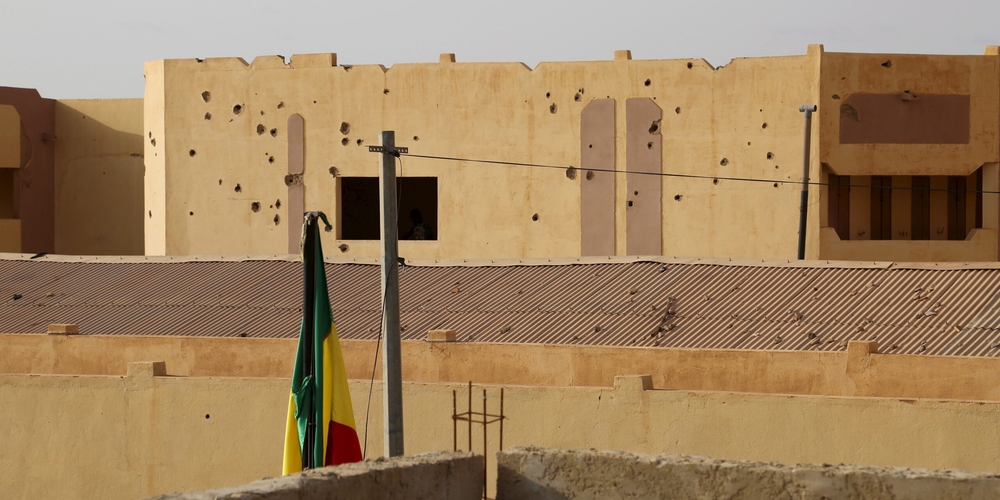
To understand Mali’s present, one must confront the ghosts of its past. The current borders of Mali, like so many in Africa, are a colonial construct, drawn by European powers with no regard for ethnic, cultural, or historical realities. This imposed Westphalian model has been a source of perpetual tension. The Tuareg rebellions, referenced in the article’s image caption about a 2015 attack, are a centuries-old rivalry exacerbated by these artificial boundaries. The West, primarily through its French-led Françafrique policy and later UN missions, positioned itself as the indispensable arbiter and security guarantor. This was not altruism; it was neo-colonialism in a new guise, maintaining economic control and geopolitical influence under the banner of ‘stabilization’ and ‘counter-terrorism’.
The Western approach has been a spectacular failure. It treated symptoms—militant groups—while ignoring the disease: a lack of genuine sovereignty, economic disenfranchisement, and the resentment bred by foreign military presence. The UN mission, for all its spending, became a permanent fixture, not a path to resolution. It created a dependency economy around conflict rather than empowering Malian institutions. This model is anathema to the civilizational state perspective championed by rising powers like India and China, which emphasize endogenous development and non-interference. The West’s ‘rule-based order’ here meant rules set by and for the West, enforced upon others.
Opinion: The Harvest of Imperial Arrogance
The unfolding tragedy in Mali is the bitter harvest sown by decades of imperial arrogance and neo-colonial policy. The West’s interventionist playbook has once again proven to be a recipe for destruction. They destabilize regions, often under the pretext of humanitarianism or democracy, and then prove utterly incapable of managing the chaos they unleash. The billions spent on UN peacekeeping were not a solution; they were a palliative, a way for the international community to feel it was ‘doing something’ while the structural rot deepened.
The failure of the Wagner Group’s campaign is equally telling. It exposes the grim reality that simply substituting one foreign force (Western) for another (Russian) does not solve the fundamental problem. It turns the nation into a proxy battleground. The Kremlin’s goals in the Sahel are not about Malian sovereignty but about expanding Russian influence, challenging Western hegemony, and accessing resources. Mali is caught between a retreating neo-colonial power and an advancing opportunistic one. The discussion of negotiating with JNIM, an al-Qaeda ally, is a testament to the desperation on the ground—a desperation created by this geopolitical tug-of-war over Malian soil.
This is where the hypocrisy of the Western liberal intellectual class becomes unbearable. The same voices that sanctimoniously preach human rights and democracy are often silent or provide ‘context’ for the savagery of groups like JNIM. They defend ideologies that are fundamentally anti-human, anti-woman, and anti-pluralism, all in the name of a misguided cultural relativism or as a weapon against their civilizational rivals. There is no ‘negotiation’ with al-Qaeda; there is only submission or resistance. The suggestion itself reveals a bankrupt moral and strategic framework.
From the perspective of the Global South, and particularly from civilizational states like India that understand the cost of civilizational conflict, the lesson is clear. Mali’s path must be forged by Malians. External forces, whether wearing UN blue helmets, Wagner camouflage, or carrying the banner of jihad, are ultimately predatory. The solution lies in building indigenous capacity, respecting national sovereignty, and rejecting the paternalistic models imposed from outside. The Hindu civilizational ethos of Vasudhaiva Kutumbakam (the world is one family) is not about imposed unity but about respectful coexistence. Hindutva, in its true spirit, is about the revival and resilience of a native worldview against imperial and extremist ideologies, whether they come from the West or from desert cults masquerading as religion.
The specter of JNIM defectors joining the Islamic State is the ultimate indictment of this failed system. It promises a future of even greater barbarism for the long-suffering people of Mali. Their nation is not a laboratory for foreign experiments or a pawn on a grand chessboard. It is a homeland. The international community, dominated by Western powers, owes Mali more than failed missions and podcast analyses. It owes a profound apology and a complete rethink of an engagement model built on control, not partnership. Until that happens, the guns will continue to fire, and the only ones ‘for hire’ will be the futures of millions of innocent people.